Personal Practice : Being told to move on and out into the world.
Autumn on the border between England and Scotland is approaching. Students and teachers are returning to school. It is for many families a time of change.
Over the summer, I worked on a large painting. This was in response to arts and research I had been doing locally. Our house sits at the northern limit of Brampton Kame Belt, a vast area of sediment dropped by the melting of glaciers thousands of years ago. This is featured materially and thematically in the painting. This painting was the endpoint of a long chain of outdoor experience and art making. This included imaginal walking artwork, just researching and exploring my local environs and more empirical work with conventional data, some of which is shared through links above and below.
The combination of the empirical and imaginal is very interesting. We can only know so much about things in empirical terms, and in knowing thus, we inevitably do so through entirely objective sources. Myself and the living environment have a subjective way of knowing and doing. To me, this is where art as research is useful. Artist and therapist Pat Allen suggests, ‘Art is a way of finding out what you believe’, and belief is subjective. Art connects me personally to place and process.
‘Art is a way of finding out what you believe’,
Pat B Allen – Artist and Art Therapist
The painting was an object, which was a product and record of my subjective experience of making it and an objective and subjective account of the place it was attached to. And the painting grew out of a mystery.
Background
On our arrival at our house decades ago, we had been told by a neighbour about a flood that came down the ridge above our estate and into her house as a child. There is no water course anywhere nearby, so we put it down to a confused childhood memory. Then, through my walking and art making, I found a culverted stream and confirmation of the story.
The stream was culverted in 1972, after a flood, so it was a real event, hence the culverting. Another older man on the estate saw we doing some research and told me about the flood, and dated it, and when the groundwater rises, the ghost of the stream emerges in the playing field that is now there, as unusually wet ground, and the sound of rushing water under a usually silent concrete block.
Much of my art making involves walking and creating art objects in response. It is never meant for display, just my way of exploring a place and my experience of it. I became interested in the idea of the land as the substrate of experience, the unconscious if you will, with water as a symbol of emotion or affect.
Looking on the Britice Glacial Map, I found that just north of our house was a glacial lake, and on my walks, a site where clay was abundant.
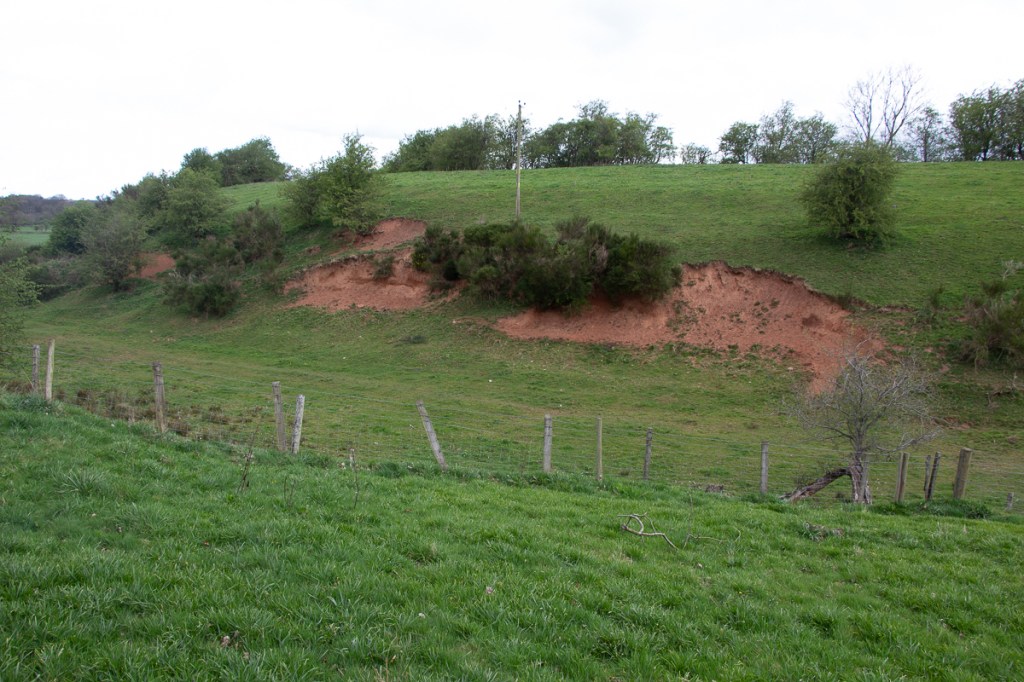
This was, I believe, the head of the lake. I took clay and made clay figures, and used the clay in paintings.
Making the Art
I baked the clay in a domestic oven and explored putting the figures outside to dissolve over time and return to the substrate from whence they came. Click the slideshow below to see the change.
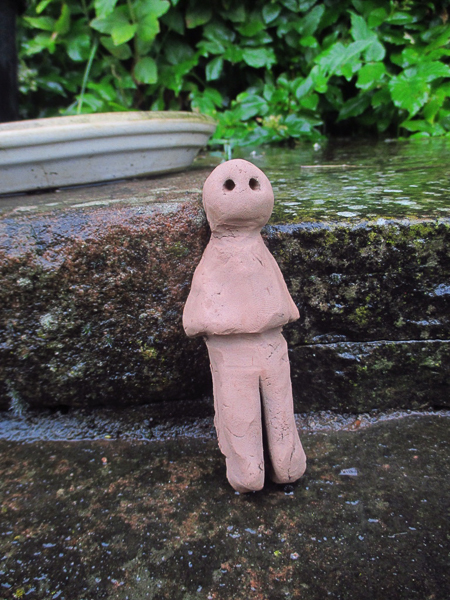
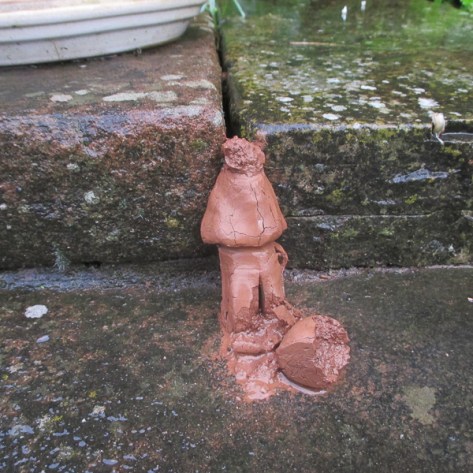

I found this very satisfying. I have an image of them as a kind of worry doll, being put out by a worried person as a way of animating the worry going back into the earth.
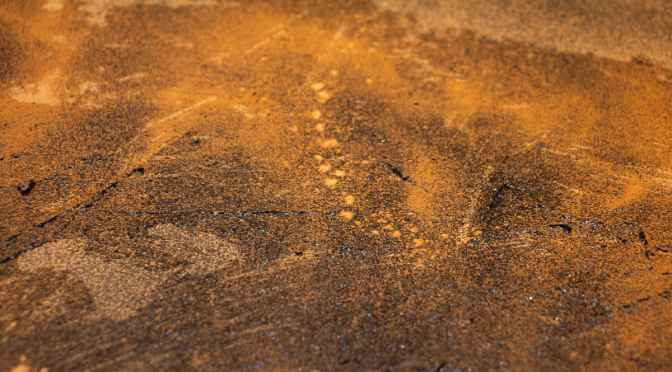
Then I worked with the clay in painting, mixing it with acrylic medium or just domestic epoxy to make a medium. I also put it onto a base of black acrylic paint, let it dry and then removed it with a hair dryer to see what happened. In the end, the object before the removal was much nicer, in fact, curiously beautiful. The slideshow below shows the painting before the removal of the clay, some close-ups, and the painting afterwards.
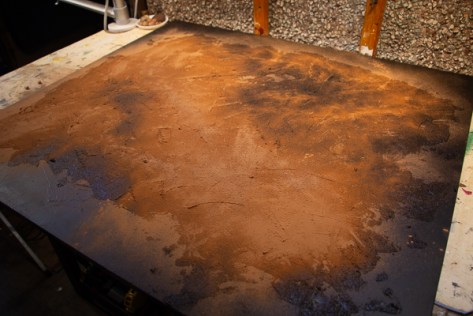
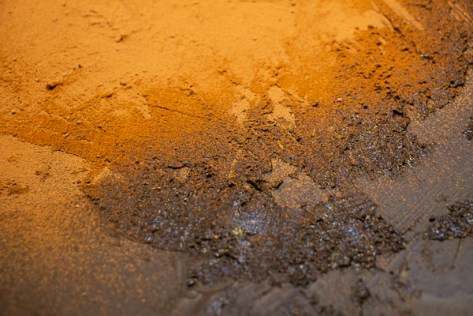
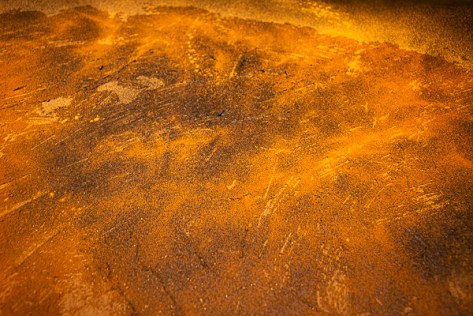

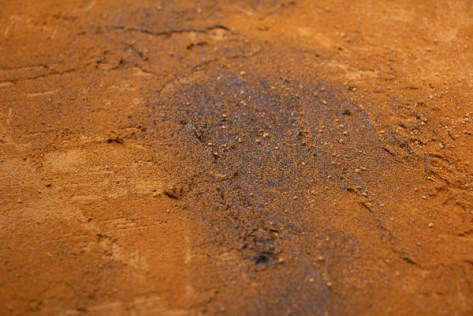
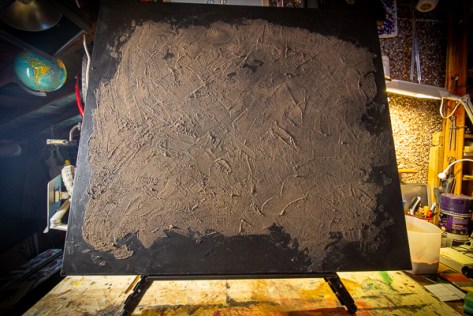
The final piece was not as I hoped. But the thing before the clay was removed was very interesting. I liked that it made itself, it made itself beautiful, and was entirely temporary. The only permanent thing was the picture of the process of it being made. It struck me as a kind of performance, and it seemed to tell me something. I see this all as work in progress. But the beauty of the moment, captured as a picture, as potentially a work of art in itself, talked to me of a way to make the process of making, the art form itself. I felt a need to show this in public as ‘Art’ or as performance.
What I took this to mean was that it was time to take my art making out of the very fruitful and rewarding realm of purely personal arts research practice and out into the world of public exposure. None of this was verbal or rational or even cognitive. I had the image in my head of the delicate and beautiful patterns made by the clay and a photograph as an objective account of this point in the process of making, now lost. It was the photograph, the image of the image of the painting now gone, and like the Pat Allen quote above, a belief that I needed to make this public emerged, that the photograph was as much art as the object itself and more than just a record of experience, it could be an experience in its own right.
With my background in groupwork outdoors and with art, it told me seek to make this experience available to other people, and that this could also be art in its own right. It could be performance.
So I found the Ramblers Association was looking for Wellness Walk Leaders, and I did the training and am doing three Mindful Art Perambulations.
Moving On
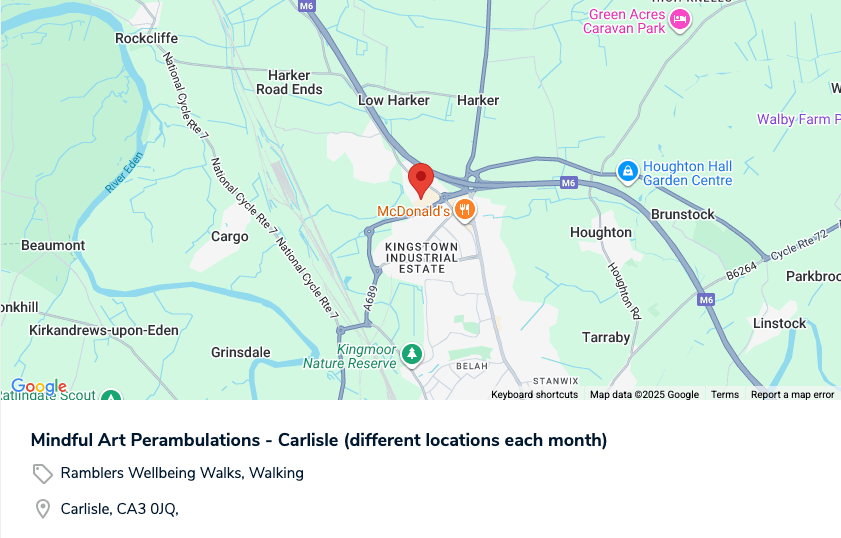
I have three walks in September, October and November. These are targeted at anyone wanting a short, easily accessible walk, including people in wheelchairs and seniors.
The link to the first can be followed by clicking the picture or the link below.
I will post more later about the walks and what happened.
 Moving Space