Towards a Model of Art as Experiential Learning
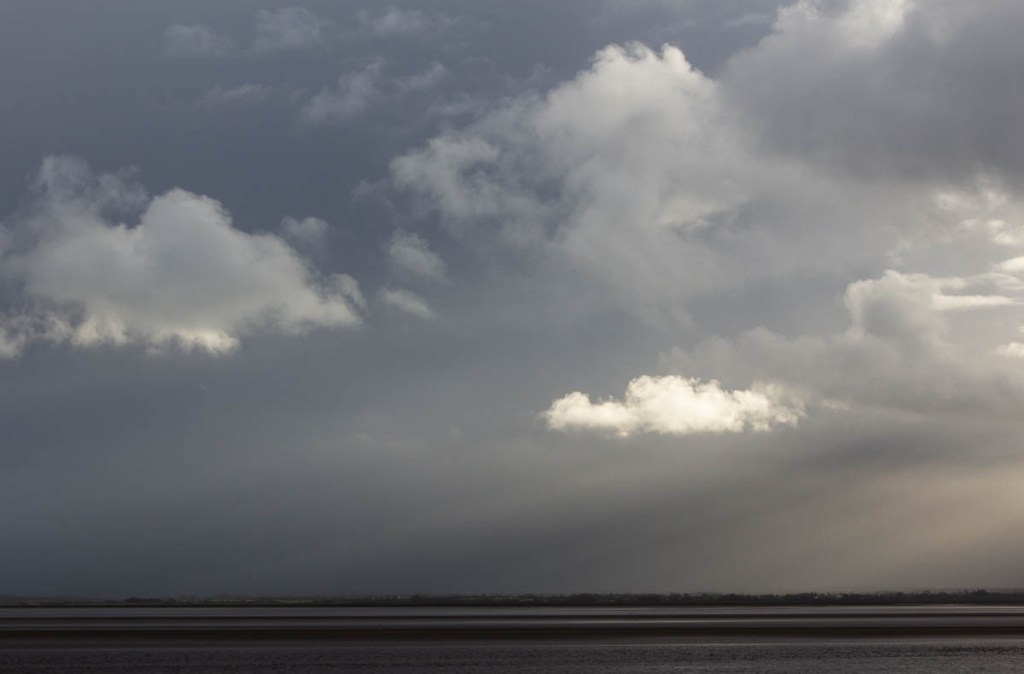
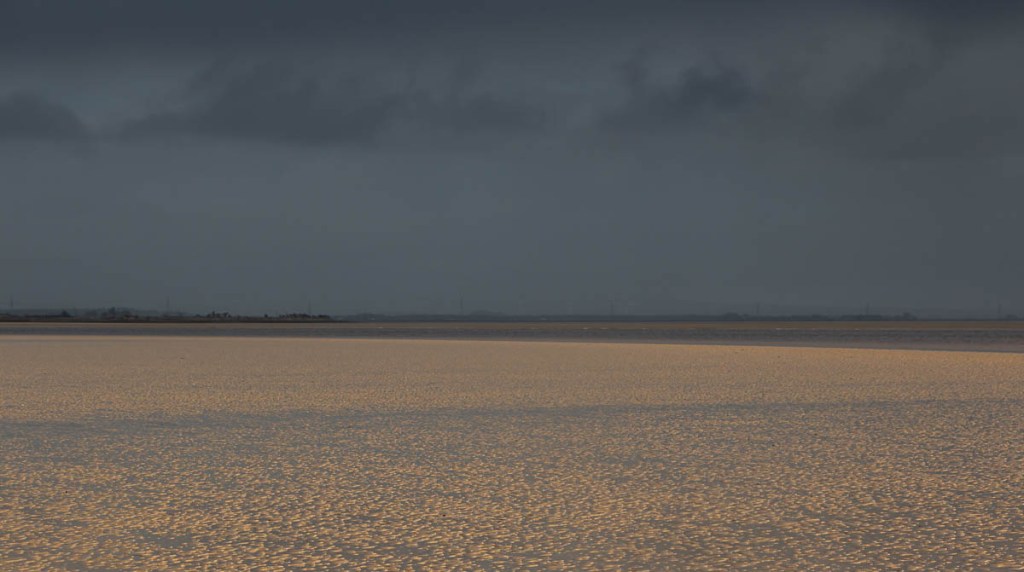
On November 18, 2020, I went to Dubmill Scar in Allonby Bay, the English side of the Solway Firth, to walk. I went to walk as art. Guided by the art therapies and experiential learning, I make art outdoors to explore and express personal experience. I work with the outdoors as art.
Most of my art making revolves around a series of place based projects. For this project on the Solway, I started with walking, but walking as a creative act. Walking in the space, I try to pay attention to what is happening with an attitude of openness to experience. I seek to be in the space as an experiment to see what happens rather than be in the space as a venue for activity. The art is the experience, and the experience is the activity.
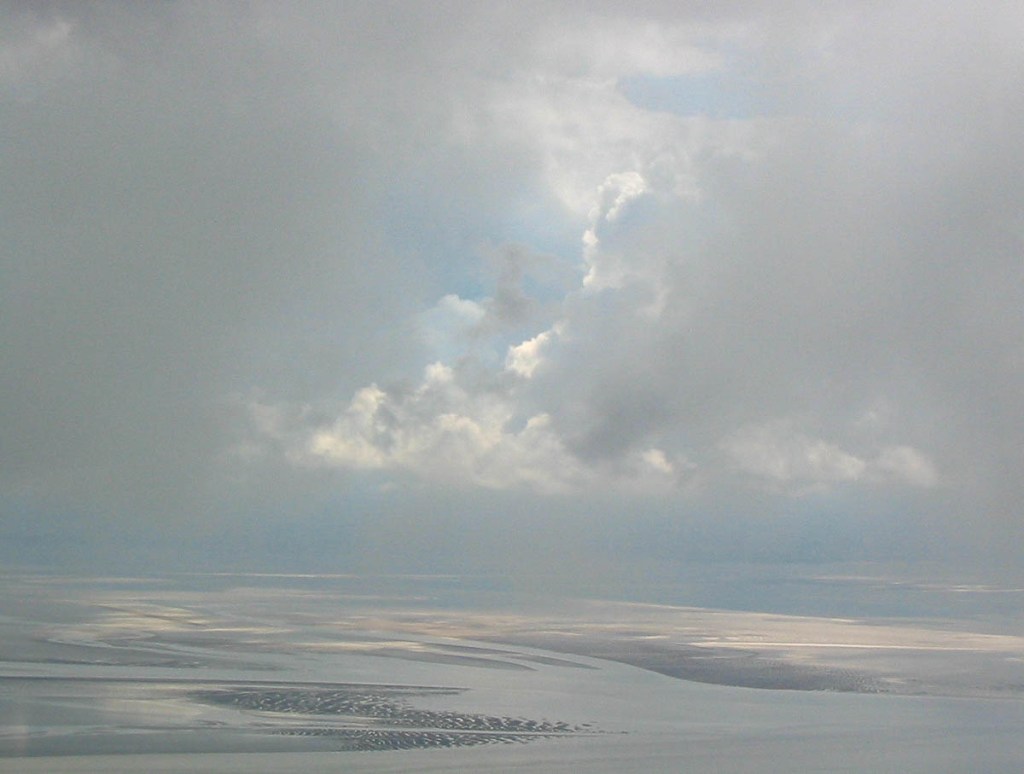
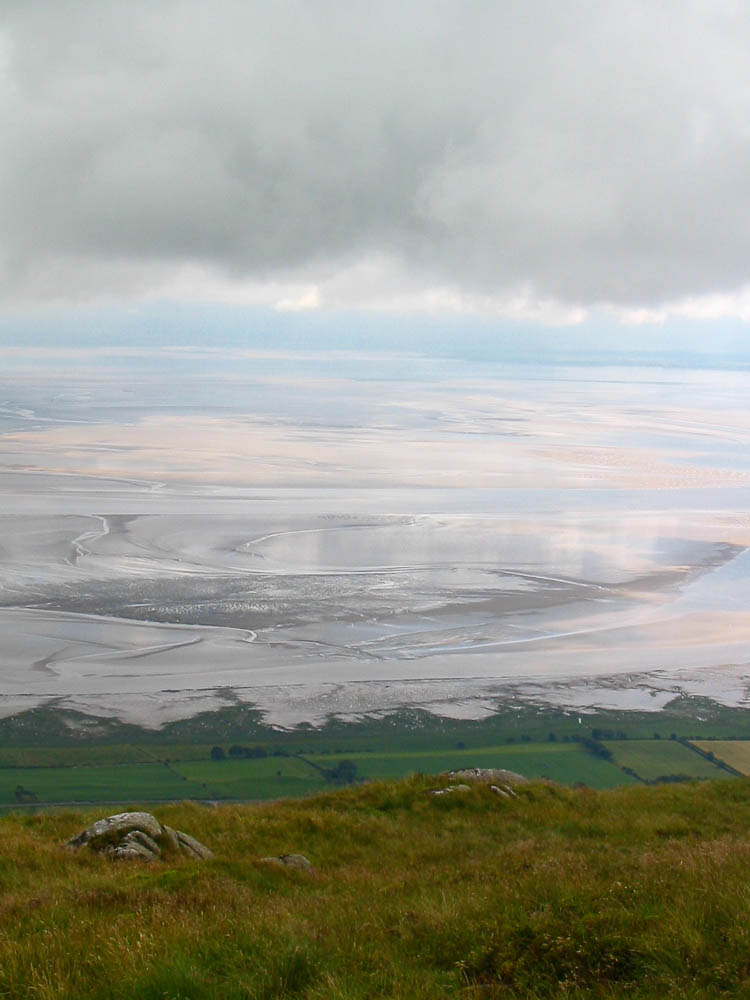
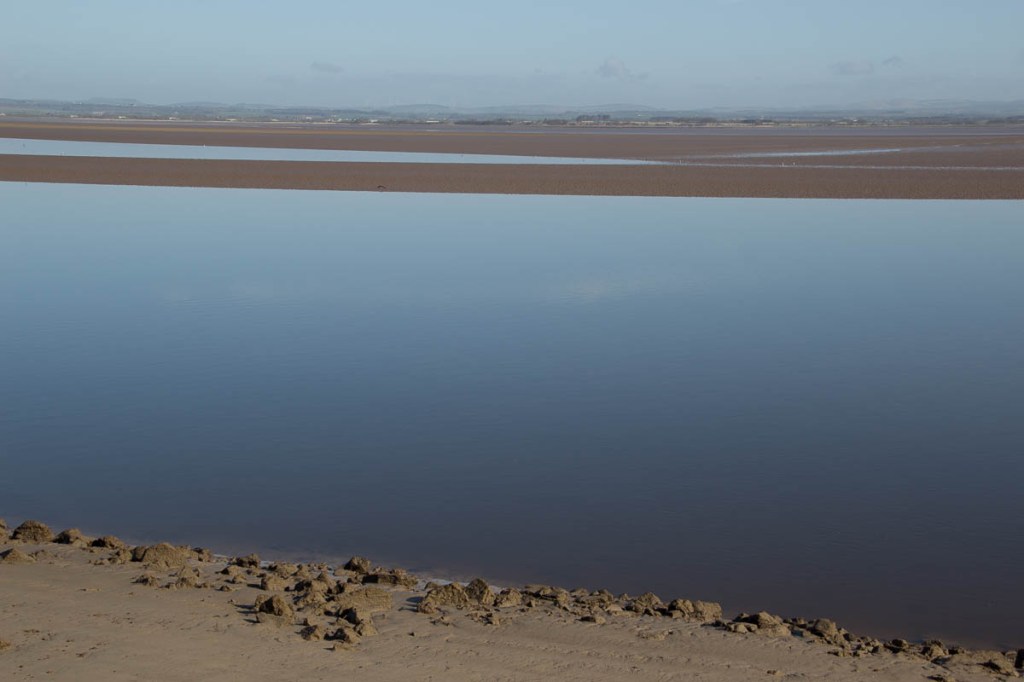
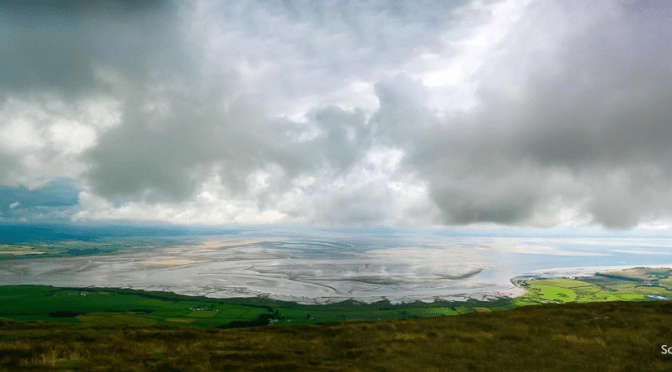
This walk needed a large space with open access and no boundary fences, and at the bottom of the tide, briefly, the Solway has a lot of walking space. The Solway does this by being eternally transitory. It is always in a state between high and low tide. The border between Scotland and England, it belongs to nobody but the sea, the sand and the things that live there. These things need no fences or footpaths. I have been visiting the Solway for years. It is never the same twice. It is a space open to possibilities, and as such, a place of creativity.
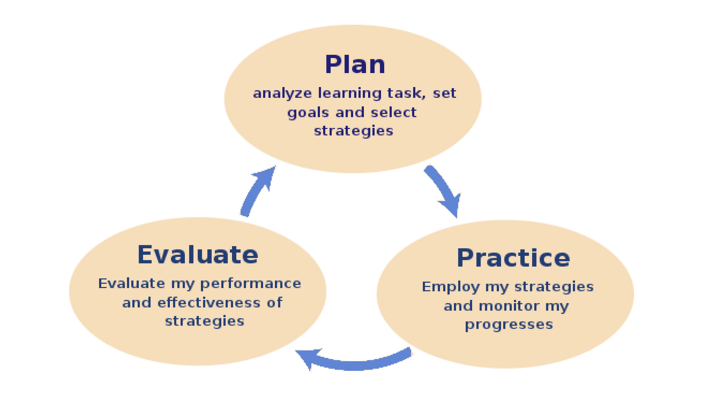
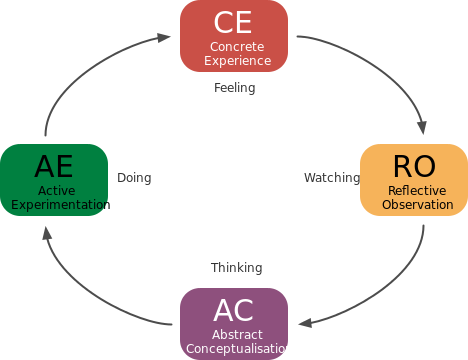
For this walk, the space was needed to recreate an image of an idea I worked on previously on about making art as experiential learning. My background in experiential learning has introduced me to a number of models of how we learn from experience. In all of them, there is an image of simultaneous movement, around a circle and along a line.
Using this idea and image of learning from experience as a starting point I reflected on my own art making and drew a sketch of experiential learning with art making at it’s centre to see how it might look. I wanted to move this idea between artforms. Each artform has it’s own intelligence, and shows things from another point of view. It is used in the arts therapies and is called multimodal working. It is an interesting technique. To aid with this I decided to film the walk.
As a starting point for how a model of experiential learning from art may look, I drew this.
First draft of a model of art as experiential learning.
In this model the looping line is my passage through time, through my life. The central bit is my encounter with art making. When I make art I learn something and this loops out back into my life and informs my next round of art making.
There a sort of sequence to this. I think about making art, then witness and pay attention to what I am doing and my senses when I make the art. The art form, the material of the art making has an intelligence of it’s own which can tell me something. This is an idea from artist and research Paul Carter called the Intelligence of Material (IOM). As part of this I also engage in reportage of my experience, which is what I am trying to do here. Writing and reporting helps me understand what I am thinking. In formal art based research, this is called exegesis, meaning interpreting arcane texts.
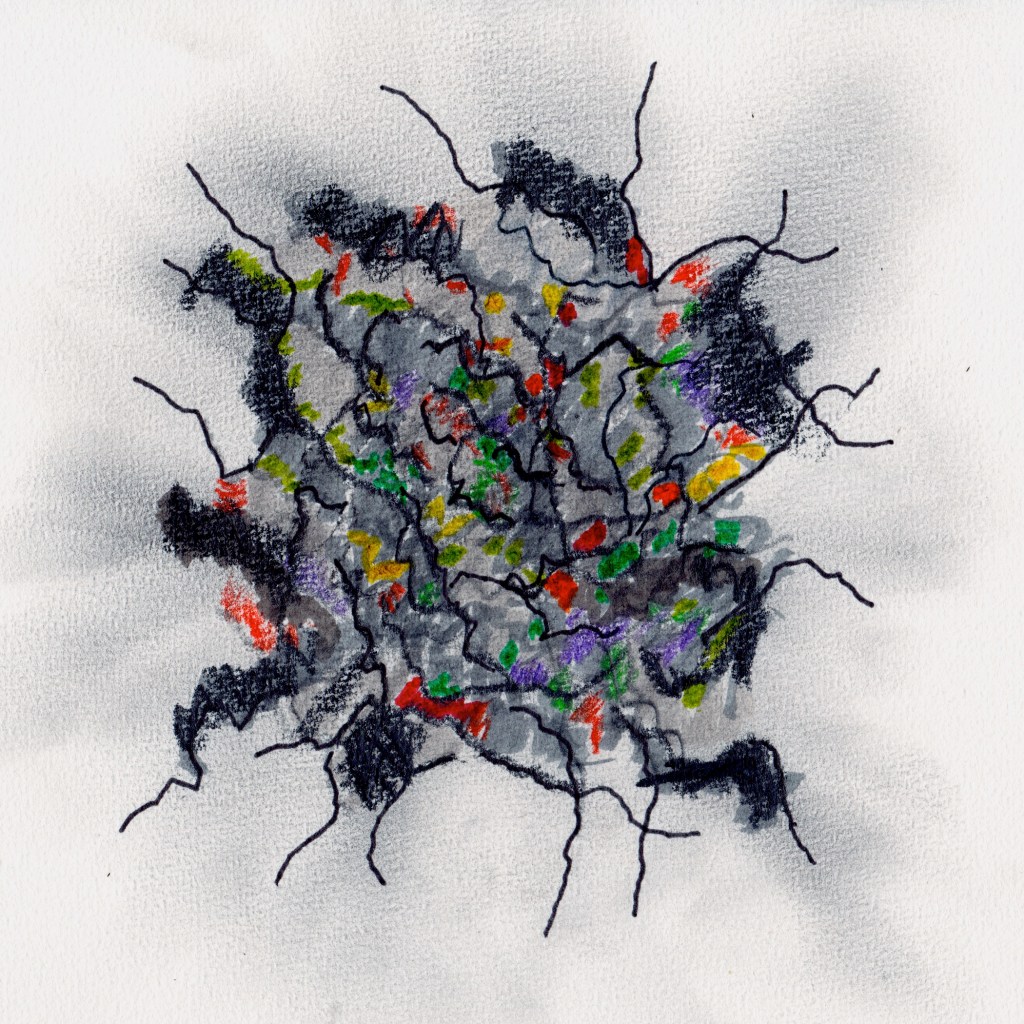
At the time I was also thinking about Rhizomatic Knowledge from Deleuze and Guattari and Bubble Charts as I felt that my experience of art making had an adimensional or three dimensional quality, hence the images at the bottom
But the bit I wanted to work with were the big recursive loops through art-making and back into life, where I did more formal research of artform, ideas, the work of other artists, theories of learning or art-making. So off I went to the Solway, with it’s big unimpeded wide open spaces, always in movement between states, and thus ripe for creativity to walk this image of an idea about experiential learning.
It is difficult to create and analyse at the same time, so my intention was to be in the space and the moment, witness what happened when I was walking as art, then reflect and report later on moving an idea from an image to an act of walking.
Generally what happens is that what I learn through the experience of art making acts like a cascade of dominoes, expanding out into inspiration to new art making, connections to theories and practices of art making and learning and insight into place and personal experience.
Over a series of posts to my blog I want to follow the cascade of ideas and art-making that will come out of the walk, then curate the posts into a themed collection of ideas, practices, artworks, a bit like a magazine. Over time I want to do a series of magazines covering different topics relating to art, experience and the outdoors.
In the next post I want to describe what happened when I did the walk of an image of an idea about art as experiential learning.













 Moving Space