A way of working with art as a form of experiential learning is the idea of the review or reviewing. The simplest version of the experiential learning cycle goes ‘Plan – Do – Review’. Experiential learning nods to Kolb and Dewey but is presented here as a way of learning through doing that is cyclical or recursive. We learn through personal experience in situ. It is in contrast with schooling which tends to value the input of curriculum and output as testing in a linear way.
The capacity to have experience and learn from it is a central aspect of our consciousness. We maybe don’t think of it that way as thinking, writing, talking about things then making plans and acting on them seems so normal and simple. Humans do it in a way that seems a bit different to other living things. It is maybe a blessing and a curse. Art reviews our experience in many ways. But with photography, the act of ‘Taking a photo’ does this in a very immediate and concrete way. The act of framing a shot, on a phone or with a camera immediately reviews how we see the world. Then we make an image and put it in some place other than where we took the photo, with a caption, in the public domain, or a chosen person. This is an amazing thing to do.
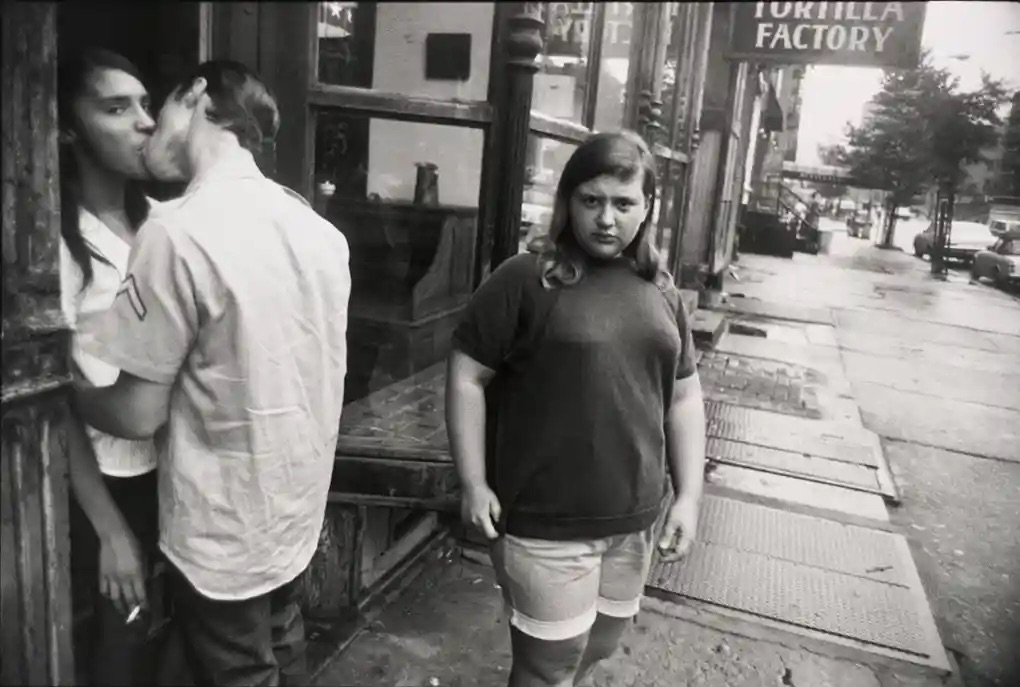
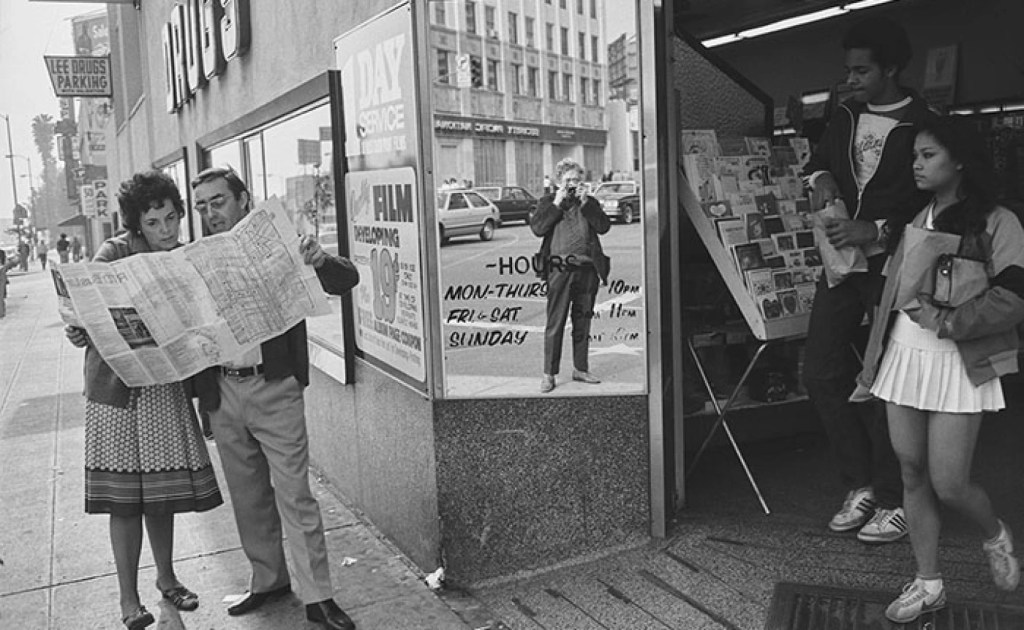
A favourite photographer of mine is the street photographer, Garry Winogrand. I love his images. He took thousands of images in New York and after his death, thousands more were found on unprocessed 35mm films. Of his practice, he said ‘I photograph to find out what something will look like photographed.’ This struck a chord with me. I posted 400 of my favourite photos and the act of sharing still seems strange. I never took them with the intention of showing or sharing them.
I photograph to find out what something will look like photographed.
Garry Winogrand
If Winogrand had vast numbers of images entirely unseen, I kind of figure he may also have some relationship with the act of taking the photograph that is different to the showing the photograph. He talks about photographing as a way of ‘finding out’ about something. It is the process of photographing that has value for him as much as the product, the photograph and the photograph shared. This to me is an act of research. To search for something is an act of finding some specific thing. The French ‘recherché’ means to seek something out with care and add value to it. In art making, we find value in things.
Below are links to Winogrand’s work. He does what all artists do, he engages in an act of reviewing. Below whatever words we find to describe this act, art and photography allow us to review experience.
Fraenkel Gallery- Winogrand Portfolio
Guardian article – Garry Winogrand: the restless genius who gave street photography attitude
This is the story of a journey and arrival at the making of a logo, a small and simple graphic representation of a much bigger and more complex thing. I can see the value in a logo to represent Moving Space. I use one already. WordPress lets you put up a small site icon to help give your site an identity. It appear where the url movingspace.art is displayed at the header of your browser. I use the Copyleft symbol. C Gnu.org, the home of free open source software says..
Copyrights exist in order to protect authors of documentation or software from unauthorised copying or selling of their work. A Copyleft, on the other hand, provides a method for software or documentation to be modified, and distributed back to the community, provided it remains Libre.
I like the idea that I put stuff up on my website, some my own and some other peoples, and you are free to use it but don’t claim it as your own. Credit the author, me or a. n. other. But more importantly make it part of a dialogue or joint venture. The image of an inverted copyright symbol expresses this better than a thousand words, but the words make it more explicit.
Part by design and part by chance I found a simple form which could become a logo without copyright infringements, which could function as textual and imaginal representation and connect art and science, mythos and logos, experiential learning and the arts therapies, and capture in essence what I am trying to do with Moving Space. I see what I do as a thing in process, an adventure, a thing in a state of constant self making, ouroborus, the snake eating its own tail. Recent research on the idea of recursion seemed to capture this and led to me seeing an idea I had already explored in a new light. To me this is the point of the exercise.
The image that emerged is this… i/i and represents the idea of the image of the image. I want to go on to more detail about the ideas that i/i connects together in another post but first I want to talk about the journey.
Long ago I read an article about an article about people and television. It stuck with me. The original article was from the 1990’s and in Christian Science Monitor and called ‘Behind the Glass’. It suggested that people were increasingly seeing a world behind the glass of their TV that some TV viewers judged to be better than life in front of the glass, in the living room, in their life. Thus they sought to emulate life ‘behind the glass’ so as to make their real life on their side of the glass more like the pretend life they saw behind the glass of the TV. The original article suggested this was problematic on the basis that much of the stuff they saw behind the glass was not real, it was manufactured in a TV studio or movie lot. The article about this article, that I read in the 2000’s suggested it had all got worse since the arrival of the internet on our computers. We could have seen this coming it said. Today the influence of life behind the glass of the mobile phone or tablet is similarly critiqued. Some say it is a grave problem, some that it is not a problem at all. I figure it is both. Images, like the imagination, can become a source of good and bad.
Imagination comes from the verb imaginari ‘picture to oneself’, from imago, imagin- ‘image’. This is central to what I am trying to do. To make art as a form of personal research. To make art and pay attention to what you make and what happens what you make it. This connects the arts therapies with experiential learning. In this an image, as a concrete object, a word, a poem, a painting, a dance move, your own or someone else’s can be used to make another image and thus act as a form of re-viewing or reflection or development of the preceding image. This is recursive or iterative. In this is also the idea of a mental image, in one’s imagination. This is the source of the thing you make as art, and the making, the embodiment, has a hand in this as well, literally.
I like working with projects and will usually have several overlapping projects on the go at any one time. I started work on a project I called ‘The Image of the Image’, connected to the idea started above, but ending with a person preferring their online image to their offline image. What struck me was the idea that the image people make of themselves online can, in some cases, become more attractive to them than the image they have offline. The politician sees the TV soundbite as more important than the thing the soundbite was meant to be about. But it became too generalised and unfocused.
It struck me that this idea, the image of the image of the self, was a problematic thing. For example it could be seen in an identification with the subjective projected image of self as opposed to identification with the body, the inhabited lived object that is the self. I became aware of concerns that there is a rising level of body dysmorphia in adolescents. Here and here. It seemed it could at some level to be connected to a relationship between the life lived in the embodied world of the here and now and the disembodied world of the internet going on forever. The suggestion was that it was a new thing.
It got me thinking about the myth of Narcissus. In one of a number of versions Ovid tells of a boy seeing his image in a pool, and fell in love with the boy he saw there but on this love being unreciprocated, turned into a gold and white flower, remaining rooted to the spot. In an earlier version, Narcissus spurns a boy, who curses him to fall in love with his self image in a pool and, because the image is unobtainable, Narcissus kills himself. This story is old, suggesting that it is nothing new. The Narcissus myth is a story of youth.
This appeared to me to be the story of the dangers of the image of the image, the disembodied image on the digital world being preferred over the embodied image in the analogue world. But in art making one is always working with an image of an image. The photographer Garry Winogrand, here said ‘I photograph to see what the world looks like in photographs.’ He sees an image on the street and photographs it. He is interested more in the image of the image than the image. Galleries are full of paintings, images of an image the painter had of the real world or in their mind’s eye. All images of images. I read a lot and the thing that is written is an idea about an idea the writer had. Be it an idea in a book about an idea about how a future world, set in 1984, could display the qualities of totalitarianism. Then I read Haruki Murakami’s 1Q84, in which ideas were developed based on the ideas in Orwell’s book, the aforementioned 1984. Hockney painted ‘A Bigger Splash’ here expressing his delight at living in the California sun after living in Bradford. It is an exuberant image of the image of exuberant poolside life.
But is not just art. For a performance piece I did here I developed this Faux Maths formula to describe the algorithm for a walk.
Where P is the path of the walk, as an iteration or repeat of p, which is each leg as a straight line a-b until this is changed by meeting a person (the m is an aboriginal sign for a person, basically, the bottom mark left in the sand where a person was sitting) in which case the path p changes (the triangle) by n degrees. Although entirely fake as maths, I wanted this to be a symbolic representation of a walk. In my walk on January the 1st I also used a very simple version of this, an algorithm sending me LLLR and ultimately into a closed loop. Maths contains symbolic forms called numbers and formulae. Maths, language, art, all are symbolic. All contain elements of repetition, images of images, ideas about ideas, things referring to other things or nesting within things.
At the end of the last post I encountered contact with the capacity for crows to engage in recursive reasoning. This piqued my interest and I wrote about recursivity in experiential learning and commented on it’s occurrence in a wide variety of settings. In maths recursion featured in a maths controversy. A book was written called Principia Mathematica attempted to prove all arithmetic from basic principles. But a mathematician called Goedel proved using maths that there are mathematical statements that are incomplete ‘that are true but unprovable, and perhaps even more surprising, that said the system of axioms will lead to a proof of its own consistency (lack of contradictions) if and only if it is itself inconsistent.’ Here. So a form of recursion was used by Godel in his ‘Incompleteness Theorum’ which could prove itself true by proving itself false through an act of recursion by referring to itself, a thing considered heretical to maths. And you thought modern art was weird.
The research on recursion proved very fruitful. Some of it was quite demanding intellectually. I reconnected with maths and came to see it as a language I could understand. I started to see recursion everywhere. In accounts of consciousness. In accounts of creativity and imagination. In accounts of human and animal evolution. In the simplest and most grand acts of art making, in the works of great literature and music and Fine Art, in performance and theatre. It was intrinsic to experiential learning. It was central to infant development and attachment. I came to believe it was central to human evolution through attachment and teaching and toolmaking as an inseparable trinity of familiality, sociability and teamwork. It is a way of seeing things as being simultaneously both single entities and things in process, naturally developing hierarchies of complexity providing simultaneously a global and a granular perspective. I think it can spin tales of fascination, creation myths and literature, create mathematic formulas that allow us mastery over the material world, enable music that will make you weep, it can move matter.
But it was also to be seen in ideas about echo-chambers on the internet and in conspiracy theories and in accounts of totalitarian systems. It could be seen to feed into the inter-generationality of abuse. The easiest way to become an abuser is to have been abused. But it can spin tales of deceit, make men and women dance on tables in the Capitol on January the 6th, and send people to the gas chambers. Recursivity can produce infinite loops from which there appears to be no escape. Cancer could be seen as a form of recursive growth. Unending. Extinguished by death of the organism. The climate emergency a form of cultural cancer. The myth of unlimited economic growth. Extinguished by the extinction of the human line.
I saw this on YouTube. By William Burroughs…
And that line ‘…evolution did not come to a reverent halt with the arrival of homo sapiens…’ stopped me in my tracks. So very funny. So very true. I became interested how this idea might work through a serialised story at a poetry night I attend and started writing and through developing the story I came to see this fictional scenario was actually worryingly realistic and that this may be the inevitable outcome. The story remains unfinished. It frightened me. Maybe the Earth wants rid of us. The Goddess in the story is driving global warming to rid the world of man. There are some interesting ideas about that suggest fiction is a way of working through ideas about the big issues that facts and figure fail to achieve. Wagner is good for gender issues, Orwell for the politics of totalitarianism, Marquez for the crossover between magic and realism.
In the story I worked with the goddess as the one facilitating the end. The Goddess says to Eva the human protagonist…
“I am not who you think I am. I am not lightness and sunshine. I was once but I am no longer. I am Eumenides, I am Athena, I am Banshee, I am the Furies. I am the Maniae, I am black Kali the destroyer. I am Ran the Giantess of the ocean. I am Hel the Queen of Death.
I am the perpetrator and purveyor of global warming. It is my act of homeostasis. I bring global genocide, infanticide, regicide, patricide, sapiocide. I want the end of man. I want man cooled and comatose. I want man unevolved and extinct. I want man dead.”
And creativity and imagination is, I think, behind it all. It is our curse and our blessing. We can imagine unlimited growth but not how to prevent it becoming cancerous. Recursivity is many things, but I have come to believe it is central to our imagination. Our imagination is limitless, unbounded by the material objective world. This makes it at once liberating and dangerous. I came to see i/i as a symbol of imagination. The ability to make an image of an image, make an idea from an idea. But unbounded imagination is problematic. We can get lost in such a vast world, believe the world is flat, or that Trump won the election or that we can ‘Take back control’ or that nobody will notice if people put vast numbers of people into camps to be ‘re-educated’ again. I can get lost in thinking about thinking, writing endless blog posts that nobody reads.
Through my discursion around recursion, prompted by an article about how crows are a clever as people, I have found a way that makes all my wanderings make sense. But that sensibility is subjective. It works for me. Recursion is a form that cannot be expressed as one word. At heart I am a nominalist. I have come to realise that all we experience are symbols of some deeper reality. Words point the way but are never the destination. The path is made in the walking of it. The map is not the territory.
A favourite quote of mine is from Orson Welles who said “The absence of limitations is the enemy of art.” My hiatus filled with reading and art making related to recursion has acted to put some brackets around the overly open and discursive path of the last few years. Like my self-imposed and entirely amateur and anti-academic PhD has ended. Oddly on my 65th birthday. My plan, stated at the end of my last post, to work with artform to explore the experience of exploring recursion has taken longer, and generated more words than I expected, but has been fascinating. All I have to show is a new logo of bracketed imagination, but getting there has been fruitful, and instructive. The symbol, the image, the imagination, is everything. One picture is worth a thousand words, but without the words there would be no symbol. The symbol emerged from a long journey. So it could also be a symbol for adventure, the thing that happens before you arrive. Art is a journey, a thing in process, made material momentarily by the flash of an image, a painting or a poem left on the trail to show the traveller where they have been. So i/i may change but for now it works. I will ramble on.
Not all those who wander are lost…
Tolkien
Header image courtesy of thisisnthappiness.com – ‘art. photography, design, dissapointment’
In my work in the USA I became aware of and interested in archetypal ‘Trickster Stories’ of Coyote, Rabbit and particularly Raven and used them in my Adventure Therapy work. Tricksters are seen as wise fools who can both cause trouble and be foolish but also bring great wisdom and change. They do this by being clever, not strong. In my dramatherapy training, we often used myths, and the oxymoronic power of the trickster was seen as an important aspect of dramatherapy practice, in that seemingly simple or even foolish actions can be very therapeutic. I also found that my work could be undermined by being too clever.
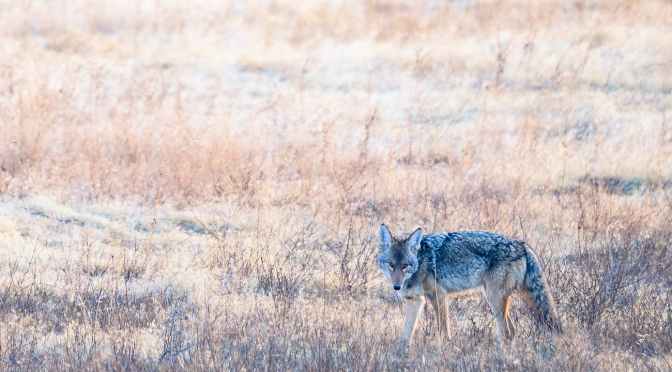
Recursion is taken to be a sign of high intelligence, particularly in relation to being able to have mindsight, the ability to perceive in your mind, some thing in another persons mind. This is an extension of the idea of embedding one thing in another. It struck me that this is a quality of the trickster. Raven is a trickster in North America, in Australia, Crow is a trickster. Another trickster in America is Coyote. I have a great memory of a story by Mark Twain in … about coyote, (or cayote as Swift writes) about his trickster qualities. It goes thus…
‘But if you start a swift-footed dog after him, you will enjoy it ever so much—especially if it is a dog that has a good opinion of himself, and has been brought up to think he knows something about speed.The cayote will go swinging gently off on that deceitful trot of his, and every little while he will smile a fraudful smile over his shoulder that will fill that dog entirely full of encouragement and worldly ambition, and make him lay his head still lower to the ground, and stretch his neck further to the front, and pant more fiercely, and stick his tail out straighter behind, and move his furious legs with a yet wilder frenzy, and leave a broader and broader, and higher and denser cloud of desert sand smoking behind, and marking his long wake across the level plain! And all this time the dog is only a short twenty feet behind the cayote, and to save the soul of him he cannot understand why it is that he cannot get perceptibly closer; and he begins to get aggravated, and it makes him madder and madder to see how gently the cayote glides along and never pants or sweats or ceases to smile; and he grows still more and more incensed to see how shamefully he has been taken in by an entire stranger, and what an ignoble swindle that long, calm, soft-footed trot is; and next he notices that he is getting fagged, and that the cayote actually has to slacken speed a little to keep from running away from him—and then that town-dog is mad in earnest, and he begins to strain and weep and swear, and paw the sand higher than ever, and reach for the cayote with concentrated and desperate energy. This “spurt” finds him six feet behind the gliding enemy, and two miles from his friends. And then, in the instant that a wild new hope is lighting up his face, the cayote turns and smiles blandly upon him once more, and with a something about it which seems to say: “Well, I shall have to tear myself away from you, bub – business is business, and it will not do for me to be fooling along this way all day” — and forthwith there is a rushing sound, and the sudden splitting of a long crack through the atmosphere, and behold that dog is solitary and alone in the midst of a vast solitude!’
In this act I think coyote shows mindsight. He can con the dog. To get the dog alone and humiliated in his domain, coyote has to know how the dog will think. He embeds himself in the dogs head, thus coyotes could be seen to display the power of recursive thinking, with no language in sight. What’s more, is the domain of this Trickster is the wild outdoors, the land uninhabitable by man and dog, dog being a domesticated beast. Same as rabbit and raven. Trickster is an experiential learner. Mark Twain also said, on being asked to reflect on things in his long life he was grateful for replied “I am glad my schoolin’ never got in the way of my learnin’.” Twain is suggesting experience was his teacher, that school teaching may be an impediment.
But the Trickster appears in many places. The wise fool appears the fool to learned or people who think themselves clever but the Trickster uses this to trick them. Even as I write this I am watching Colombo the cop casually con an oh-so-clever murderer (in this case an ambitious politician) into making a mistake that will have him show himself as a fool, by himself appearing to be a fool. Columbo is even scruffy and scrawny and dishevelled like coyote. Columbo is the wise fool, he is coyote transposed into contemporary culture. In the UK this could be Reynardine the Fox.
Columbo leads this smart city guy out into the desert and makes a fool of him.
In Mind of the Raven here Bernd Heinrich talks about how in any bit of forest or mountain there live ravens who have a pecking order and an established network of intimate, kinship and social relationships. But when young ravens fledge, they do not understand them, or more specifically tend not to adhere to them. Young ravens are trouble. They meet fledglings from other family groups and form gangs. In an established settled feeding site, the gang of young tearaways will turn up, steal the food and take off with it. Our local rooks work as a small group to turn over the turf on traffic islands, leaving all the moss pulled out, often over periods of days. Rooks are very well organised which means unorganised or uncooperative birds are disruptive.
I see this too locally, after fledging, when our young rooks are kicked out of the family nest we have found them sitting in disconsolate gangs at the bottom of our garden, looking sorry for themselves in the rain. Literally, they are teenagers hanging at the bus stop. Troubled teens. Tricksters all. The band Elbow also observe this trickster. In their song ‘Lippy Kids’ Guy Garvey writes in his wonderful poetic way about lippy kids settling like crows. Watch the keyboard player do the trickster thing and use insulation tape to make the old keyboard arpeggiate without an arpeggiator latch.
Lippy Kids on the corner again Lippy Kids on the corner begin Settling like crows Though I never perfected the simian stroll The cigarette scent it was everything then
Do they know those days are golden? Build a rocket boys Build a rocket boys!
One long June I came down from the trees And kerbstone cool You were a freshly painted angel Walking on walls Stealing booze and hour-long hungry kisses And nobody knew me at home anymore
Bernd Heinrich talks about he is unable to categorically say what happens to these young birds in the long term. For our local rooks who have a much larger social set, they form crowns in the move from spring to summer. A tower of circulating birds will appear over the roost. Clearly, there are more birds that inhabit the roost. My belief is that this is a way of rooks from different roosts, particularly fledglings, mixing and meeting birds from other roosts. The gangs at the bus stop seem to dissipate around this time. Given a need for the mixing of the gene pool, this would make sense. Also if older birds move over to a new social set, then it could be knowledge and culture is transferred, but this is pure speculation and wishful thinking.
A Crown of Rooks
If the trickster does display recursive features, even down to the circulating crown of rooks, then the trickster and thus recursion at a social level may have the following archetypal qualities. The trickster is young, it is an outsider, a thing of the wild, it is a troublemaker but a source of new ideas and new life, it brings risk but in the long term diversity, in the short term it appears elusive and contrary, but in the long term it settles into a perceptible pattern. If Columbo is the trickster archetype coyote then he is also socially inept, scruffy, impoverished, appears inept and a bit of a clown, but fully ten steps ahead of everybody all the time, he is a bit of a con man, he leads you on to your own demise, in the short term his actions seem strange, foolish, incomprehensible, but in the long term the pattern emerges and he gets his man, or rather he facilitates the means by which his man get himself. Tricksters are facilitators. As con artist the trickster facilitates their own interests, and as the hero, they facilitate the interests of other people. Either way the Trickster is never neutral, always brings change, for good or bad.
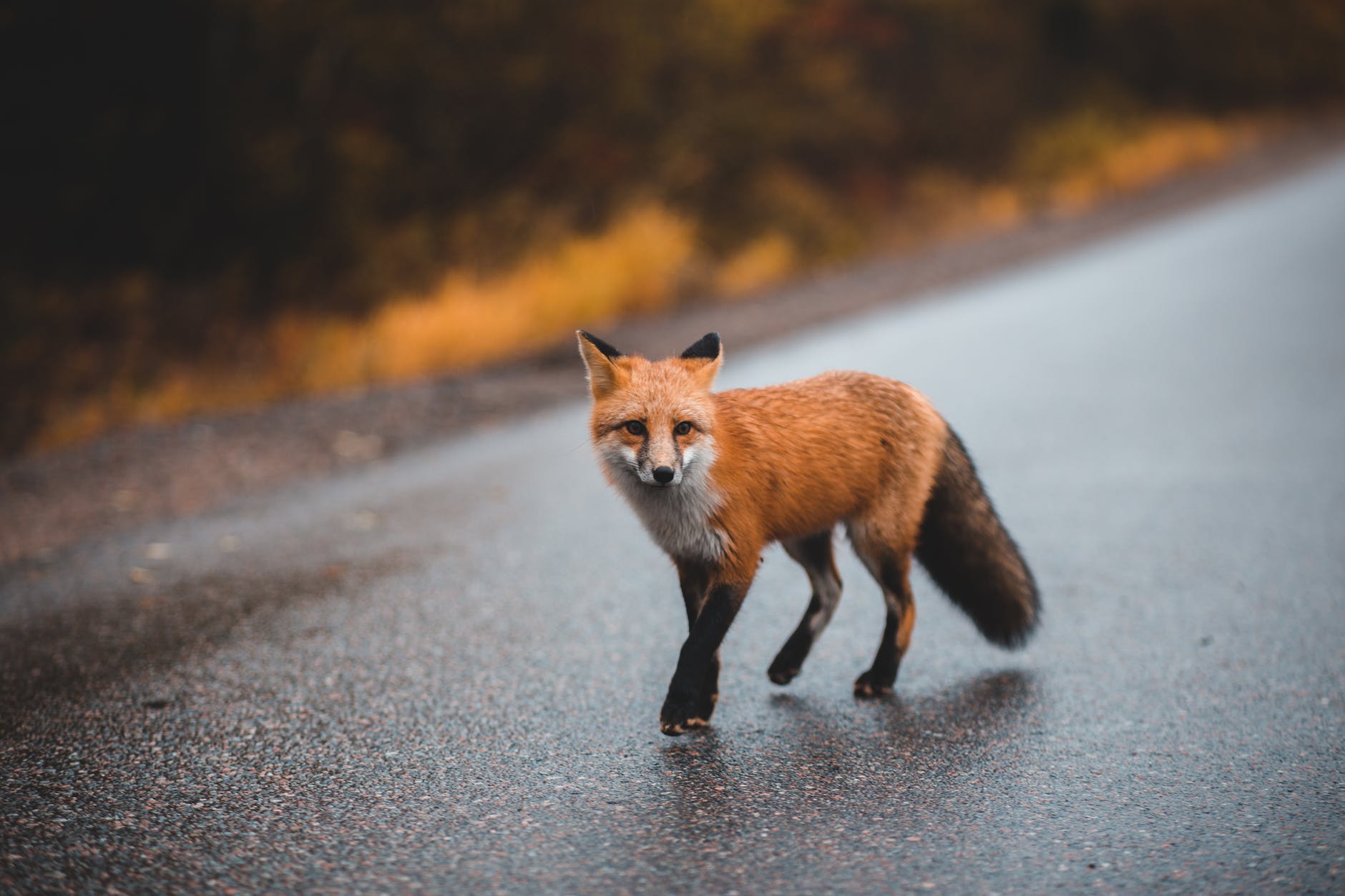
Red Reynardine the Fox the UK Trickster- Photo by Erik Mclean on Pexels.com
In developing Moving Space and my own arts practice I was greatly influenced by work by the arts therapies and arts education doing art as research. It was a revelation. Driven by a need to provide quantitative evidence to demonstrate efficacy of the arts therapies was vital to their being licenced and peascribed. They are still unable to provide the gold standard double blind quantitative evidence. This can be seen as evidence of inefficacy, or that absence of evidence is not the same as evidence of absence, or that art making is a creative act so you cannot intrisically say what an outcome is and test it. One suggestion is that art as research is performative research, and an adjuct to quantitative and qualitative research. Indeed, Brad Haseman an artist resercher wrote ‘A Manifesto for Performative Research’ in 2007 avaialable for download here.
When I trained at Central School a therapist called Shaun McNiff had published his first book ‘Art as Research’. It was a lone voice. Now it is one of many. The idea of art making as research, to me in practice, seemed obvious. Making art facillitates finding stuff out about my experience of the world. But ideas about research, beyond personal practice, make the idea less obvious, particularly when judged alongside the hard evidence needed for quantitative research. The practice is also confusingly know by many differesnt epithets, practice based research, studio research, performative research, practice led research, art as research, art based research etc etc. One book that influenced me greatly was ‘Practice as Research: Approaches to Creative Arts Enquiry’ by Estelle Barrett and Barbara Bolt, two Australian artist researchers, here on Amazon.
For a lot of this site I have refered to art as research, it was part of the ‘site identity’ on WordPress, the strapline inder the site name. On reflection however I think art as experience is more accessible than art as research. I think they are interchangeable. Art making can be experienced as personal research. But explaining ‘art as experience’ in which one learns something through experience…’, whilst to my mind is intercahangeable with ‘art as research in which one learns something…’, the latter takes more explaining. Indeed in 2007 Estelle Barrett wrote the article ‘Experiential learning in practice as research: Context, method, knowledge’ available for free download here.
So… on reflection I have made all my ‘art as research’ references into ‘art as experience’ for ease of explanation and accesibility. In my heart of hearts this sound like a slight sellout. I liked the kind of punk feel to the idea of art as research in the kind of DIY way that punk extolled. We only need three chords and some attitude to shake the world up.
But the work done by arts based researcers, in the arts therapies and fine art is now very serious stuff, and changing the arts. So I believe art making as personal research, ‘art as research’ is the same as art making as learning through personal experience ‘art as experience’. But for ease of accessibility of explanation, to themes, and practice, I have changed ‘art as research’ to ‘art as experience’ throughout the site. If I have missed any, let me know. I will also continue to tag posts with experiential learning and/or art as research depending on content and context.



 Moving Space