Posts linking to realted, useful and informative source material including work of practicing artists, theorists and commentators, research of anecdotal evidence, magazine or news items.
Everyone knows that arithmetic is true: 2 + 2 = 4. But surprisingly, we don’t know why it’s true.
By stepping outside the box of our usual way of thinking about numbers, my colleagues and I have recently shown that arithmetic has biological roots and is a natural consequence of how perception of the world around us is organized.
Our results explain why arithmetic is true and suggest that mathematics is a realization in symbols of the fundamental nature and creativity of the mind.
67 million people currently inhabit the United Kingdom – but what do we know about the original, first Britons? It’s no secret when looking back into pre-history that it was a time of mass migration for animals and people alike, but who were our early inhabitants, and what can we learn about them?
In this episode of The Ancients, Professor Chris Stringer returns to the podcast to shine a light on this mysterious part of prehistory. Looking back across millions of years, Chris helps us delve into our distant ancestors’ pasts, and illuminates what they were really like. Looking at the latest archaeological and scientific research, what can we know about the first traces of hominin activity on the British Isles?
At the time of writing this post I am about 2 months into researching recursion through reading stuff and making stuff. It has been very fruitful. Doing and describing doing are still at war, but the further I go down the line of enquiry the less I trust words. The more I believe they are a trap. Words work for persuasion not description. I feel like I need to take heed of the title of the 1993 album by The Fall ‘Perverted by Language’. I feel like to be accurate, my research output should always teeter on the edge between the divine and disaster and be like this…
The Fall – Tempo House – From ‘Perverted by Language’ 1993
Part of this realisation came out of a podcast I listened to. The poem below, short but sweet, came out of the podcast I listened to. Here. The poem about the podcast goes thus…
Nominalism
I am disappointed to find there is
A name for what I believe
In the podcast Jody Azzouni, poet, writer, philosopher and Professor of Philosophy at Tufts University NY talks about nominalism, a form of philosophy proposing that words and numbers are made up things pointing to some real thing. Words and numbers are real in name only, they are titular and nominal. Before the podcast, I did not know there was a name for this, but on listening to Jody I was struck that this is what I believe. I found it hilarious that there was a name for the thing that said that the things in the world have no names. My belief system boiled down to one word. I felt at once ruined and relieved!
In nominalism, words and numbers are post res to reality, like a map is to a territory or a signpost to a destination. They are like what Fedinand de Saussare called the ‘signifier’ to the underlying thing, the ‘signified’ except Saussare meant they were both internally constructed, until Louis Hjelmslev moved the signified to become some objective thing, which is where it has stayed since. This makes nominalism interesting to me. To see the real thing it may be useful to forget its name. This changes the thing because it changes how you perceive its reality. Claude Monet, the painter said “To see you must forget the name of the things we are looking at.” It is in this sense that I encounter nominalism as a guide for art as research. I ask what would happen to this thing if I encountered it as if it had forgotten its name? What then would it have to say? I would have to say some new thing about itself.
To see you must the forget name of the things we are looking at.
Claude Monet
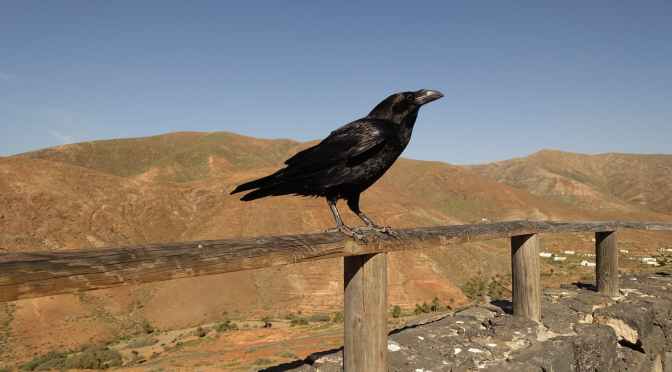
In reality, we could even be seen to construct even the object. I listened to this podcast here. In it Ed Yong talks about how animals and humans construct their world. In constructing our world, various philosophical ideas talk about sense data, qualia, and consciousness as hallucinations, but Yong talked about ‘Umwelt’. Translated from German it means ‘environment’ or ‘my world’ and describes how an animal constructs their perceived world from the senses regards the world it inhabits. So how we sense determines what we perceive. My local woods experienced by me would be different to the woods experienced by a mole or vole, or crow or crayfish. This fits with ideas about art making as an embodied experience rooted in the senses. It would fit with what Monet says. It would fit with what I experience through the intelligence of the materials I use in art making. I experience them sensationally and this crosses over to me becoming more attuned to experiencing the world directly through the sensations of art making. They are inseparable. I have a favourite quote from the progenitor of quantum mechanics Werner Heisenberg, who says “We have to remember that what we observe is not nature itself but nature exposed to our method of questioning” My contention is that with art making as a method of questioning, our mode of research physically changes the world we encounter. We make some new thing come into existence. Our personal subjective experience is central. This renders art as research unavailable for quantitative research. Art is performative and subjective research. But it introduces art as an adjunctive companion science. We can make a subjective form of an objective process, the subjective object, the art we make.
We have to remember that what we observe is not nature itself but nature exposed to our method of questioning”
Werner Heisenberg
So in making some new thing come into existence from our thoughts, our ideas, and our sensational encounters with the world, we make new things. We perform an act of poiesis. This produces a subjective object, an oxymoronic thing of magic realism. We make our research finding personal. This reminds me of the breathtaking opening paragraph of Gabriel Garcia Marquez’s ‘One Hundred Years of Solitude’ about the wonder of the world. Marquez writes ‘ Macondo was a village of twenty adobe houses, built on the bank of a river of clear water that ran along a bed of polished stones, which were white and enormous, like prehistoric eggs. The world was so new that many things lacked names, and in order to indicate them it was necessary to point’. Marquez is saying things you make don’t need names. They exist without them. If we have experience and make it as art, words become secondary. The thing we make can speak for itself without words. This is the essence of art as research. We can show what we found through a physical act, we always don’t need words.
The world was so new that many things lacked names, and in order to indicate them it was necessary to point.
Gabriel Garcia Marques
This page is an attempt to describe the direction taken by my work generally and by the exploration of recursion that follows. What follows is a summary of this direction as a poem. The poem goes thus…
Companion to the James Bridle interview post below, about different kinds of intelligence. Supports the idea of intelligence and recursive thinking, mindsight, emerging out of sociability.

 Moving Space