Category Archives: Source Material

Posts linking to realted, useful and informative source material including work of practicing artists, theorists and commentators, research of anecdotal evidence, magazine or news items.

Overwhelming

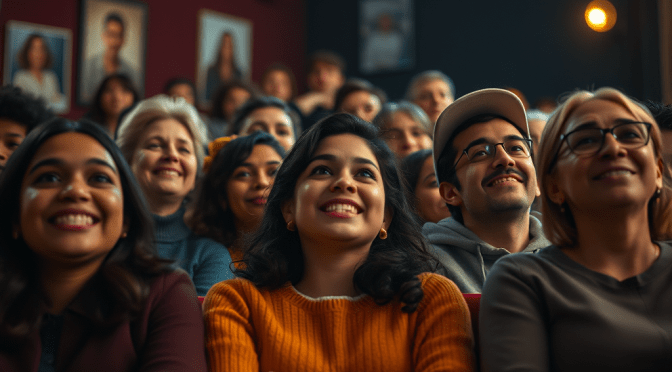
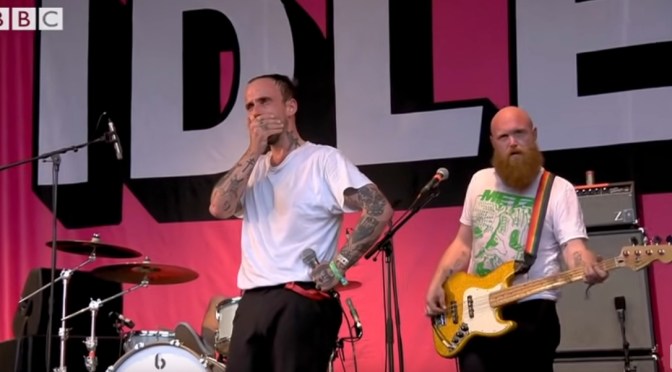
This post is a complement to the previous post here about the physical and emotional response to viewing great original art. We could say art is a collaboration between our phenomenal and emotional world and as such, as sentient beings, one would assume this may have the capacity to connect with us phenomenally and emotionally. In simple terms, it can move us. The last article about scientific evidence of the impact of seeing an original painting reminded me of a track by Idles, shown below which is a tongue-in-cheek defence of being moved by art. Stendhal Syndrome is a description of a reaction to viewing art in which a person faints or becomes delirious. It is named after the writer Stendhal. The man with the beard moving through various art galleries is Adam Devonshire, Idles bassist.

In 1817 Stendhal had a visceral reaction to being in Florence surrounded by exquisite art and architecture.

He commented “I reached the point where one encounters celestial sensations . . . Everything spoke so vividly to my soul. Ah, if I could only forget. I had palpitations of the heart, what in Berlin they call ‘nerves’. Life was drained from me. I walked with the fear of falling.”

The syndrome is not a diagnosable illness but is a phenomenon described by an Italian psychologist in 1979 based on their experience of tourists responding to art, particularly in Florence.

In an article in The British Journal of Psychiatry by Gary Woods here Joe Partridge, songwriter and singer for Idles is quoted as saying that an experience in a Valencian gallery in Spain, rendered him awestruck, tearful and ‘captivated to the point of nausea’.

When I lived in London and visited the National Gallery and the National Portrait Gallery regularly I recall having a strong emotional and embodied reaction to seeing the actual brush strokes of artists like Monet and Turner. It did make me feel lightheaded like I was going to swoon. It surprised me.

Maybe the difference between the painting and the reproduction is the knowledge that one is witnessing the embodiment of the moment the paint was put on the canvas. In a reproduction, one cannot perceive this. The experience of seeing the reproduction is lesser, in that knowledge accompanies sensation and perception that tells you this is a copy of many copies. The original seems more like a live experience.

Joe and Idles value the live experience and in this video below towards the end, Joe is overwhelmed by the experience of being there. Enjoy this astonishing performance.

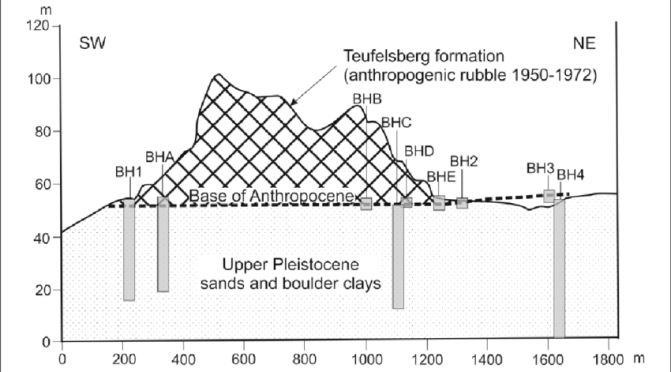
The Teufelsberg Formation

The Devils Hill.

The caption says…’The Teufelsberg Formation was built of war rubble including concrete, brick, clinker, rock, fly ash, slag and solid chemical waste, deposited between 1950 and 1972, forming the highest elevation of Berlin. Thin Holocene deposits may locally separate the Pleistocene and Anthropocene units.’

https://en.wikipedia.org/wiki/Teufelsberg

The allies raised Berlin in 1945. I watched a PBS thing which showcases how the cities of Le Havre, London, Berlin and Warsaw were destroyed during World War II and then rebuilt, using archival footage, visual effects and first-hand witnesses who contributed to the cities’ rebirths.

I did a search and came across the header image of the substrate of the Holocene, overburdened with a man-made hill 80m high of the detritus of war, put there to make space to rebuild Berlin, and if moved industrially, replete with the dead, humans, children, men and women, and it was quite shocking.

https://www.researchgate.net/publication/311093683_Scale_and_diversity_of_the_physical_technosphere_A_geological_perspective

At the moment I am trying to write an academic thing about art as research, and the theme is the ideas of the New Materialists, Donna Haraway, Karen Bard, Rosi Braidotti and my favourite Jane Bennett, you know, Gordons sister.

There is a lot to it but the hu-man centred world, The Anthropocene, features highly. Like, the idea that, by being just centred about ourselves as hu-men in a world made of inert matter and dumb animals and even more dumb plants, protista and protazoans, all there for our taking, might be a bit of problem. Humanism, us at the centre of the cosmos, might be best left behind through an idea of post-humanism, where we share the world with the more than human world and vibrant matter, makes sense.

But that line in Hi Ren… “You got to kill you if you wanna kill me…” rang a bell. If bad Ren is the one making us make war, and making a wasteland of the world, then bad Ren is right, you got to kill you if you wanna kill me… we will kill ourselves short term to live with ourselves long term. I s’pose that is evolution, seeing as 99.9% of all living species are now dead. If we go post-human will we, by will of our newly shared more than human world nature, just become a man-made hill 800m high of the detritus of war and call it evolution. Like Woody Allen said, “I’m not afraid of dying. I just don’t want to be around when it happens.”

A theme developed in post-humanism, is that we have to find a way of ‘Staying with the Trouble’ ie the trouble we have made for ourselves. We need, like Ren shows us, to have a word with ourselves.

And on hearing Ren I remembered a thing I did as a performance that showed the act of co-evolution, two species evolving independently to arrive at the same place. I wrote this

Two Figures:


At 64 and over time
Grit in wind and water
Erosion and corrosion
Remove matter
To show what matters

Two figures emerge

In black and gold
Millstone grit

Unsure what they are at first
Until a diptych
Two parts
Connected
Remain

The First Part

As the end of life
shines brighter than birth
A hard core
Of misanthropy
Takes hold
And says

‘I am
Looking forward
To leaving this all behind
All that we have done to this world
It’s your’s
You can keep it

Too many kinds of phones
Too many kinds of coffees
Too many kinds of milk
Too many choices
Enough
We are consumed

Evolution did not halt
With the arrival
Of Homo Sapiens

Finish me before the extinction event
It is unfair I know
But children,
It is your’s
You can have it.
I don’t care any more

The Second Part

But
Sensation
I will miss
The sound
Of children coming out of school
Or walking
At the end of summer
And hearing
Joni Mitchell singing..
Blue
Drifting out a car stereo
In a jam
Blue
The colour of the sky
My daughters hand
My wife arms
Wind at my back on the Pennines
Waking up outdoors
Sleeping under canvas
The smell of coffee
The scent of cut flowers
I will miss my body
I will miss you
I will miss the world
I will miss this

Hi Ren

Came across this…

It is at once hard work and relaxing, at least at the end, where Ren does relax. It ‘mak mi wep’ as they say.

Posting regularly evades me ‘cos I feel like I have to put some thing up that ticks boxes for hits or likes or comments, but, it induces angst, and like Ren at the end learns to relax, go with the flow and see where we go, I’ll be more relaxed about posting and just put up stuff and see what happens.

This tho’. Man, it’s a work of art, and angst, and so even as I write and find myself with Ren again, the ocean from whence we came makes me wet.

This tho’. Man it works at so many levels. It is black comedy, virtuoso performance, pain and perforative, in it’s sonics and it’s lyrics, switching from the bible to Brecht to Shakespearic street talk to confessional to rap at it’s best and British, the kind of multicultural mixed race mixed gender mixed ability thing we do so well, like all the other places that do that well likewise.

And he’s Welsh.

So Ren, Diolch yn Fawr.

Reworking Experience Through Art

Recent work by Scott Von Holzen from my Worpress feed. The words sung by Delores… ‘

But you see, it’s not me
It’s not my family
In your head, in your head, they are fighting
With their tanks and their bombs
And their bombs and their guns
In your head, in your head, they are crying

In your head, in your head
Zombie, zombie, zombie-ie-ie
What’s in your head, in your head?
Zombie, zombie, zombie-ie-ie-ie, oh

…. seem very apt at the moment.

Scot reworks the words through visual art.

His blog post includes other reworkings, covers of the song, as examples of this done through music.