Posts linking to realted, useful and informative source material including work of practicing artists, theorists and commentators, research of anecdotal evidence, magazine or news items.
Of Mans First Disobedience, and the Fruit Of that Forbidden Tree, whose mortal tast Brought Death into the World, and all our woe, With loss of Eden, till one greater Man Restore us, and regain the blissful Seat, Sing Heav’nly Muse,that on the secret top Of Oreb, or of Sinai, didst inspire That Shepherd, who first taught the chosen Seed.
Mos Def – Fear not of Man 1999
All over the world hearts pound with the rhythm Fear not of men because men must die Mind over matter and soul before flesh Angels hold a pen keep a record in time Which is passing and running like a caravan trader The world is overrun with the wealthy and the wicked But God is sufficient in disposing of affairs Gunmen and stockholders try to merit my fear But God is sufficient over plans they prepared Mos Def in the flesh, where you at, right here On this place called Earth, holding down my square.
A great article from the wonderfully named book website Book Riothere. On the site the author Chris M. Arnone says of their choice. ‘The final result is a list of great poetry books, all focusing on different aspects of mental health, and most are from poets who are relatively unknown to readers.’ To visit click button below.
Step out of the idea that poetry is written to be read by other people. Write so only you see it. The benefits start with you thinking about some thing you want to write about. You commit an intentional act. All art is intentional and you can write with the intetion to to keep your art making private. The next benefit is you see your words, your ideas, your thoughts as if on the stage of the empty page. You become the audience to your own drama. You have permission to be a queen.
This will not open a can of worms.
The act of writing will not cure your ails, nor will it unlease a hidden demon. Shaun McNiff, Arts Therapist, says the benefits of art making emerge out of many small acts of witnessing. In writing and seeing your words you witness yourself. They say mad people talk to themselves. This is not true. Sane people talk to themselves because they realise it is the world that is mad. In talking to yourself you get a sensible converation. Try and remember to write when you feel like it or need it. Don’t sweat if you don’t write for a week. Get a book or an app to write in and use it at will.
Treat your art based outing as if a journey.
On the journey you will spend time on a well trodden path or go cross-country, you may bushwhack. The good days are the trodden path. The anxious days are when it your life goes off-track and into the wilderness. When you are in the wilderness, leave trail markers. For a trail marker you clip a tree with an axe to show where you have been, to better find your way back should you get lost. These markers will be your private writings. They are little clips of words that mark your trail. This is what you put in your book or app.
Read back what you wrote in privacy.
Your word clips, your poems, show you where you have been. You witness yourself. This may help you descide where next to go. Commit to privacy by buying a notebook with a closure, or close it with a hair band or elastic band. Use this act to reinforce your intention. This is intended for your eyes only. When you read the content of your book, just observe what you see. Make, where possible, no judgement. If you do. Write it down and witness your judgement. This is like meditation. It is Intention, attention, attitude. The intention is to write, the attention is your witnessing, the attitude is one of witnessing yourself not beating yourself up.
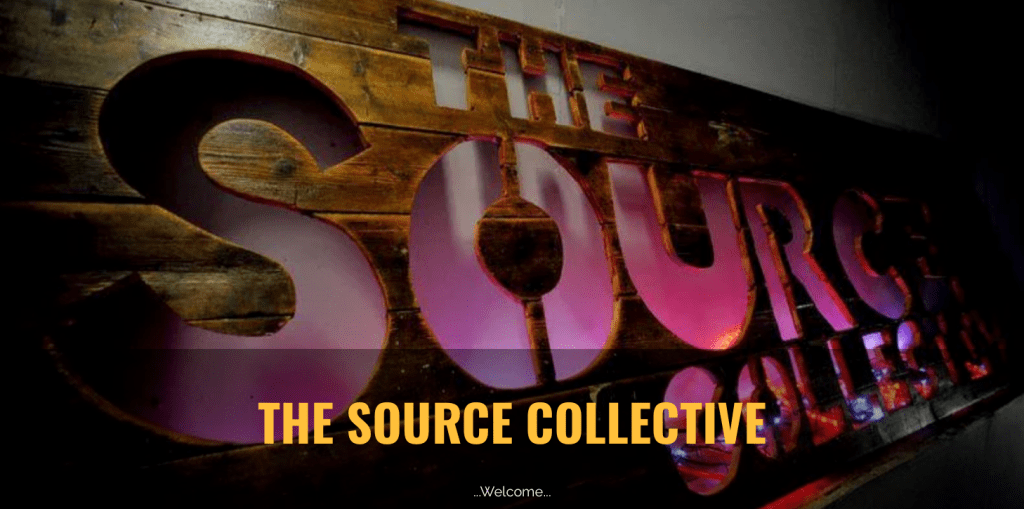
If you are in the Carlisle area of Cumbria please feel free to share your poetry, music or any other form of expression not concidered unlawful, at The Source Collective ‘Speakeazy Night’, last Wednesday of the month. It would be great to see you or hear you. I will be there. Chris Reed. Click below for more details of The Source. Some great gigs comin’ up….
A reblog of archive material from Bournemouth Arts University Performance as Research site.
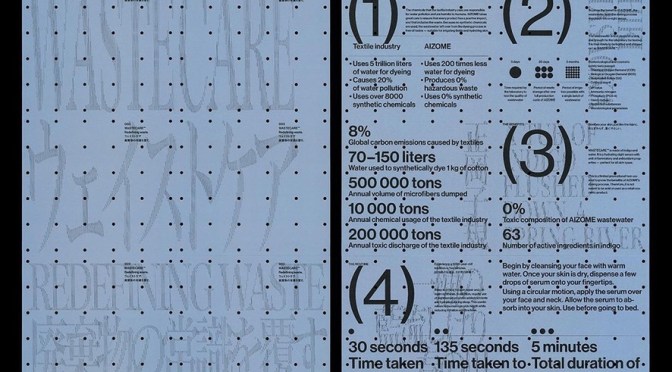
Working with art as research, taking a topic or subject and exploring it through a different form, cross processing, can be useful in informing your experience of the topic. Adding some visual element to lists of words works experientially to change the way you experience the words.
A YouTube podcast from Adam Zucker of the Artfully Learning website about walking as art. He interviews Ellen Mueller who wrote Walking as Artistic Practice.
There are may ways of describing experiential learning but this work from Professor Thomas Fuchs works for me, describing cognition as embodied and active and the brain as a relational organ, the title of his 2016 book.
I am working my way through his 2018 book “Ecology of the Brain – The Phenomenology and Biology of the Embodied Mind”.
In the preface the book refers to the idea of ‘..the Umwelt for understanding the human brain, namely as an organ of relation, interaction, and resonance: with the body itself, with the immediate environment of the organism, and with the social and cultural environment of the lifeworld.’
The Umwelt or environment, is a way of thinking about how our perception is a product of our circumstances. A bacteria, a bee, a bat, a bird and a badger all live in a wood near my home. All sense and respond to the same woods but each will percieve it in a very different way. A bacteria responds to heat and chemicals in it’s immediate milieu, a bees can sense the sun, with compound eye and navigate by it, a bat flies by sound, a bird by sight, a badger lives in darkness and hunts by with its nose. To each it is categorically a different place. Each organisms umwelt, their environement, thus their experience, is different.
My take is that the outdoors and art making offer us ways of modifying our umwelt or having our umwelt modified. We can, through art-making, think through paint or dance. The outdoors provides us with an experience very different from our normal domestic indoor setting. Art making and the outdoors extend and modify our umwelt. Thus they extend and modify us. This is a key idea in what I am proposing.
The video below has Professor Fuchs explaining ideas from this book. The language is dense but non-technical. It may be a useful way of thinking about experiential learning, our learning in an environment, an umwelt, for artists, art therapists, experiential and outdoor educators.
He talks of learning being circular, realtional, thus performative and phenomenological, about how mind and body are a unity, and both the subject and object of experience, and about how an ecological understanding best applies. For me it brings together a lot of ideas, maybe attached to different words, in a variety of other academic discourses I have read, so it is post-curricular and trans-disciplinary. To me a good sign. It suggests it has the scope to be understood by people from many modes of discourse.
Sunday afternoon beckons. Saturday was interesting. The usual suspects played up.
If you have work to do and need some chilled and slightly warmed sounds to keep you focussed and alert, try Tru Thought’s latest chilled 2 hour slot of modern British and Global tunes. I am proud to be part of this that follows…
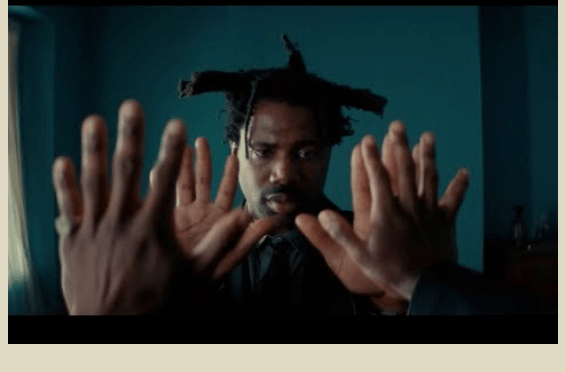
The mix above features Sampha, a great upcoming artist using music to explore and express experience. He sings at one point about ‘la la la la fingers in my ears…’ like lately we all maybe hear too much stuff we don’t need to hear. Like Sappho said “What cannot be spoken will be wept.”




 Moving Space