A link to a BBC Radio programme, The Verb, which is described as ‘Radio 3’s cabaret of the word, featuring the best poetry, new writing and performance.’ This week it featured Margaret Atwood and Alice Oswald talking about how we write poetry, and their own process, the natural world, time, and the possibilities of myth.
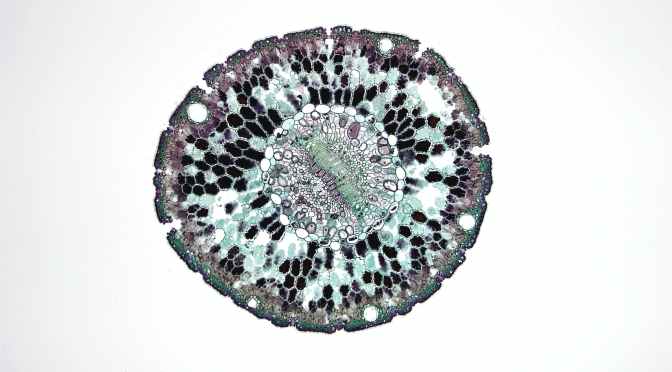
At around 35 minutes there is an interesting account of how writing poetry changes the poet. This reinforces the idea that it is an act of experiential learning, and it is recursive, the poet makes the poem which makes itself and also makes the maker. The header image reflects this as a self-making pattern of continuity and discontinuity.
This post is a link to a very interesting article, describing arts practice as a way to practice finding a healthy balance between chaos and predictability. Mark Miller, a philosopher of cognition and research fellow at both the University of Toronto and Monash University in Melbourne talks about the human brain as a prediction machine. The source, VOX, has as its strapline ‘Your mind needs chaos – The human mind is designed to predict, but uncertainty helps us thrive.’ In the article Miller proposes that mental health needs some chaos, and art making can healthily provide that chaos.
The article summarised
Being able to predict what happens in the world is useful. We have a system in our head that seeks to predict what happens in the chaos of the world which upon experiencing this chaos feeds back to modify the model so that it can then feed forward to guide our behaviour. This is the recursive act of learning from experience, or not. If we don’t learn from experience we can become overly fixed or overly chaotic in this process and thus become unwell. The proposal is that viewing and doing art both provide an experiential arena where we can practice the skills of managing our encounters with chaos.
Arts materials like words, paint, musical notes, wood, stone and movement are in an unstructured or chaotic form when we encounter them. In creating form as art makers we learn to make form out of what starts as unformed, but in doing so some new or unexpected or chaotic element makes itself known. We take things we think we know and see them in a new way. Form and chaos coalesce.
Me summarised
The header image shows grass responding to its environment. I worked for an events organiser and mats put down for a wedding overlapped and removed the light so the grass stopped photosynthesising. One layer of matting let enough light through for the grass to photosynthesise. In my art making I end up with an embodied account of my experience. This image immediately struck me as an embodiment of the experience of the grass.
I found this very exciting like the grass had become an artist. It filled me with wonder and awe in a way that kind of freaked other people out. I do genuinely believe my awe at seeing the experience of grass was a result of my persistent and consistent exposure to art making.
In viewing and doing art I am consistently in awe at seeing some new thing I have never seen before. It might even be a thing I made. Yet the awe emerges out of the most mundane things, paint, pencil marks, and poetry as just organised words we speak every day. It is like through art the intentional exposure to uncertainty and unpredictability teaches me to be able to see new possibilities. And not only that, but to know that I know from my experience of art making, that I will see new possibilities in both chaos and mundanity. This is I think, the wellbeing the author and article refer to enacted and rehearsed through the act of making art.
The link below will lead to the original article on VOX, which in turn leads to the original podcast.
About being blind in blackness digging in my garden
So instead I embody things in
The intelligence of materials
Paper, or ink, or words on a page
And speech
To make the air vibrate
In your ear.
About Gestate
This was written for performance. It was a thing that fell out of me and was very personal and was quite an important trail marker on my art as an adventure and research trail. Often artform preempts material emerging into consciousness. It kind of acts like an alchemical process and distils down lots of raw material then allows the product to float up to the surface. In art making this is sometimes called percolation. I call it incubation. But different words for the same thing. Regards this website, it says a lot about what art as research feels like. Regards me, it revealed some personal stuff that was emerging for me.
It is also about poetry and art making and what art therapist Pat B Allen here and here calls, spiritual technology, the latter descriptor being consciously and deliberately and accurately oxymoronic.
As performance, the poem was designed to be heard and not read. So below is the poem as spoken word.
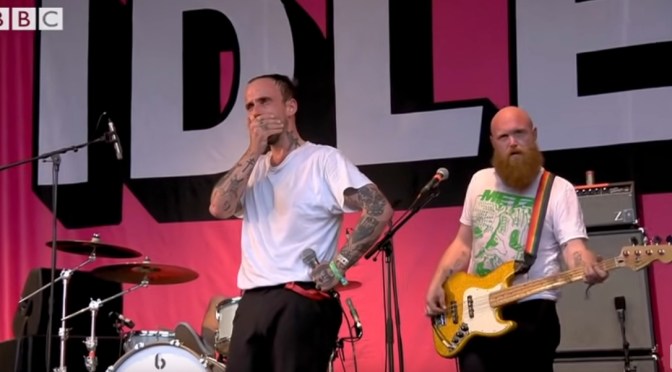
This post is a complement to the previous post here about the physical and emotional response to viewing great original art. We could say art is a collaboration between our phenomenal and emotional world and as such, as sentient beings, one would assume this may have the capacity to connect with us phenomenally and emotionally. In simple terms, it can move us. The last article about scientific evidence of the impact of seeing an original painting reminded me of a track by Idles, shown below which is a tongue-in-cheek defence of being moved by art. Stendhal Syndrome is a description of a reaction to viewing art in which a person faints or becomes delirious. It is named after the writer Stendhal. The man with the beard moving through various art galleries is Adam Devonshire, Idles bassist.
In 1817 Stendhal had a visceral reaction to being in Florence surrounded by exquisite art and architecture.
He commented “I reached the point where one encounters celestial sensations . . . Everything spoke so vividly to my soul. Ah, if I could only forget. I had palpitations of the heart, what in Berlin they call ‘nerves’. Life was drained from me. I walked with the fear of falling.”
The syndrome is not a diagnosable illness but is a phenomenon described by an Italian psychologist in 1979 based on their experience of tourists responding to art, particularly in Florence.
In an article in The British Journal of Psychiatry by Gary Woods here Joe Partridge, songwriter and singer for Idles is quoted as saying that an experience in a Valencian gallery in Spain, rendered him awestruck, tearful and ‘captivated to the point of nausea’.
When I lived in London and visited the National Gallery and the National Portrait Gallery regularly I recall having a strong emotional and embodied reaction to seeing the actual brush strokes of artists like Monet and Turner. It did make me feel lightheaded like I was going to swoon. It surprised me.
Maybe the difference between the painting and the reproduction is the knowledge that one is witnessing the embodiment of the moment the paint was put on the canvas. In a reproduction, one cannot perceive this. The experience of seeing the reproduction is lesser, in that knowledge accompanies sensation and perception that tells you this is a copy of many copies. The original seems more like a live experience.
Joe and Idles value the live experience and in this video below towards the end, Joe is overwhelmed by the experience of being there. Enjoy this astonishing performance.
An interesting article on how much more a genuine painting stimulates the brain than a reproduction. More apparently than an unexpected stop in a lift. Scary!


 Moving Space