A reblog of archive material from Bournemouth Arts University Performance as Research site.
Working with art as research, taking a topic or subject and exploring it through a different form, cross processing, can be useful in informing your experience of the topic. Adding some visual element to lists of words works experientially to change the way you experience the words.
A YouTube podcast from Adam Zucker of the Artfully Learning website about walking as art. He interviews Ellen Mueller who wrote Walking as Artistic Practice.
Researching recursion brought up a lot of references from a range of sources. I worked my way through them. Intuitively there seemed to be connections centring on the idea of self-similarity, a function that expressed itself by referring to itself, like a thing that made itself, like way experiential learning and art make themselves. There was a lot of maths, code, logic, and some geometry. I wanted to start to explore recursion by making something, so geometry seemed a good place to start. I decided to start by making a thing called the Golden Ratio as a thing that makes itself. As the quote below from Wiki indicates, the study of the Golden Ratio has spanned millenia.
‘Some of the greatest mathematical minds of all ages, from Pythagoras and Euclid in ancient Greece, through the medieval Italian mathematician Leonardo of Pisa and the Renaissance astronomer Johannes Kepler, to present-day scientific figures such as Oxford physicist Roger Penrose, have spent endless hours over this simple ratio and its properties. … Biologists, artists, musicians, historians, architects, psychologists, and even mystics have pondered and debated the basis of its ubiquity and appeal. In fact, it is probably fair to say that the Golden Ratio has inspired thinkers of all disciplines like no other number in the history of mathematics.’
Mario Livio — The Golden Ratio: The Story of Phi, the World’s Most Astonishing Number.
I cannot do this material service so the Wiki entry is here
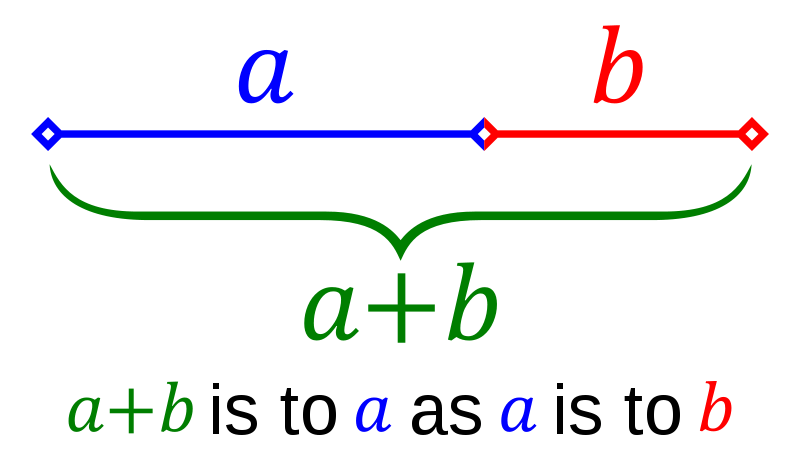
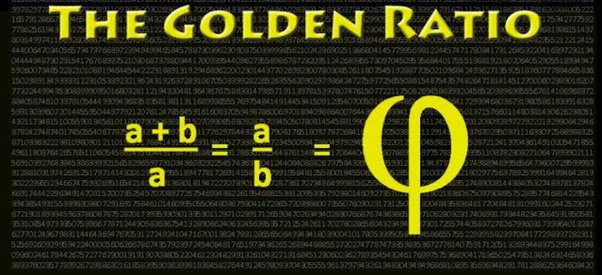
But first a bit of maths. A ratio is a thing that exists only as one value as expressed in relation to another value. It is one thing divided by another. 1 divided by 2 is a ratio. It is 1/2, a half. The golden ratio is a mathematical and geometric expression of a particular ratio. As a ratio, it is described as (a+b)/a=a/b where a and b are numbers.
As a geometric form it is expressed thus…
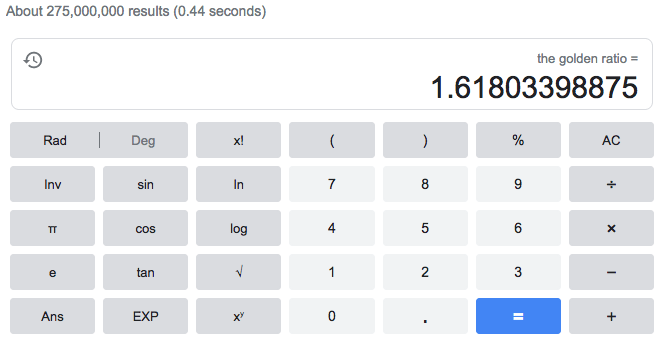
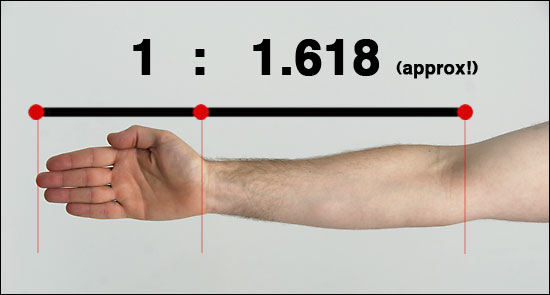
As a decimal number is it 1.618033988749…. so it is an irrational number, it goes on to infinity. The ratio is the same for 1 and 0.618… as it is for 1.618… and 1.
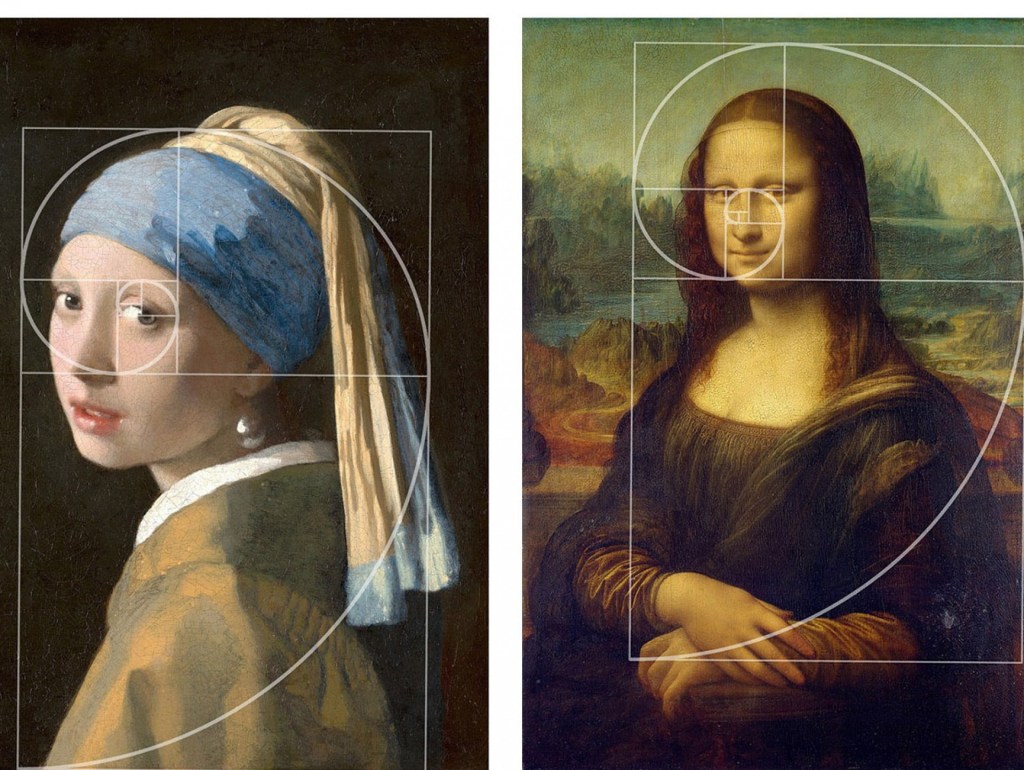
But as many sources show, the golden ratio is also a thing that exists in nature.
It is also a thing expressed as a mathematical symbol, Phi, a letter from the Greek alphabet.
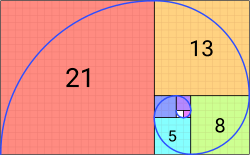
It is also the basis for a mathematical phenomenon called the Golden Spiral which expresses a thing called the Fibonacci Sequence found in art and nature and mathematics. It can be expressed in many ways.
The Golden ratio is recursive and as such seems to reiterate the feeling of researching recursion. A feeling of finding some deeper connection between things, between experiential learning, art-making, crow intelligence, coding, philosophy, on and on. It feels like all the different references may emerge from a single or underpinning referent. This interests me. But this was all a bit abstract. It also evoked a feeling of caution, like I was maybe seeing things that were not there, things not connected. I wanted a more concrete experience. Something embodied not just imagined.
The Intention and the Action – Making the Golden Ratio
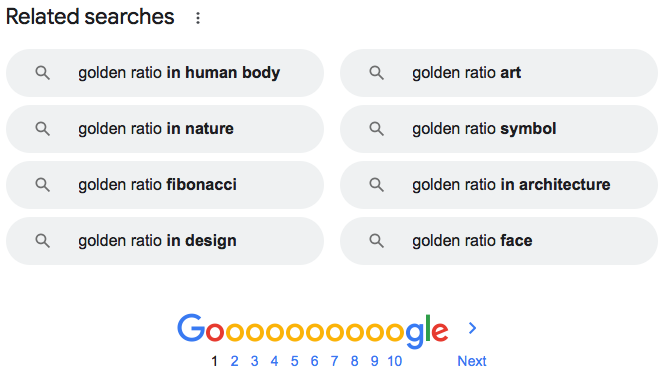
You can make a Golden Ratio with nothing more than a pencil, compass and ruler. I decided to make a golden ratio for myself. My intention was to have a concrete experience of making it rather than just having the abstract experience of thinking about it. I was already exploring the recursive behaviour of crows through poetry, and this changed and deepened my connection to them. So I set out to draw the Golden Ratio with a pencil a ruler and a compass. As shown above, there are a great number of discussions of, investigations of, theories of, and expressions of, the golden ratio by very learned people spanning millennia. This does not really interest me. Google Golden Ratio and you will get many varied references thus…
My idea was that the golden ratio has something to do with recursion, which has something to do with making art and experiential learning and this interests me. All the serious ideas generated by other people can help me pursue this interest in ways my brain could never imagine, like Fine Art made by proper artists can help my art-making. But most helpful is the art I make. My intention was to simply make it and pay attention to what I make and what happens when I make it. As always. Don’t Google it do it yourself, the punk ethic. My preparation was to get hold of a big compass and a joiners pencil. I use wallpaper lining paper. It is a heavy gauge 300gm/metre weight paper like fine art paper, but a nice off-white and is as cheap as chips. It remains curved off the roll so needs to be fixed to a board with masking tape. This also fits with a punk ethic. So I made it myself. I went into action.
What Happened?
I found some instructions in a book I got from a charity shop about making the golden ratio1. I bought the big plastic compass from Amazon here. But this proved a bit bendy. My arcs drawn were a bit wobbly and uneven. So I did some practice on another bit of paper and found a way to make a nice steady arc. I got my ruler and joiners pencil. I photographed my making of it…
It proved bizarrely nerve wracking. Hippasus of Metapontum was reputedly drowned at sea by the Pythagorians for discovering irrational numbers here, and according to wiki ‘Irrationality, by infinite reciprocal subtraction, can be easily seen in the golden ratio…’ I hoped Pythagoras and the gods were not watching.
I measured the two sections of the golden ratio I made and did the maths to see how accurate I was. I was not drowned at sea. Nothing happened. I drew a line with two segments of differing lengths. It seemed mundane. What was I expecting? I let it go and let it incubate, or percolate, whichever you prefer. I went to work. I made other art. The board with the line on sat on my desk for ages. I lost my measurements done at the time of making. So I returned to the drawing and the following measurements were taken.
On measuring this, the two segments were 22.3cm and 13.7cm giving 1.62773723. The longer segment divided by the shorter segment should be 1.61803398. So this can be applied to the sides of the triangle I drew, so (22.3 x 13.7) / 22.3 = 1.61434977, this applies to the bottom and side segments of the triangle. This gives an error of about 0.009, mostly due to my hamfistedness and a wobbly compass. I was pleased with this outcome. It is interesting that the Fibonacci sequence moves towards 1.618… with each iteration of the recursive sequence. My second iteration was closer. Maybe it was just noise error. It seemed mundane and magic all at once, which is what magic and reality really are. Perpetually dichotomous. Certainty is certain in its uncertainty.
I did lots more reading about recursion. Eventually, I reflected on the experience for this page. This is my reflection.
Reflection
My immediate reflection after standing away from the image for a while, was that the further you stand from the mirror, the smaller becomes your image, but the setting gets bigger. Whilst there are no unequivocal written accounts, it is suggested that Plato knew about a mathematical phenomenon that went on to be named ‘The Golden Section’ by Martin Ohm in 1826. But the (a+b)/a=a/b formula was written in Euclid’s The Elements 2300 years ago. Maths has moved on a long way since then. My understanding is that maths was then, more of a geometric thing. It was understood as objects, albeit in many senses imaginary objects, it was also in a real sense about things you can make and draw.
Making this object put me in some ways back in that time. The line drawn and segmented could be any length, and the segments, with simple tools, could make an object that made itself. All the actions root back to and emerge out of that line. Then that line produces a form which relates only to itself. I could see how Plato could be Platonic, how he could contemplate pure form which could transcend or sub-ordinate matter. To make the golden ratio, on reflection, was at once transcendent and mundane. The act was mundane, but the emergence of a thing that made itself, utterly without any other referent in this world now seems quite remarkable. It reinforces my belief in nominalism. That all that is written about the golden section are just signs pointing to some thing that exists outside of our experience, and this thing is mundane and transcendent. I can see why Pythagoras and the Pythagoreans felt like they were in touch with some deeper reality. And all it is is a pencil line on a piece of paper.
This reflection also puts me back again in a place I have been before. I have an image of a path, in partial darkness, by some garages near my home. I was doing a series of algorithm walks, llr, rlr, rrrl, etc to make my daily wellness walk more interesting. At some point, I realised that each walk was an act of creation, unique and unlike any other walk I had done. Because the path was varied, but because the time varied, I did just this walk, just today, it could never have been done tomorrow or yesterday. I was strongly struck by the realisation that creativity is mundane. We make a sandwich, we drive to work, we make stuff happen. But through connecting to the innate creativity in the seemingly mundane act of making a sandwich, watching endless TV cookery programmes by celebrity chefs showing me how to make a sandwich become mundane.
The act of making the mundane into art, finding some deeper structure in drawing a line and forming a ratio, has risks. If it can render everyday life mundane, it risks becoming escapism, the evasion of everyday life. For some reason, Irving Welsh sprang to mind writing about the risk and trap of escape. The film version of Welshe’s Trainspotting starts with a great, but disturbing diatribe on the seemingly simple escape from the complexity of life…
‘Make a choice…” I think. I did not, like Renton and Iggy, choose some external internal stimulant, although in the past it was a choice I made, it made me unwell, so I made art, eventually after periods of unwellness that showed TV shows and stimulants to be singularly unstimulating.
So like the Glorious IG, I moved on and chose not to “Choose Life; Choose a job; Choose a career; Choose a family…” or at least I chose to be more choosy over what I chose. The lines at the start of the film are highly ambiguous. Iggy Pop sang about a lust for life. Maybe that was what drove Renton to become a junkie as a way out of the mundanity of his diatribe. Renton chose junk, but it kind of becomes a cypher for an escape from choosing ‘…a f***king big television,’ and ’stuffing f***king junk food into your mouth’ as acts of self-destruction which can be ameliorated by recognising the mundanity of self-creation, making art with a pencil or a walk on a morning past a neighbours garage as opposed to shooting up. The line as a walk or as a pencil mark is transformational. Making them is the key. It is not the same as reading about somebody else’s walk or seeing somebody else’s line. But the purveyors of f***king big televisions and f***ing junk food don’t want us to know that. They want us to buy, to buy into a drug of choice, TV, food, holidays, hair products, an online persona, booze, weed, speed, junk, to take Soma, the drug of choice in Huxley’s Brave New World. In an article from Medium by Yash Deshmukh the author explores Soma as a metaphor for current experience, not a future society. The content of Renton’s rant is the drug. Consumerism as Soma. Work to earn money, to buy things to help you escape the mundanity of working to buy things to help you escape… The endless loop. Recursion as a closed loop is a risk. But the recursion of making the golden mean feels different.
I am still working on how recursion as creativity, exposing deeper forms, and recursion as an endless infinite loop reinforcing the same shallow forms of mundane life, differ. I am still working on what it is about making things as art that makes the content of Renton’s rant mundane, but the experience of drawing a pencil line on paper becomes rich and revelatory. Am I mad, or is the world mad? I will make more stuff as art as research. The journey goes on. The path is revealed by the walking of it.
The Secret Code – The mysterious formula that rules art, nature, and science. By Priya Hemenway. 2008 ↩
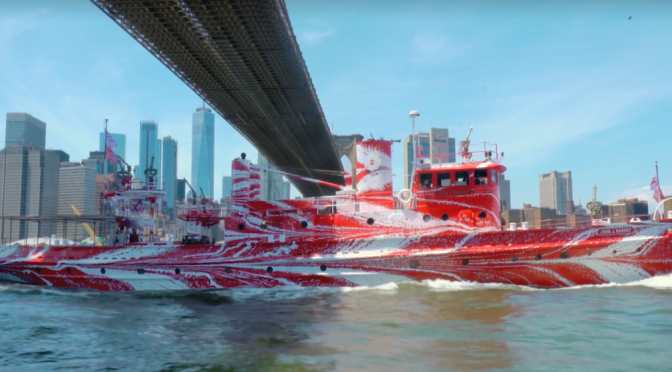
Great video of artist Tauba Auerbach who works right on the edge between arts practice as personal subjective research and objective material research to the point where they become some other thing. That they are they reinforces the post-curricular, nominal nature of their work. That they seek to find the substrate that underpins our surface world fills me with wonder and awe. The header image is a boat she painted.
In this video Tauba says “I want to learn new things constantly. And I am always trying to find the pattern behind things. I have educated myself about a number of mathematical and scientific principles through crafts like paper weaving and paper marbling. To marble paper it is all about relationships and ratios…”
This appeals to me a great deal. I read nothing but books about maths for about 6 months once on the principle that maths may describe the underlying substrate of the material world. In the end I was unconvinced but concluded that maths provided the best map we have available for the underpinning of the objective world, but the maths was the map not the territory.
So like Tauba I explored art making as a way to get there by other means, subjective means that meant something to me personally. I made a things called ‘A Step Back’ here as this path about maths led to me exploring ideas about recursion between the digital and analogue domains and the oddly dissociative effect of things being in both domains. Recursion as a phenomena connects lots of things in maths, science, art, ecology, sociolology, philosophy, on and on. I believe it is a source of creativity and distributed or collected intelligence between intelligences other than just people, see here. Art making helps us encounter distributed intelligence. James Bridle wrote a great book about this idea, see here and the way it is embedded in the world.
Tauba also talks about art making as a way to get out of thinking in words. This is also important. Materials used in art making have their inherent material intelligence made available through the act of art-making. This intrinsically and in an embodied way extents your perceptions to re-view the world through art making. Thus arts practice facilitates the extended mind see here.
Tauba’s website is here and a great pdf called ‘Thy Fearful Dissymmetry’ is here to see more.
And the original link was for Art21, a great arts website here and here.
At some level there is a connection between art making and adventure. The place this can happen is in the making of art. Arts practice. Arts practice could be seen as a journey of uncertain outcome. A big part of the adventure journey is the travelling rather than the destination. The journey is made in the walking of it. So it is with art making. I will give you two ways.
Art as Adventure – No 1
The Journey of Uncertain Outcome
I had an art adventure this weekend (Oct 21–22 2023) on Adobe FireFly here. Adobe is doing a big sell on their new service, FireFly. This is an AI image maker. Kinda controversial in some quarters. Some AI image programs scrape art off the interweb and quite rightly some object when art is scraped but not attributed to the maker. Everybody wants the artist to do some art for them for nothing. Hey it’s good publicity right!
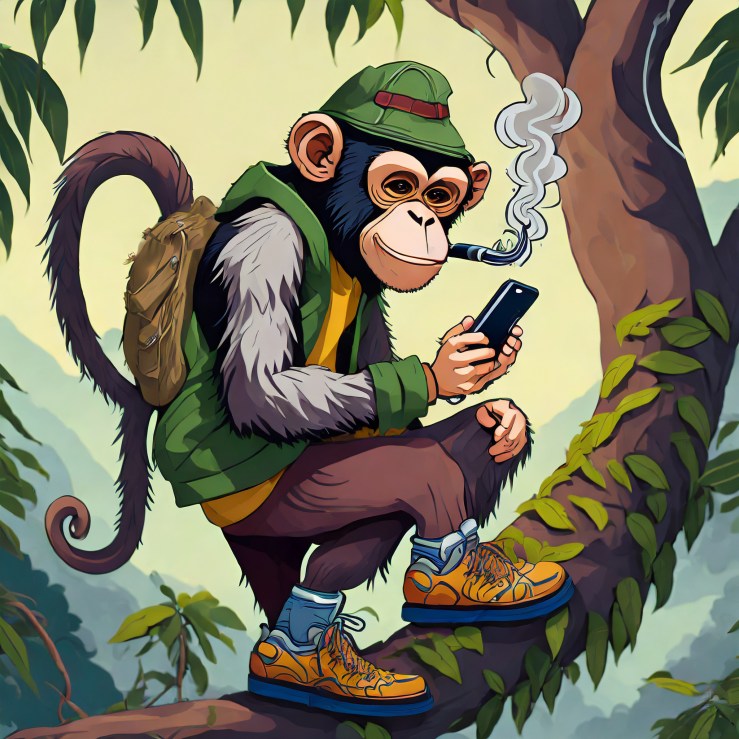
But Adobe base FireFly on their product Adobe Stock of 2 million or somethingorother images here and here. For this you sell them a photo or artwork and they then own it, then designers and advertiser and artists can buy other people images for their art/product/service etc. So Adobe scrape their stock of bought art and images, where the artists are paid. Fair enuf. But this is then used to drive their AI image making machine. They then sell on this service to subscribers. But this all goes (or went) live November the 1st , the paid bit that is. But ’til then it is (or was) up for grabs for payed up subscribers for nowt. I have the ‘Photography Plan’ so I experimented with it. This was my adventure. I put in ‘a monkey in a tree wearing trainers and smoking a pipe, looking at her mobile phone,’ and this is what I got…
This begs the question ‘Did the monkey agree to this and did she get payed and is she in Equity?’. Art can be so difficult.
My interest (beyond smoking monkeys) really was not in such concrete manifestations but in more abstract ones. Below are some images and the text prompts I gave for more abstract ideas. I wanted to see what I would get.
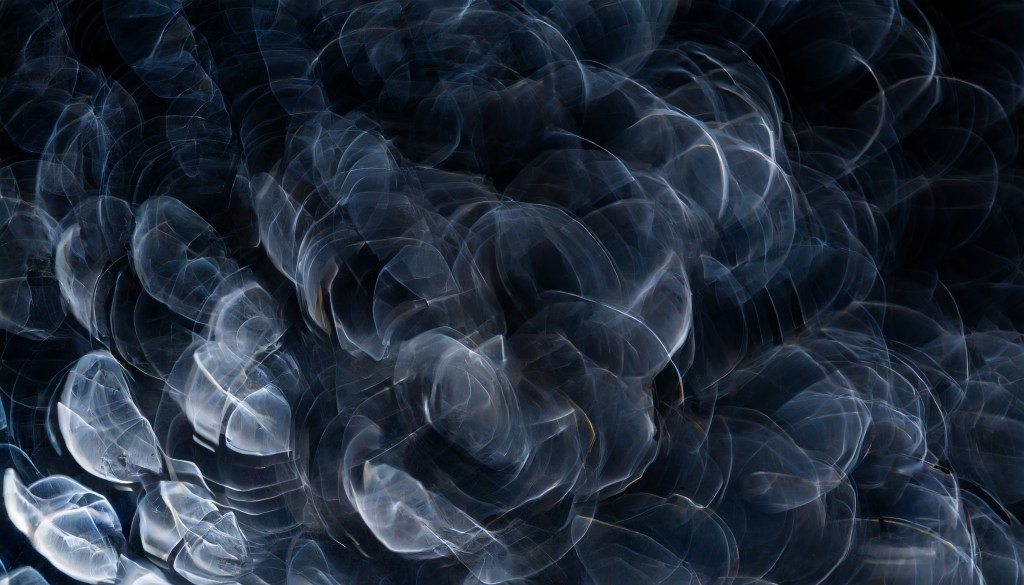
I prompted with ‘cycles and cycles and cycles of dark foreboding substrate’. I got this…
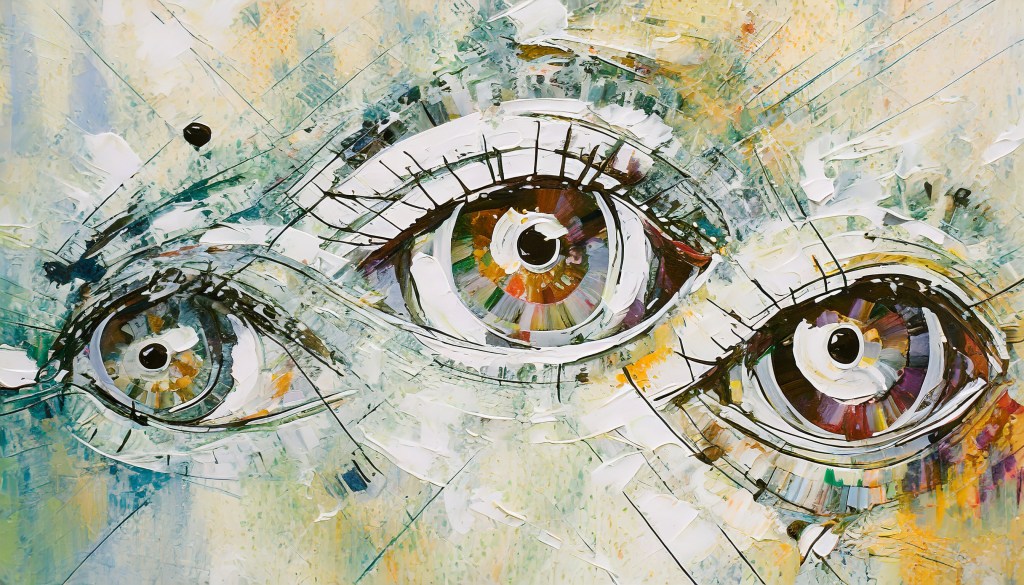
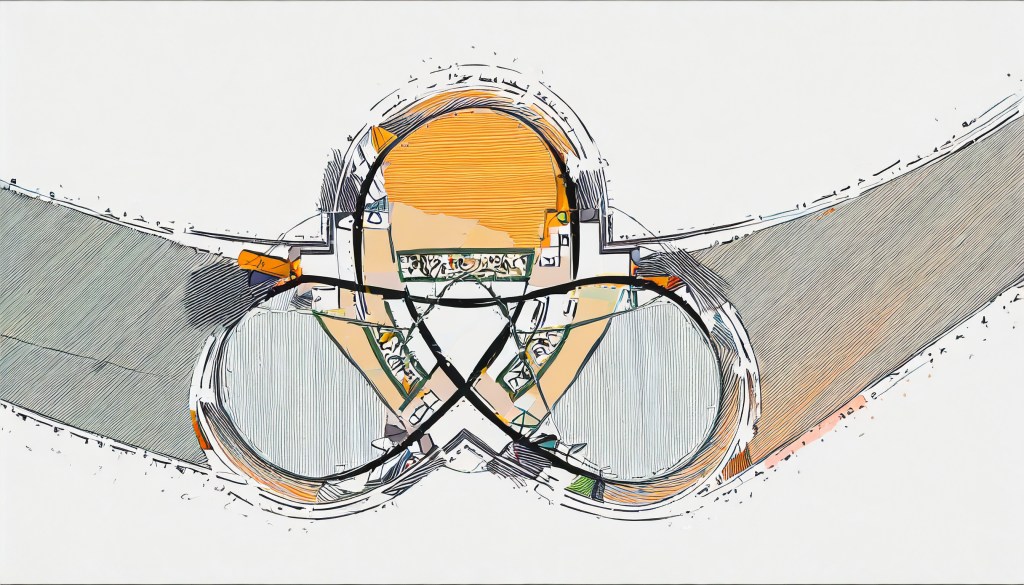
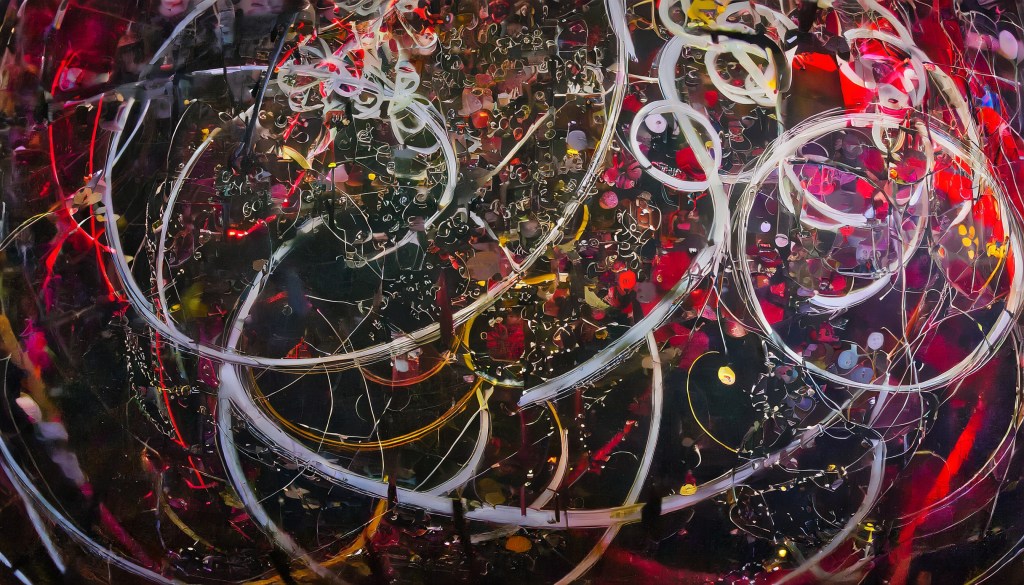
Then I changed parameters, making the image ‘oil painting’, or ‘archtectiral drawing’ or ‘bright colours’ or included say, ‘three cycles’ and got these.
It was impressive. I suspect this will make millions for Adobe. Designers no longer need to trawl through image libraries, if they want a ‘a monkey in a tree wearing trainers and smoking a pipe, looking at her mobile phone,’ for say, a New Scientist article on hominid evolution in the age of the interweb. They subscribe to FireFly on their device, type in the aforementioned prompt, and then there she is, on their PC in about 5 seconds if you have the latest Intel chip. So as mentioned, from Nov 1st on you will be charged for this as part of your plan.
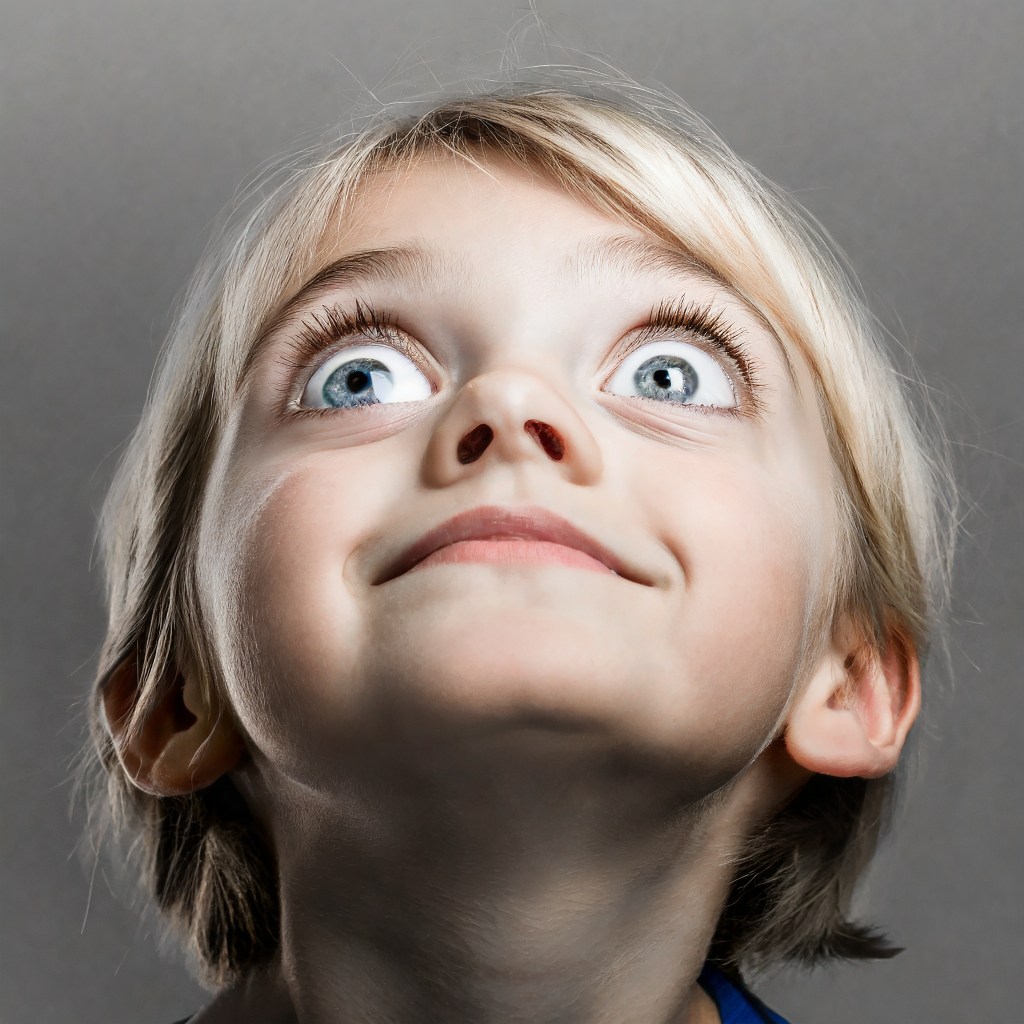
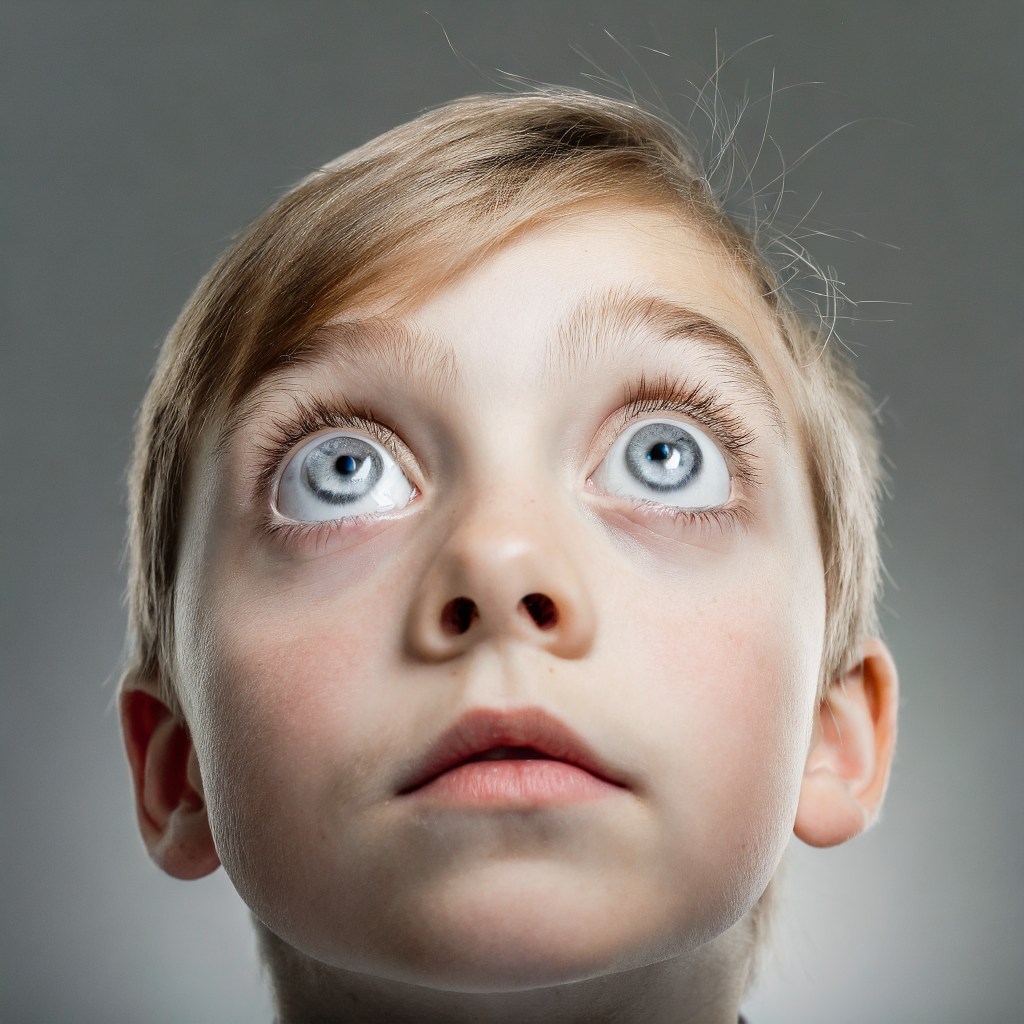
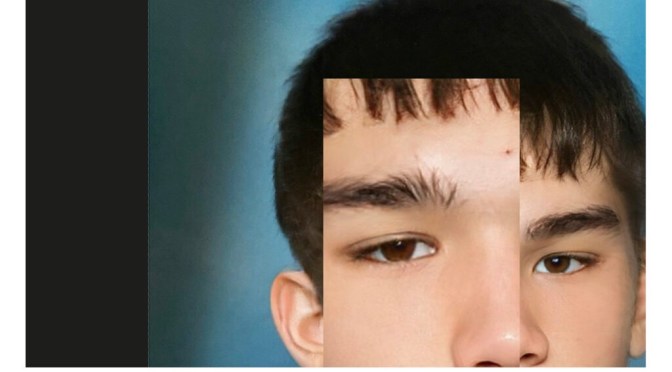
So my counter cultural alter ego kicked in and I decided to make a little artwork from the initial text prompt ‘huge face with big white blank eyes with no pupils looking up’ and got these.
Part of what I was after with my little artwork was some critique of the Attention Economy (see here), about how young people particularly are being trained by social media and their device centric social life to make money for the shareholders of multinationals see here. Adobe apparently read my mind. Uncanny. Scary. My Lu’d I rest my case. Adobe initially gave me children with big trustful eyes.
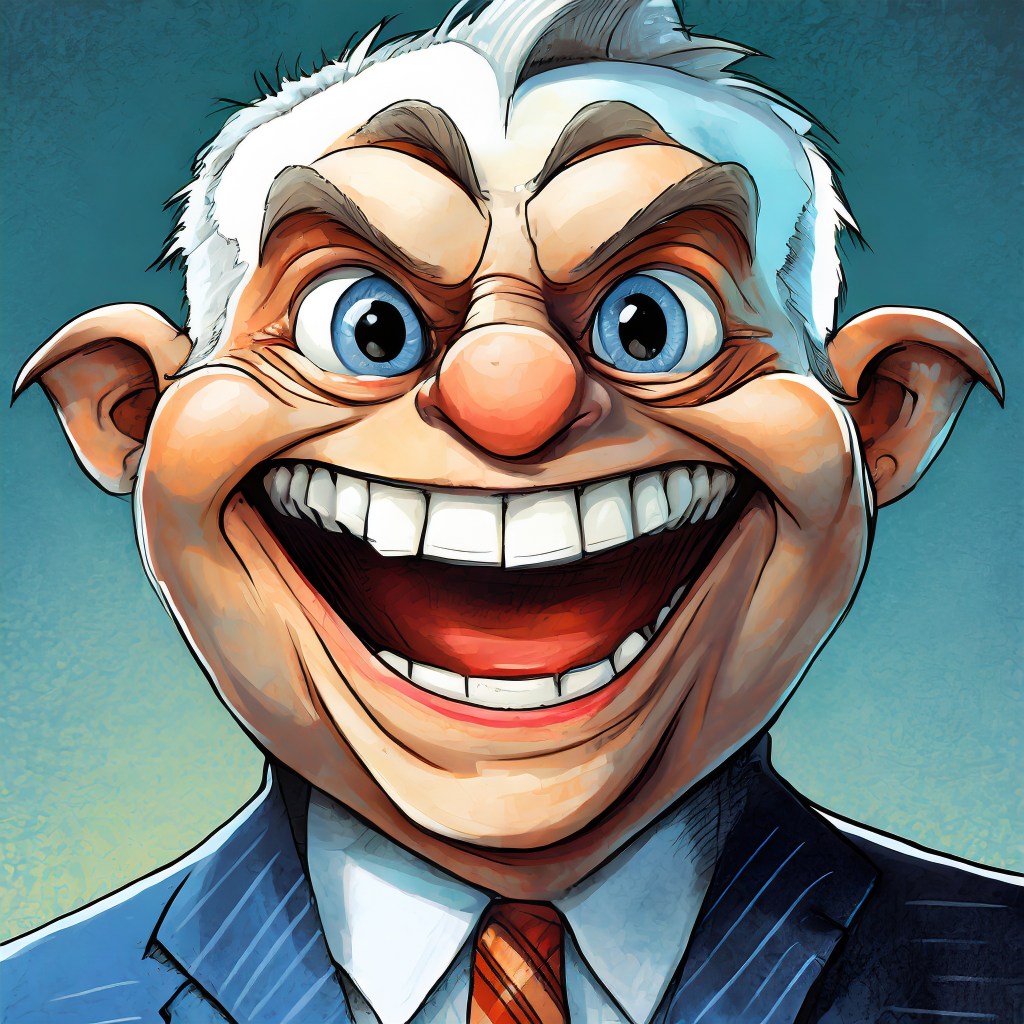
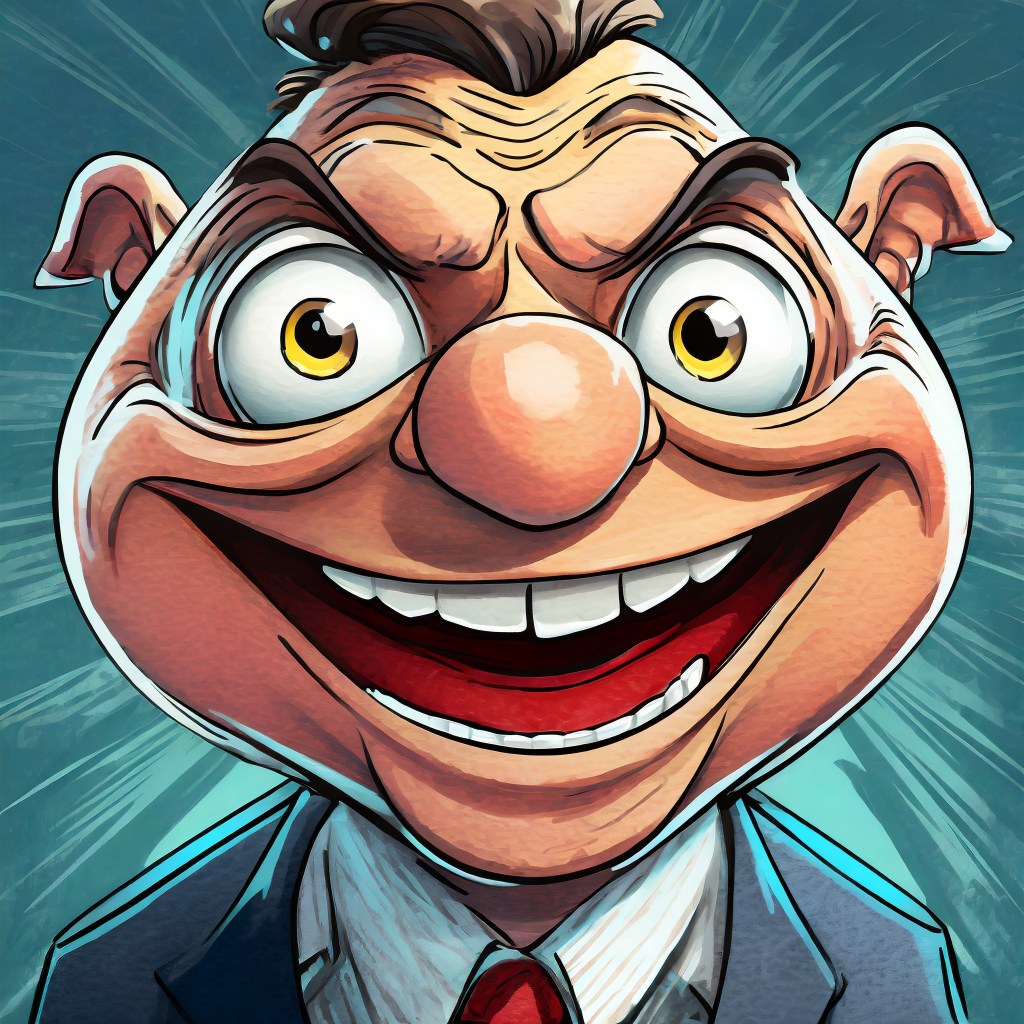
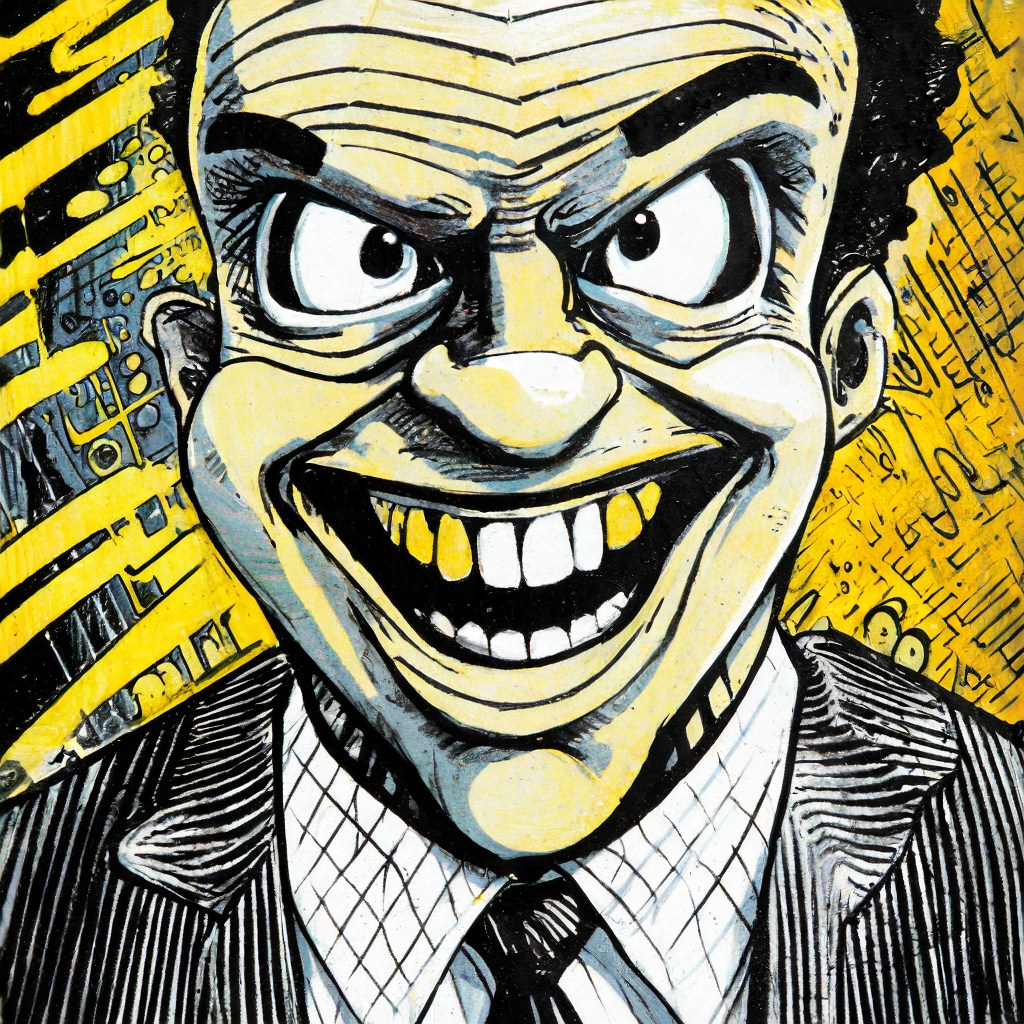
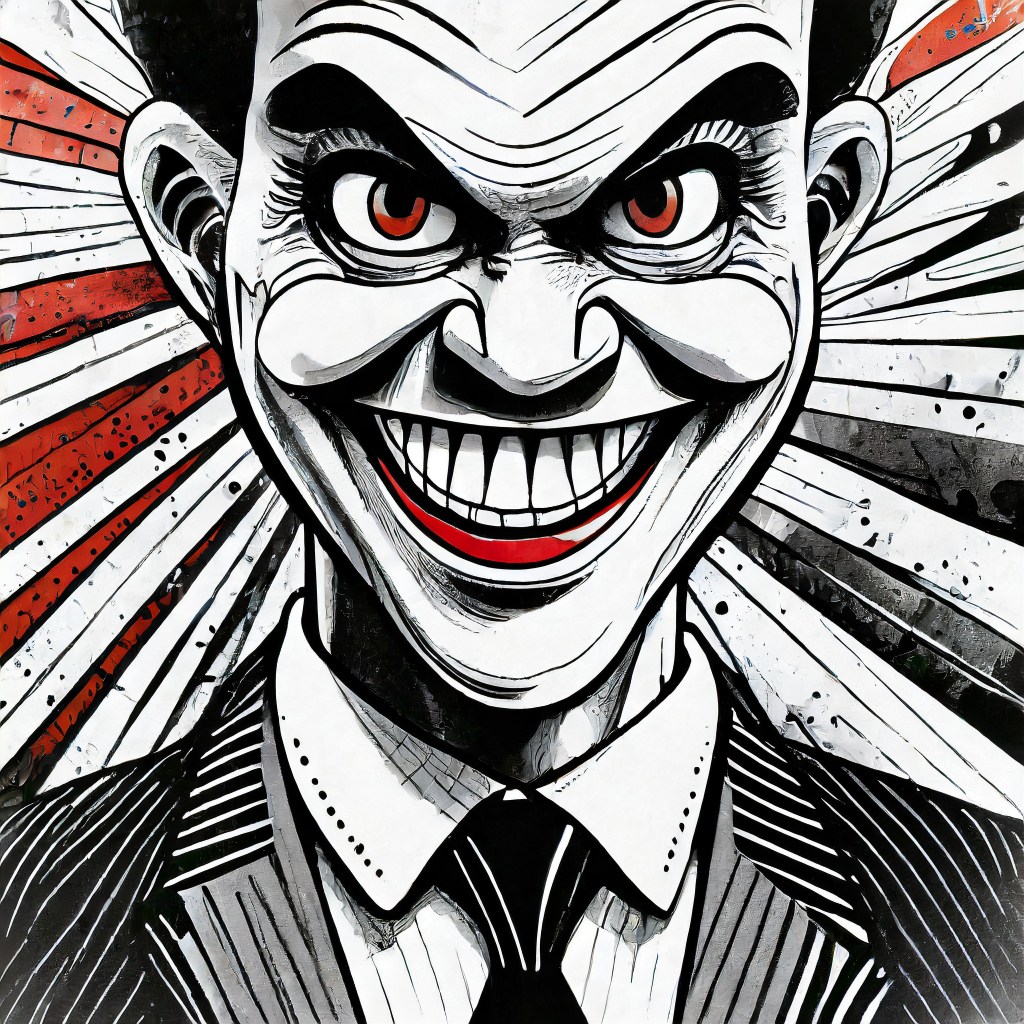
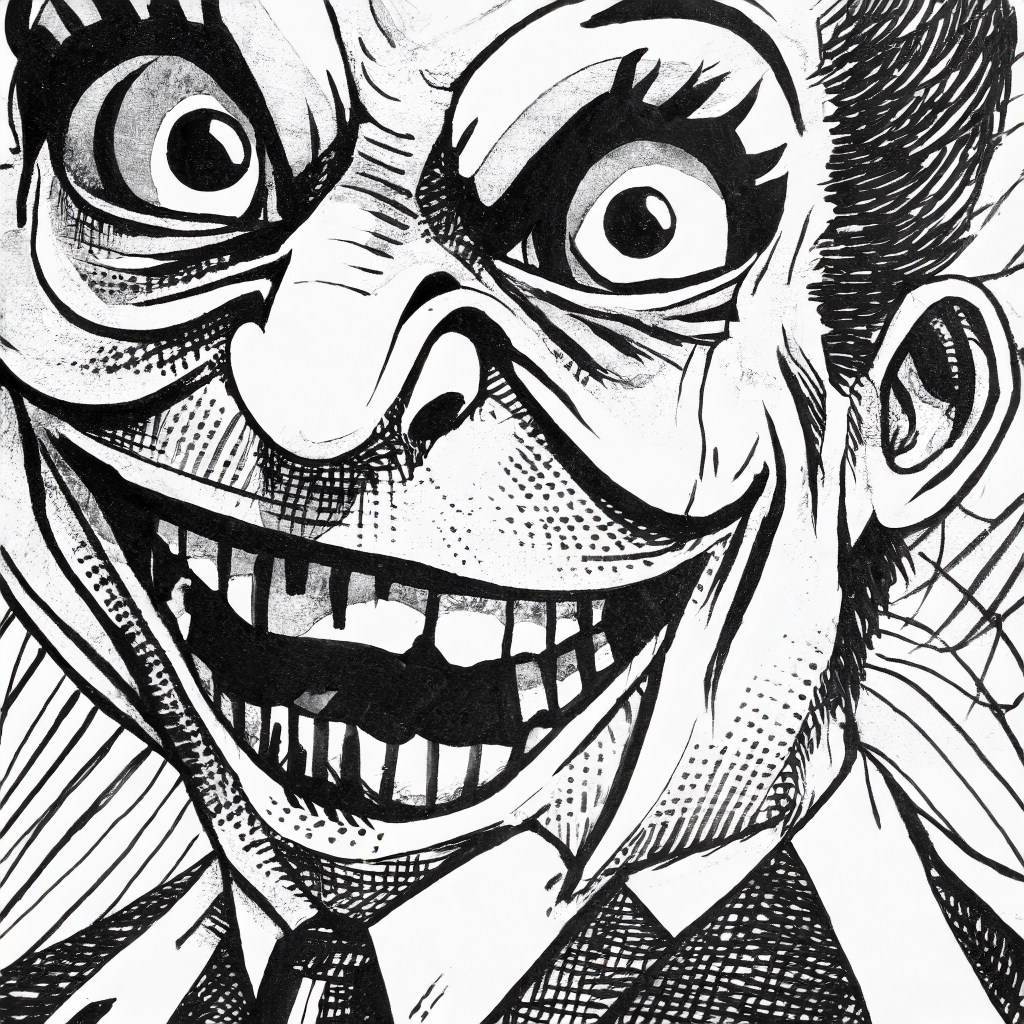
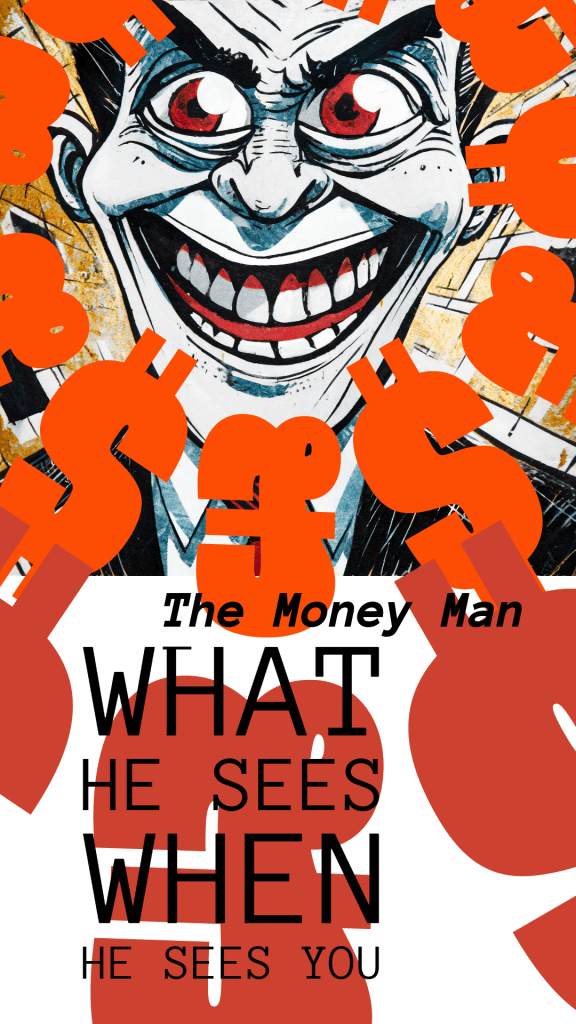
But to be truthful in this case I was after a more specific image so I typed in ‘huge grinning smiling business man face with huge big oversized white blank eyes’, then ‘huge ugly grinning smiling business man face with huge big oversized eyes looking at viewer’ and got these (amongst many more, unlike a real human artist, AI never gets tired or wants to eat or go to the toilet).
Now FireFly is connected to Adobe Express, a thing to make graphics and images for social media. Express is a quick and easy way to make graphic design. So I made this…
It kinda worked but was not quite what I was after. I moved on and planned to come back to this ismege agian later. But this moving on made me think.
Art as Adventure – No 2
Artworks as way-markers (and as cheating).
This act of art making lead me on to my No 2, Art as Adventure idea, the art object as way-marker or ‘flash’.
On an adventure the ‘flash’ was a thing you left on a tree with your hand-axe. In the wilderness an axe mark can only be the work of a human hand. A bit like a work of art. It was a way to mark your trail, so you can find your way back to whence to came, or have someone else find your remains if you were eaten by a bear say.
People are afraid of bears as people are afraid of art. Like avoiding hungry bears, people avoid making art for fear their art be seen and critiqued. Publicly. In my school if you had your art put up on the wall it was sign of a being a sellout, see here and you were shunned in the dinner queue. Harsh, but just. I got CSE grade 1 in Art and Physics. Social pressure has a lot to answer for. I did a BSc.
So to overcome this fear a suggestion is to see each little artwork you make as a way marker, a flash, a flash in the pan, a thing to be discarded and left behind, a thing to show where you have been not where you are. A thing only you see. A small sign of moving on.
A bigger art work, a project, a show, an article on your local radio station, then a national, then Breakfast TV, Sky Arts, the Venice Biennale here the Turner Prize here, can be seen as an encampment. You set up camp and make a lot more mess. A midden, a dunny, a campfire circle and some discarded lager cans. You know…. ‘Culture’. An encampment will make you officially a ‘Real Artist’. Is it an old tent or Tracy Emin’s artwork? See here. I have seen her tent and I loved it, don’t get me wrong.
So I made the image above and moved on. The lettering did not work. The £ and $ signs ended up upside down so it kinda missed point. The face was great, but I did not make it, AI did.
So what? Well some principles from the arts therapies and experiential learning apply. Whatever thought or idea you had becomes concretised, reified, made a subjective object see here. You make it as art and this experience becomes concretised, reified, made a subjective object. You get to view and re-view yourself, your inner world. You go beyond being a consumer of images and become a producer. That nobody sees your way-marker but you removes you from the echo chamber of on-line life. Like a sketchbook or journal, you see your journey unfold and know where you have been that you better see where you could go. I believe this can make health. It can aid recovery of whatever need to be recovered. It is recovering your own ground. It is in the process in which states become traits to quote Dan Siegel see here. It is art in process. It is art making with intention, attention attitude. I intend to make art, I attend to what I make and what happens when I make it within an attitude of openness and the capacity to non-attachment. This is a just way-marker and I let it pass. Nobody sees it but me. It shows where my adventure took me. This is art not ‘Art’. I do not have to account for it. I am a safe in the dinner queue.
So check out Adobe FireFly. Or ignore it out of principle. But remember David Hockney said ‘The moment you cheat for the sake of beauty, you know you’re an artist.’ See here and here. My business man was not a beauty, nor was my art, but I was a bit of a cheat so maybe I was being an artist. If you cheat, you too can be an artist. Just avoid the dinner queue.
“Each camera click is an exploration, a deep dive into another person’s worldview, making the photograph a captivating tapestry of human perception and worldview. This process, this dance between creativity and reality, transforms an ordinary image into a captivating story that is a trustworthy reflection of a real and true story with which the viewer can identify. It is a fusion of different minds and points of view converging to create something unique, trustworthy, thought-provoking, and priceless. The process of searching for meaning and truth in documentary photography is a value in itself that AI is not likely to give.”
A way of working with art as a form of experiential learning is the idea of the review or reviewing. The simplest version of the experiential learning cycle goes ‘Plan – Do – Review’. Experiential learning nods to Kolb and Dewey but is presented here as a way of learning through doing that is cyclical or recursive. We learn through personal experience in situ. It is in contrast with schooling which tends to value the input of curriculum and output as testing in a linear way.
The capacity to have experience and learn from it is a central aspect of our consciousness. We maybe don’t think of it that way as thinking, writing, talking about things then making plans and acting on them seems so normal and simple. Humans do it in a way that seems a bit different to other living things. It is maybe a blessing and a curse. Art reviews our experience in many ways. But with photography, the act of ‘Taking a photo’ does this in a very immediate and concrete way. The act of framing a shot, on a phone or with a camera immediately reviews how we see the world. Then we make an image and put it in some place other than where we took the photo, with a caption, in the public domain, or a chosen person. This is an amazing thing to do.
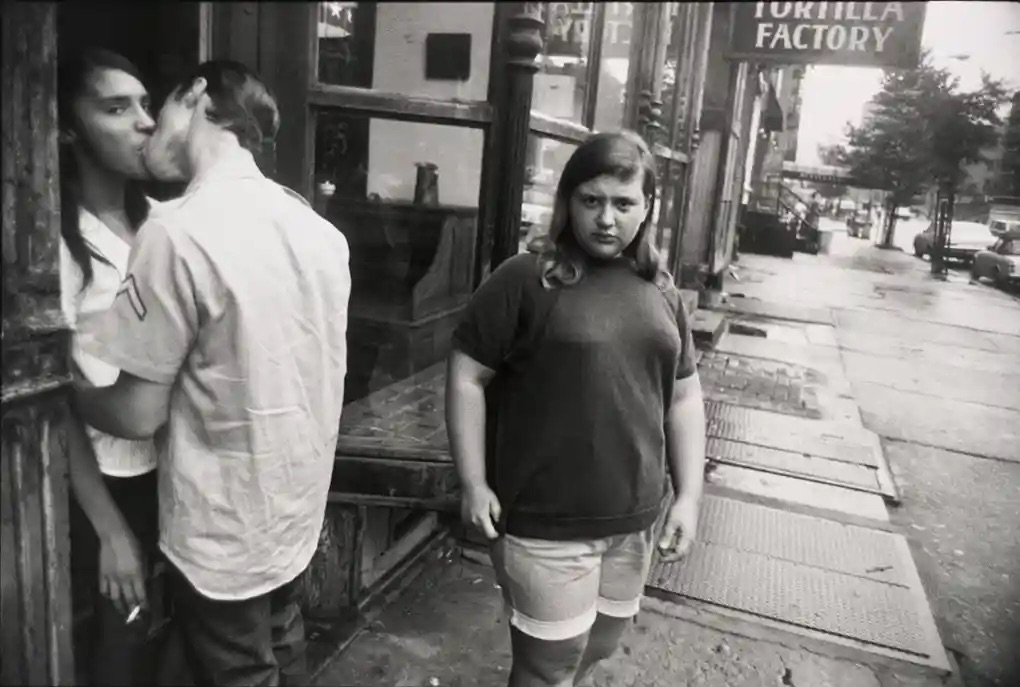
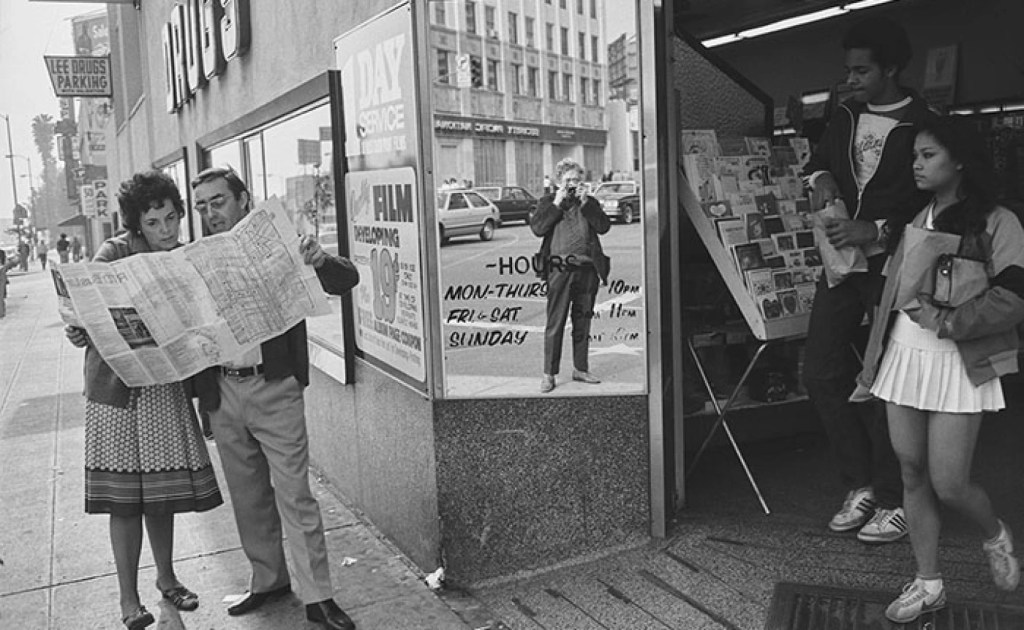
A favourite photographer of mine is the street photographer, Garry Winogrand. I love his images. He took thousands of images in New York and after his death, thousands more were found on unprocessed 35mm films. Of his practice, he said ‘I photograph to find out what something will look like photographed.’ This struck a chord with me. I posted 400 of my favourite photos and the act of sharing still seems strange. I never took them with the intention of showing or sharing them.
I photograph to find out what something will look like photographed.
Garry Winogrand
If Winogrand had vast numbers of images entirely unseen, I kind of figure he may also have some relationship with the act of taking the photograph that is different to the showing the photograph. He talks about photographing as a way of ‘finding out’ about something. It is the process of photographing that has value for him as much as the product, the photograph and the photograph shared. This to me is an act of research. To search for something is an act of finding some specific thing. The French ‘recherché’ means to seek something out with care and add value to it. In art making, we find value in things.
Below are links to Winogrand’s work. He does what all artists do, he engages in an act of reviewing. Below whatever words we find to describe this act, art and photography allow us to review experience.
Fraenkel Gallery- Winogrand Portfolio
Guardian article – Garry Winogrand: the restless genius who gave street photography attitude








 Moving Space