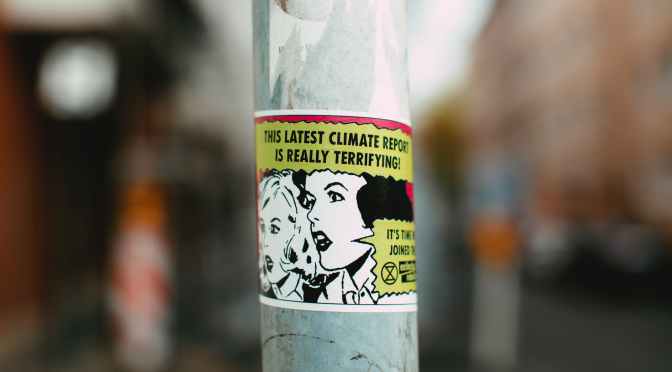
I was taken by this strapline in a news report on climate change…
“We have no choice but to take direct action to put our bodies on the line because petitions, sign-waving, and chanting—we tried that for the past 50 years and it hasn’t worked, and we’re out of time,” said one arrested activist.
A book called, ‘Limits to Growth’ was required reading for my degree in Human Ecology starting in 1979. It was published just over 50 years ago.
Limits to Growth was the first widely publicised model for climate change. It has kind of been forgotten because critics rightly pointed out it’s proposed timescale for catastrophe was missed. However it was clear that this was an estimate of a thing very difficult to predict. Change, it said, would be non-linear, ie it would get worse faster over time but the rate was nearly impossible to calculate with their early modelling. It proposed a ‘Business as Usual’ sceanario as the worst case scenario. Evidence from 2023 suggests this is the best description of what is happening now.
Part of what I want to do with my work is to use story writing as a form of personal research to explore the worst case sceanario from a factual and imaginal point of view. I started this as a series of performance peices meant to be a serialised story. In the setting planned this did not work but I continued writing. This was entirely fictive, but was informed by objective evidence. I reconnected to my degree which was a science degree, to see what had changed since the early 80’s. Sadly, not much had changed. That’s why the strapline captured me.
In fictive writing the story kind of tells itself. It has a life of it’s own and a hand in what is written. In the writing of the story. I went to a place several times where the medium term outcome was total nuclear war. Putin was dropping hints about this regards Ukraine at the time. So I took a break. I let it incubate. I wanted a more optimistic prospect. What was clear from my research was that we are taking part in an experiment, and we cannot say how it will end. This is an adventure of uncertain outcome. But this gave me hope. I wondered if a non-linear narrative might work. Could there be a number of different outcomes? This was really much more accurate.
Then my two main Mac’s died or started to expire. I stuggled to write on what other tech I had to hand. I have now replaced them and my writing can continue.
What is emerging is a story which explores as a starting point, a reality ‘as if’ the earth wants rid of us. It has a classic protagonist and antagonist. The outcome of their struggles, again in a classical form, are new forms neither of them anticipated. In writing I hope to find what these forms are. Some will be imaginal, fictional, and some more factual, except, as Club of Rome, Limits to Growth show us, we cannot accurately say what form this will takes. Except it won’t be pretty. At the end of the 4 year bachelor of science degree, on reflection, the consensus was that the shit was definately going to hit the fan. But we were young and thought we could outwit this outcome. Now I am not so sure.
By the beginning of October I want to have the story out as a series of podcasts. My intention is to use this work with art as research to suggest some ways of being that retain optimism in the face of what I do think is inevitable. Maybe accepting the inevitability of the shit hitting the fan will be the catalyst for change. My beleif is that we cannot change the whole world. The world is full of people who start their prognosis with “We all have to….”. This is not realistic. I want to get to “In order to not be laid low by this I am going to have to…” I want to see if the story can suggest some fictive ideas about how to be not be rendered depressed and useless by anxiety as individuals. To ask “What if it is inevitable. What can I do to survive?” I think this is what more people will find is unavoidable for them.
I hope to put together a kind of magazine, a collection of related posts, centred on the theme ‘End Times’. This will be put online and I hope to do a paper fanzine kind of thing with QR codes to online content. So I will be posting stuff that I hope to curate or collate into a coherent form by mid October.
At the time of writing this post I am about 2 months into researching recursion through reading stuff and making stuff. It has been very fruitful. Doing and describing doing are still at war, but the further I go down the line of enquiry the less I trust words. The more I believe they are a trap. Words work for persuasion not description. I feel like I need to take heed of the title of the 1993 album by The Fall ‘Perverted by Language’. I feel like to be accurate, my research output should always teeter on the edge between the divine and disaster and be like this…
The Fall – Tempo House – From ‘Perverted by Language’ 1993
Part of this realisation came out of a podcast I listened to. The poem below, short but sweet, came out of the podcast I listened to. Here. The poem about the podcast goes thus…
Nominalism
I am disappointed to find there is
A name for what I believe
In the podcast Jody Azzouni, poet, writer, philosopher and Professor of Philosophy at Tufts University NY talks about nominalism, a form of philosophy proposing that words and numbers are made up things pointing to some real thing. Words and numbers are real in name only, they are titular and nominal. Before the podcast, I did not know there was a name for this, but on listening to Jody I was struck that this is what I believe. I found it hilarious that there was a name for the thing that said that the things in the world have no names. My belief system boiled down to one word. I felt at once ruined and relieved!
In nominalism, words and numbers are post res to reality, like a map is to a territory or a signpost to a destination. They are like what Fedinand de Saussare called the ‘signifier’ to the underlying thing, the ‘signified’ except Saussare meant they were both internally constructed, until Louis Hjelmslev moved the signified to become some objective thing, which is where it has stayed since. This makes nominalism interesting to me. To see the real thing it may be useful to forget its name. This changes the thing because it changes how you perceive its reality. Claude Monet, the painter said “To see you must forget the name of the things we are looking at.” It is in this sense that I encounter nominalism as a guide for art as research. I ask what would happen to this thing if I encountered it as if it had forgotten its name? What then would it have to say? I would have to say some new thing about itself.
To see you must the forget name of the things we are looking at.
Claude Monet
In reality, we could even be seen to construct even the object. I listened to this podcast here. In it Ed Yong talks about how animals and humans construct their world. In constructing our world, various philosophical ideas talk about sense data, qualia, and consciousness as hallucinations, but Yong talked about ‘Umwelt’. Translated from German it means ‘environment’ or ‘my world’ and describes how an animal constructs their perceived world from the senses regards the world it inhabits. So how we sense determines what we perceive. My local woods experienced by me would be different to the woods experienced by a mole or vole, or crow or crayfish. This fits with ideas about art making as an embodied experience rooted in the senses. It would fit with what Monet says. It would fit with what I experience through the intelligence of the materials I use in art making. I experience them sensationally and this crosses over to me becoming more attuned to experiencing the world directly through the sensations of art making. They are inseparable. I have a favourite quote from the progenitor of quantum mechanics Werner Heisenberg, who says “We have to remember that what we observe is not nature itself but nature exposed to our method of questioning” My contention is that with art making as a method of questioning, our mode of research physically changes the world we encounter. We make some new thing come into existence. Our personal subjective experience is central. This renders art as research unavailable for quantitative research. Art is performative and subjective research. But it introduces art as an adjunctive companion science. We can make a subjective form of an objective process, the subjective object, the art we make.
We have to remember that what we observe is not nature itself but nature exposed to our method of questioning”
Werner Heisenberg
So in making some new thing come into existence from our thoughts, our ideas, and our sensational encounters with the world, we make new things. We perform an act of poiesis. This produces a subjective object, an oxymoronic thing of magic realism. We make our research finding personal. This reminds me of the breathtaking opening paragraph of Gabriel Garcia Marquez’s ‘One Hundred Years of Solitude’ about the wonder of the world. Marquez writes ‘ Macondo was a village of twenty adobe houses, built on the bank of a river of clear water that ran along a bed of polished stones, which were white and enormous, like prehistoric eggs. The world was so new that many things lacked names, and in order to indicate them it was necessary to point’. Marquez is saying things you make don’t need names. They exist without them. If we have experience and make it as art, words become secondary. The thing we make can speak for itself without words. This is the essence of art as research. We can show what we found through a physical act, we always don’t need words.
The world was so new that many things lacked names, and in order to indicate them it was necessary to point.
Gabriel Garcia Marques
This page is an attempt to describe the direction taken by my work generally and by the exploration of recursion that follows. What follows is a summary of this direction as a poem. The poem goes thus…
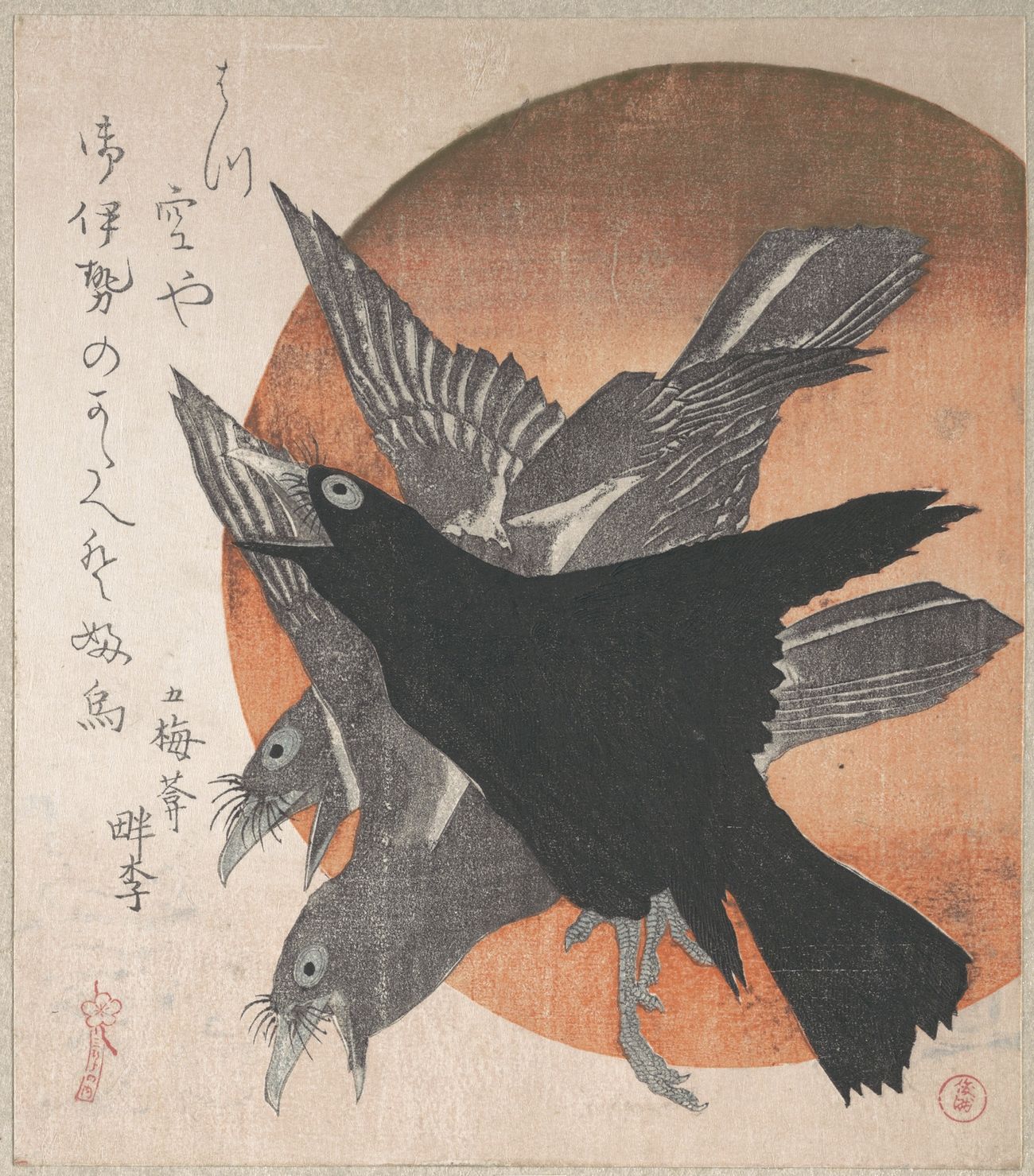
Croci the Crow cronked a cronk. A cronk is a crow call that says ‘ There is that man from the car there, with a clipboard, a pencil, three cages and his bag of carrion’. The man just heard a croak and a collective set of caws returning the call around him in the woods. ‘Well,’ the man said ‘the crows are definitely here.’ and put down his bag of carrion, the caronia carcass. The prize. Croci had smelt it before the man entered the woods. Before he got out of his car. Croci had called the call ‘cawcsss’ (with silent sss, at least to men) and as one, the crows converged, convened and conspired to steal his food.
One crow is all crows. They live en masse. No crow ever leaves the side of another crow. See one crow and you know some other crow is nearby. Each crow lives bracketed, like a word in sentence speaking about crows and what they intend to do. Crows calling to themselves be outspoken and literate in the wild non-human world, in the city, in the sky, on the rubbish dump, over the mountain top. Everywhere. Crows calling together to echolocate their fellow crows, and hear their own call answering back, in the throat of another crow. And these crows spoke of theft and trickery, because tricksters were them all. The thing with the crow is they go with the flow, because adventurers were them all. Whatever the outcome, in the end they would return, trick away and escape and curse and re-curse the fools who tried to trick them one and all.
Croci set off the moment the bag of sweet smelling rotten flesh hit the floor. All the crows so, set off too. All crows landed so, in a circle around the man and his soon to be stolen bag of booty. Croci hopped right up to the man and his bag. Two crows followed and triangulated him, took their third of the prize, and hopped into the cages to eat alone together in peace. They even closed the cage door, with click and clack and a corvidian caw. The caw is the call that says ‘We have him. He is ours’. It is said of men. Which is why man only notices this call. It’s subtext is ‘Sucker! and if crows could grin it would be said with a grin. The man was pleased. He had to get three crows for an experiment and had planned for it to take a month or more to train the crows with food, to trick them into the cages and carry them off to his lab and test them. But the trap closed on him the moment he carried the three crows to his car in cages, and put them in.
The car was warm and with their bellies full the crows slept. They woke at the lab as the cold air tickled their nostrils and were put in a cage indoors together on one perch, together as a three. The man went home, pleased with himself for gaining a month, for the ease with which his plan unfolded, for tricking the birds into taking his test. But wise them all, with one eye open so the man would see only three sleeping birds, the crows conspired and conversed. Little whiffles, and shuffles of breath, imperceptible whispers and ruffles of jet black feathers, almost silent clickings of bills and they had it all worked out. The way in was the way out. They knew. How the cage was built. How the lock was clicked. Where the sun came from, so where the windows were. In the darkness Croci conferred with his confederation of three. They reviewed and renewed their hasty plan made in the woods. If it was food the man thought had trapped them, it was food they would take from the man to undo his trap. They would refuse his tricks until they were fed, up to the gullet line under their bills, until he was fed up of their silence and their turned backs of sleek black feathers. For four weeks they got fatter everyday until they feared their weight would slow their escape, so then they turned and looked at him, and complied, complicitous and contrite. He suddenly found them friendly, almost apologetic, ready to do as he asked.
So off they went. Each put in a separate room. Each given treats for pecking at some marks on a piece of paper. Each chatting to the next. Each knowing where the other ones were. Each saying to all, what each was doing. Cribbing. Cheating. Conferring and sharing notes. Each one in the exam room passing with full marks with the answers given by the one that passed before. They saw and pecked some shapes like bones. Curved bones. Square bones. Cursive bones. Bones alone and in pairs, nested and bracketed in repeating patterns of self similarity. It was easy. Funny little bones on white shiny sheets. They were the connoisseurs of bones. They were carrion crows. They came into this world nested in a nest of other crows. Each knew their place. A pecking order from birth. Their family group bracketed together. Each a word in a crow call sentence. They partnered for life. Their partner and them bracketed for life. First single then double quotation marks quoting ‘I do’ forever together. All chatter and clatter and calling names. All finishing each others croak called sentences. Each knowing what the other was thinking. Embedded, a single bird, in a family, in a pair, in a roost, in a rookery, in a flock, murmerating en-masse. One crow is all crows. Each lives in and through the other. Their life and living is made through self similarity. There is no plural for crow in crow. We is I is we. Palindrome and palimpsest, all words overwritten and undertaken by the rest.
So Croci and the crew were happy with their work. Or should I say holiday. A warm bed. Unlimited food. No predators. No men with guns. Simple tricks. Simple solutions. They made the law they lived by. Free. Rebels all. A parliament of crows. All for one and one for all. Croci and the crew knew the time and place to shew, to be gone. After the moon had rolled over her milky form three times, they would go at night. This was their plan. The man disappeared for two nights, three times, every moon turn. He had a shiny little bone he kept on a hook on the wall by the window. This clicked in the cage and made it open, but did not click to make it close. It remained by the window on them entering their cage. One night, after the games with the little bones on the paper, Croci landed on the man’s head and made him shout. An accomplice stole the shiny little bone when the man was not looking and put it under their wing. He shut them in and went off blustering and huffing on his two days off.
He returned to find them gone. The window open and the cage bare. They left, cursing and re-cursing man, the fool, the sucker, the feeder, the tester, the test they passed with ease. Way too easy for minds en masse. Each bird a word in the collective prosepoem that is crow life. The singular song. Of the flow of us Crow. One in all. Our call. We is Croci. We sing our name.
Begone wicked. We is gone.
About Three Cursing Crows
After the short poem The Song of the Crow, which was quite lyrical, I wanted more of a detailed narrative. The Song of the Crow was performed at a performance night in Carlisle and went down well. But there was a lot leading into it, as presented on my site, and to give it out alone and unexplained was interesting. You release stuff into the world and loose control of it, it has a life then, of it’s own. For a second thing I wanted be a bit more explicable, so wanted narrative, but with a feel of how Croci expresses them-self. I hope therefore that it is more self-explicating.
In the writing, rather than the idea of Croci being the either/or singular of it, he or she, I wanted to explore a collective unsingular, a they and a them. So in the writing to avoid pronouns Croci became what we call ‘non-binary’. But like bi-sexual, the descriptor ‘non-binary’ relies on describing the thing it is by saying what it is not. My belief is that this is a manifestation of the patriarchy and colonialism, an othering of a continuum in process, splitting of a whole into an us and them. The act of not assuming singular sexed pronouns worked to make Croci become both an individual and a collective, a hive mind.
So on this basis it was clear Croci had a clear plan before the man with the clipboard entered the wood. This is the power of the trickster and Croci became trickster with ease. The Trickster exists outside the closed court and kingdom of the King and looks in, enters and leaves. This is what I wanted them to do, to take the piss really. Narrative allows the scope for more detail to make the way Croci thinks and acts more explicable.
The title was worked over a number of times. I wanted to let the title point to recursion, so as to not talk about it explicitly in the story, and I struggled. Then I wrote the simple descriptor ‘Three Cursing Crows’ and the words showed me what to do through the string threecursingcrows. This to me is an example of the intelligence of material, even down to ‘reecursing’ being nested inside a thing not about recursing. Materialising ideas makes the materiality intelligent. Things act for themselves, all we gotta do is listen and look for their performance, pay attention, with intention and attitude, be available for outcomes, but not connected to them.
‘Three Cursing Crows’ by Chris Reed (audio file)
This story was quite descriptive. For my next writing about Croci I want to get more mythical.
The name Croci had been in my head for ages. Once, a few years ago it just popped into my head. It seemed the perfect start to a poem about the song of the crow. A crocus is a very colourful little plant which comes up in the spring, The name Croci worked for me, as it appeared to be the singular of a plural that was crocus. I liked that a black bird could have a name of such a colourful flower. That a black bird, a carrion eater, a scavenger, a bird with a croak for a call could identify with a delicate spring jewel seemed to suggest a creature unlike it’s public image, suggesting delicacy and an aesthetic sensibility. That the name of the crow was a declarative pun was also very appealing. Like a punch line to a dirty joke.
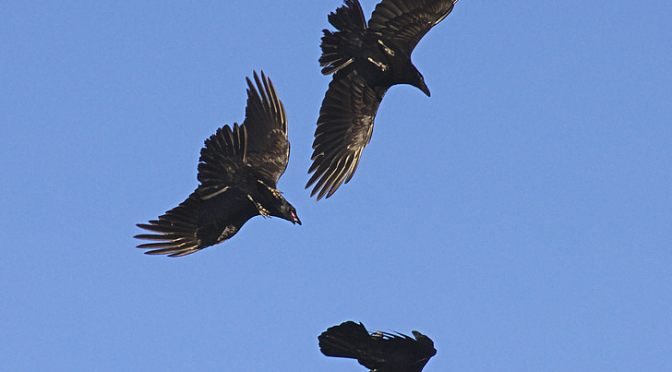
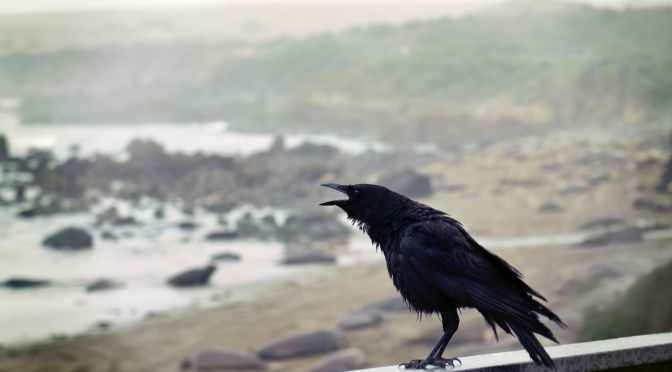
Taxonomically the corvids are oscine (singing) passerines (perching birds) and as such have complex voice boxes. The corvids, the crows, include, Ravens, Crows, Rooks, Jackdaws, Magpies, Choughs and Jays, the most colourful of the corvids are residents of the UK but there are over 120 species worldwide. In my writing I will use crow for corvid. Corvid is our linguistic Linnaean parsing of a life form that does not care what we call it. Crow is the vernacular. I can do taxonomy, just not in poetry.
That the calls of the crow, and all corvids generally are not songful and not always of a single bird, like a nightingale, appealed to me. Given what we hear of the corvids, the eponymous singularity of the ‘croak’ heard at a distance, once you spend time close to them together, you will hear the plurality of all sorts of little whiffles, chatterings, bill clappings and sundry noises, unheard at a distance. I believe the quieter calls are meant for other crows in a social setting. They are meant for kin not man. This suggests a private life.
For this poem I wanted to mix the plural and the singular, and I wanted a certain non-binary feel, as the sexes look identical. The individual birds identity would be inexorably linked to the group identity of a flock of birds who to non-corvids look all the same. The sexes are not expressed through different plumage. This, I felt, could reinforce the embodied and lived experience of the crow as bracketed, a thing within a thing, the one in the all. That for the research into crows, brackets were used, added a certain irony to the findings. In linguistics it seems bracketing is an important academic practice. In writing poetry I let the words speak for themselves, and play with each other and talk to each other. The repeated I, I, I, followed by We, We, We, seemed to come from the words being asked to do short repetitive utterances like a crows call. Then the repetition later dissolved into clamour of lines each with a different voice seemed apt.
In writing to a page, making the words seen, I noticed the ‘curse’ in recurse. So the way the corvids are seen as pests and vilified on farmland suggested an antipathy to the vilifiers, and possibly the glamorous, performing songbirds with elaborate and colourful plumage. Croaking as cursing was a great discovery.
The shift from ‘I is…’ and ‘I sing…’ to We is…’ and ‘We sing…’ from beginning to end, again, was suggested by the words themselves, and suggested a loss of the individual into a flock. The song of the crow went from all singing together to collective improvisation. So the words, once freed from my head onto the page, improvised too. The sky is the birds stage. The page is the words stage. The experience of the birds reified and embodied in ink.
This poem emerged like I hear the lyrics and sonics of rap. In rap I love the way in performance the words in one line change the words in preceding and following lines, through meaning and rhythm. When I spoke the song of the crow out loud it sounded like code-switching, so what was given by performance, was a capacity for being multi-lingual when you are taken for being sub-lingual, speaking a restricted code. Thus those willing to attend, hear a secret code, words of hidden experience, hidden in plain sight. So the birds blackness was not lost on me. We see them but don’t see them. Jim Crow, down by law.
I hear my local corvids differently now. Attention is focussed through intention and action to make art. When I go out the door to walk I step into their home. I step out now with more deference. Respect. I attend more. I say hello.
‘Song of the Crow’ by Chris Reed (audio file)
I felt like I had the song of the crow in verse, but I needed narrative, a story, to speak of their cunning. This is my next post – Three Cursing Crows
At the end of my last post I wrote about how I saw an article here crows titled ‘Recursive sequence generation in crows’, what it stated next piqued my interest ‘Recursion, the process of embedding structures within similar structures, is often considered a foundation of symbolic competence and a uniquely human capability.’ Other articles had more clickbait in their headlines, one stating ‘Crows Perform Yet Another Skill Once Thought Distinctively Human’, here and whilst this claim is not fully endorsed by all scientists I got to thinking about what I know of the Corvids and how this recursivity might be linked to their capacity for learning from experience. I wondered, given the frustration expressed in my last post about the difficulty in describing doing, and the proposal that experiential learning could be recursive, and the proposal that recursive thinking is based on language, and the observation that crows don’t talk, I wondered what it was in the experience of the crow that could produce recursive thinking.
So this post and some following posts will explore this through applied research and art as research with a view to applying ideas of recursivity to art making and experiential learning. The intention is to engage in subjective research, to use my own and other people’s observations along with art making to help me develop ideas through the action of making stuff and attending to what I make and what happens when I make it. This does not render an objective outcome in a scientific or empirical sense but it does render objects which provide opportunities for reflection and thus render personal insight and subjective knowledge. Outcomes are subjective, situational, experiential, embodied, emergent and multi-modal. As research, this will be generative and performative1. I hope it will make something happen.
Observing Doing
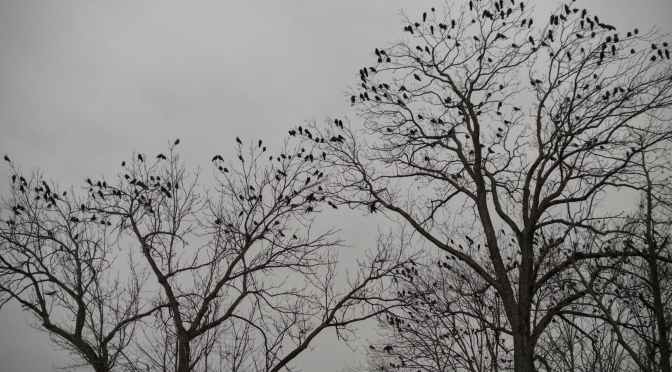
As part of my current outdoor as art practice, I walk a lot locally, I like the outdoors outside my front door and enjoy making art there. In my walking and my art making I have become quite attached to a local rookery. Through observation and reading, I came to realise the local rooks had culture. They had a form of collective knowledge learned from experience and shared. For example, in the winter I observed that they all left at dawn to feed remotely. They settled in a tree then set off en-masse to some remote destination. Normally they fed locally. I suspect they left for the Solway when the fields nearby were frozen solid. As a maritime environment, the ground freezes by the sea last. On my travels, driving as part of my day job, on frozen days I saw rooks feeding by the Solway in large numbers, but they were not there on warmer, unfrozen days. My hypothesis was that the local flock probably had birds with memories of feeding remotely on frozen days and these birds led the whole flock to feed. Memories of past events are seen as an aspect of recursive thinking enabling planning for future events or enacting plans for alternative actions in the present.
Describing Doing
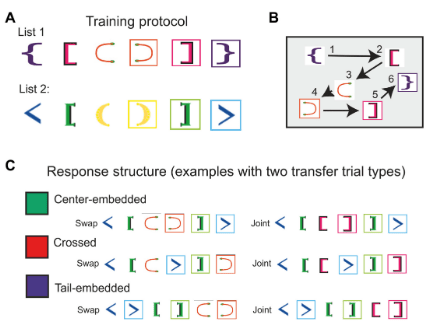
In the aforementioned research, crows are shown to possess the power of recursive thinking. This is proposed to be a skill previously only seen in humans by virtue of being expressed through language. The implication being that crows don’t talk so how can they possess recursion as a skill. Central to the research was the act of bracketing, of seeing one pattern within another pattern. Crows were shown to be able to see the pattern within the pattern below with brackets within brackets.
This is said to relate to recursion emerging through our capacity to use language to embed one idea within or express one idea as another. Much of this relates to the work of Noam Chomsky. Chomsky explains linguistic recursion as something that occurs when a grammatical sentence, which includes a noun or noun phrase and a verb, might or might not contain another sentence. Again at its core recursion is the idea of perceiving one thing within or through another thing. Extended, this leads to ideas of language, empathy, imagination, planning, art, memory, culture, science and maths. The idea of symbolic thought, thinking beyond the here and now of animals. So crows thinking recursively intrigued me and delighted me.
I got to thinking about how my observation of my local rooks and crows suggests they are very familiar with one thing within another thing. I believed they could have a form of embodied recursivity. As a dramatherapist and experiential educator this interests me.
Crow Talk
When I walk locally I often see a crow and when she calls I hear other crows nearby which I cannot see. My supposition is that individual birds use calls to locate where other crows are. Thus they are aware of themselves as a thing within another thing, the bigger thing being them as a group or flock. They are social birds, specially the rooks, and their experience of their vocalisations will almost always be of themselves vocalising in relation to other birds’ vocalisations. One could imagine the call of one crow as a word within a bigger sentence uttered by the flock, but this is spatial and embodied not sequential and spoken like we speak.
In my initial research relating to me checking if I was understanding recursion correctly, I found that the idea of recursion cropped up in a broad range of settings. It recurred within maths, logic, biology, ecology, linguistics, philosophy, media studies, code and programming, art, literacy and creative writing, psychology and neuroscience including studies of consciousness, evolution and ontogeny, aesthetics, fractals and chaos theory, and that was in just one google search.
My interest is in experiential learning and art making as a form of experiential learning. So whilst in all this I could find no direct references to experiential learning and recursion, there was enough to provide material to connect recursion to experiential learning and art making. The range of references suggested a phenomenon that could connect many different things, which interests me as this suggests a phenomenon which could be at the root of many other phenomena. A key to art as research to explore and express personal experience is its multimodal use, exploring one thing through many artforms to see patterns, connections and exclusions. Art making is seeing one thing through another thing which suggests a core recursive function.
A Plan For a Direction of Travel
So my plan is to use basic research approaches, document searches and reading alongside art making as personal subjective research to explore and develop my understanding of recursion. This will be posted on my blog, but because a blog has the most recent post first, and this journey may be useful to be seen as going from it’s departure to it’s destination and not the reverse, I will put up pages showing the journey in it natural order. Because it is my belief that art making and/as experiential learning is intrinsically adventure, there will be no fixed destination. From the little I had read, I could immediately see that recursive processes are the same. A mathematical sequence has a fixed formula, often with an end point. But the recursivity exists as a process, moreover, it exists ‘in process.’ The formula makes some thing change. The recursive formula in maths could seem to be as far as you can get from art making and experiential learning, but each iteration of the formula derives its outcome from the previous iteration. It is cyclic like it learns from experience. Like art making it is a difficult thing to describe in words.
One definition of recursion (of many) is that recursion is a thing that defines itself by it’s own definition. here It is described as exhibiting self-similarity. In programming languages, if a program allows you to call a function inside the same function, then it is called a recursive call of the function. One example of recursivity brought together the aesthetics of art and geometry and a philosophical ideal for ancient Greece, the golden mean. In my training as a dramatherapist we put great emphasis on the archetype and the symbol in myth and storytelling. But with a background in science, I could see that the emergence of Euclid and Pythagoras also relied on the archetype and the symbol but through maths and geometry. Euclid worked out basic geometry and expressed it through his book Elements which was used as a core text until the 19th C. It is plausible that the work was done with nothing more than a compass and line in the sand on the floor, like at a campsite or like on a blank canvas. It was plain that the golden mean made itself from scratch. You start with a straight line, divide it into three, use a compass to make a right angle and define the section so AB/AS = AS/SB = 1.618… Yet the golden mean is found in nature, art, science, music theory, architecture, on and on. It is deeply self-similar and seems to recur in many diverse settings.
Doing Doing
What struck me was that recursion is a thing made in the making, it is a doing thing that remains elusive for words, it is as the saying goes, a path made in the walking of it, the principle of Dao as stated by Zhuangzi. So for my starting point I embarked on a path of making some thing, or numbers of things and work multi-modally. I want to also use poetry and story as if crow could inhabit recursivity, to show how crows subjective experience may include recursivity. I want to see if I could make the golden mean with a compass and a ruler, or more specifically, have the golden mean make itself facilitated by me. I want to do this through art making but also dig through more formal research descriptors. I want to see where this intended path will take me. I start with direction not destination.
Given that my initial interest was captured by the nature of crows I decided to work with language, but through poetry and imaginative writing to better express my ideas about recursion and how crows could experience and embody recursion without using words. This would be an experiment to see if a creative process could be used to explore and express the embodied experience of crows as recursion. This would, like I said, not be an alternative to scientific research, but an adjunct, an act of performative research to describe in a creative form what the science expressed in quantitative form. A subjective re-viewing of the thing the science showed us. The subjective object.
Barrett and Bolt; Practice as Research – Approaches to Creative Arts Enquiry – Introduction. ↩
This post comes three weeks after a walk on New Year’s Day 2023. On the walk, I wanted to use a walking algorithm of turning LLLR at path intersections to reconnect with my local walking range after a hiatus. The walking algorithm helps me attend to the experience rather than concentrating on navigation. After the walk, I wanted to make some thing that said something about the experience. I made a string of words describing the experience of the walk along with a slideshow of images and put up a post.
I wanted to use the words in a way that showed the experience of the walk, the form showing just one thing after another to indicate the experience of walking a linear path, and the content indicating what I saw and thought. A long string of unpunctuated lowercase words describing the thinking and sensing seemed to do this. It was not prose nor was it a poem, it was an impression of the walk in words. I called it LLLR prosepoemwalk. here
On the page, the string of words became a word block, a physical form, something I have worked with before. The words represented a series of encounters with the place I walked through. Each one occurred as the here-and-now experience, but which added up to a sense of time passing as I physically passed through the outdoor space.
One of the things that interests me is the way showing or describing doing, the words and pictures of the experience, never fully express the fullness or completeness or singularity of the experience. This is specially the case if you are intentionally attending in a state of flow.
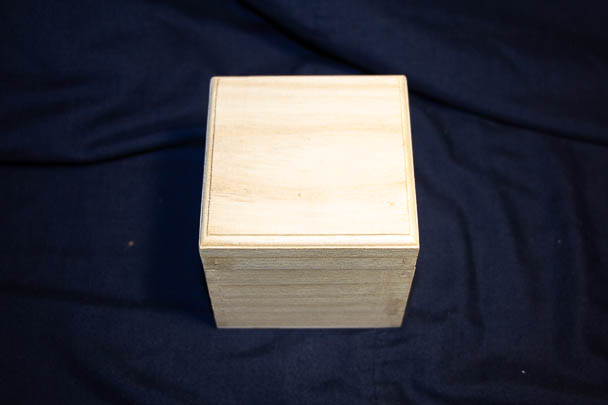
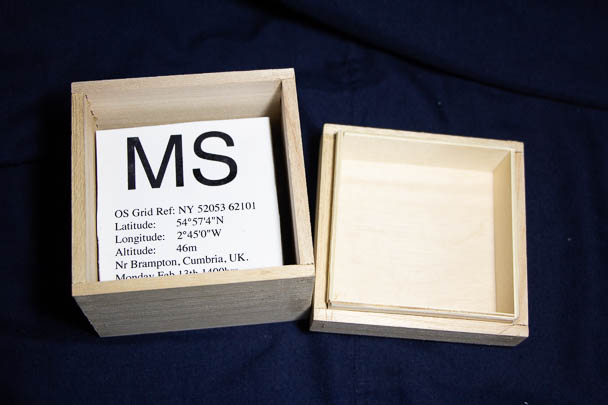
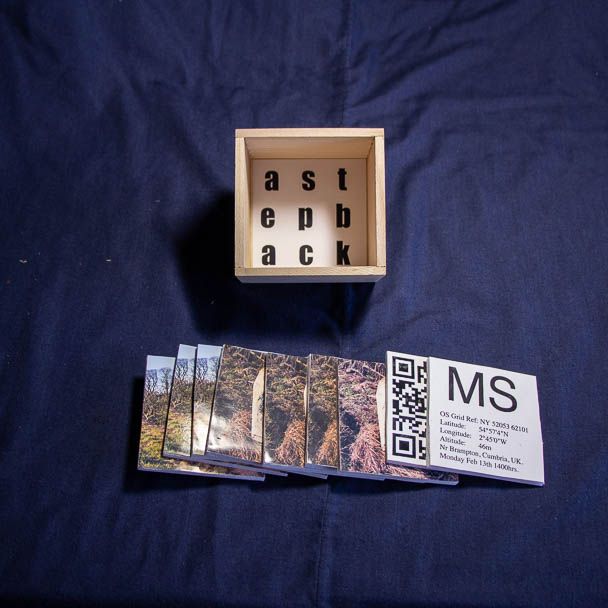
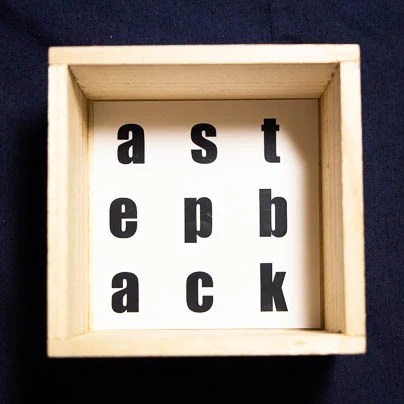
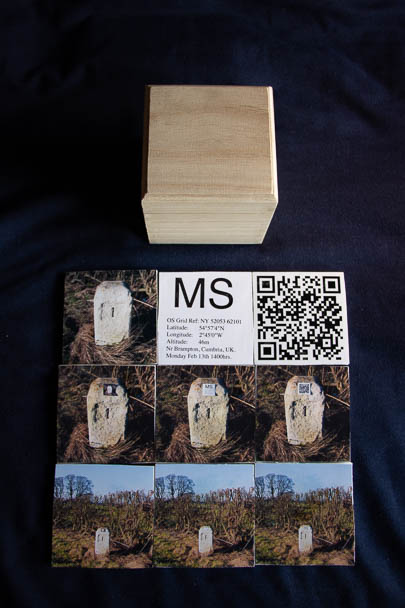
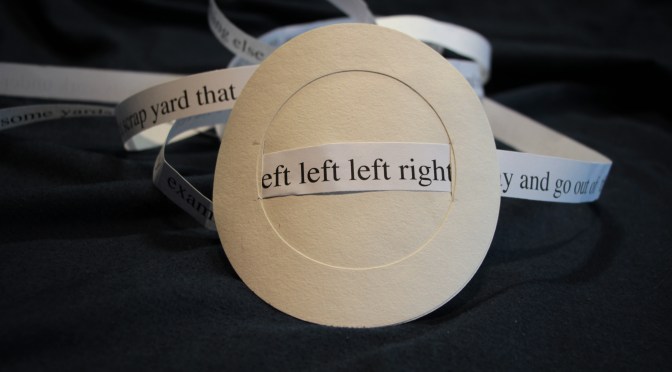
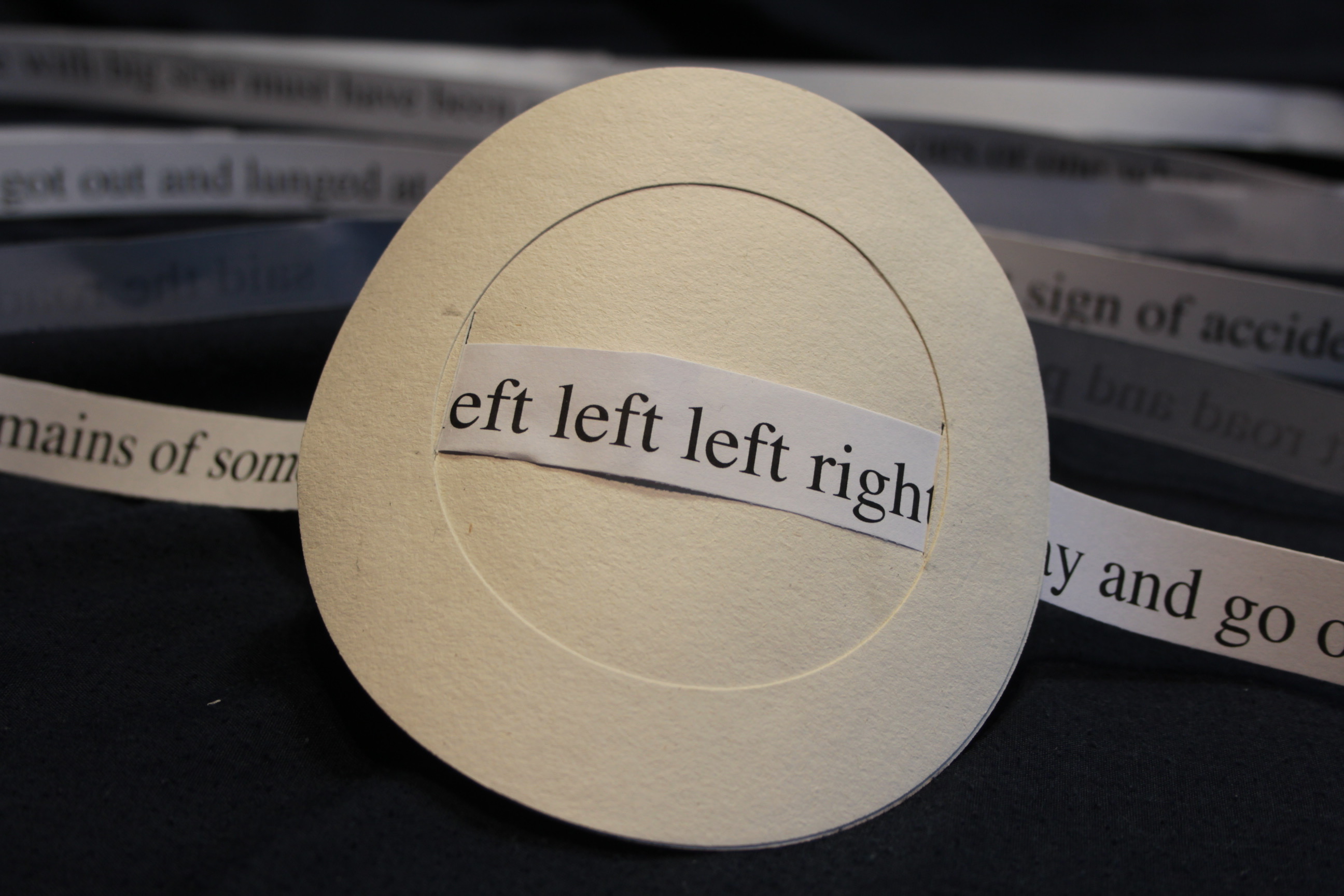
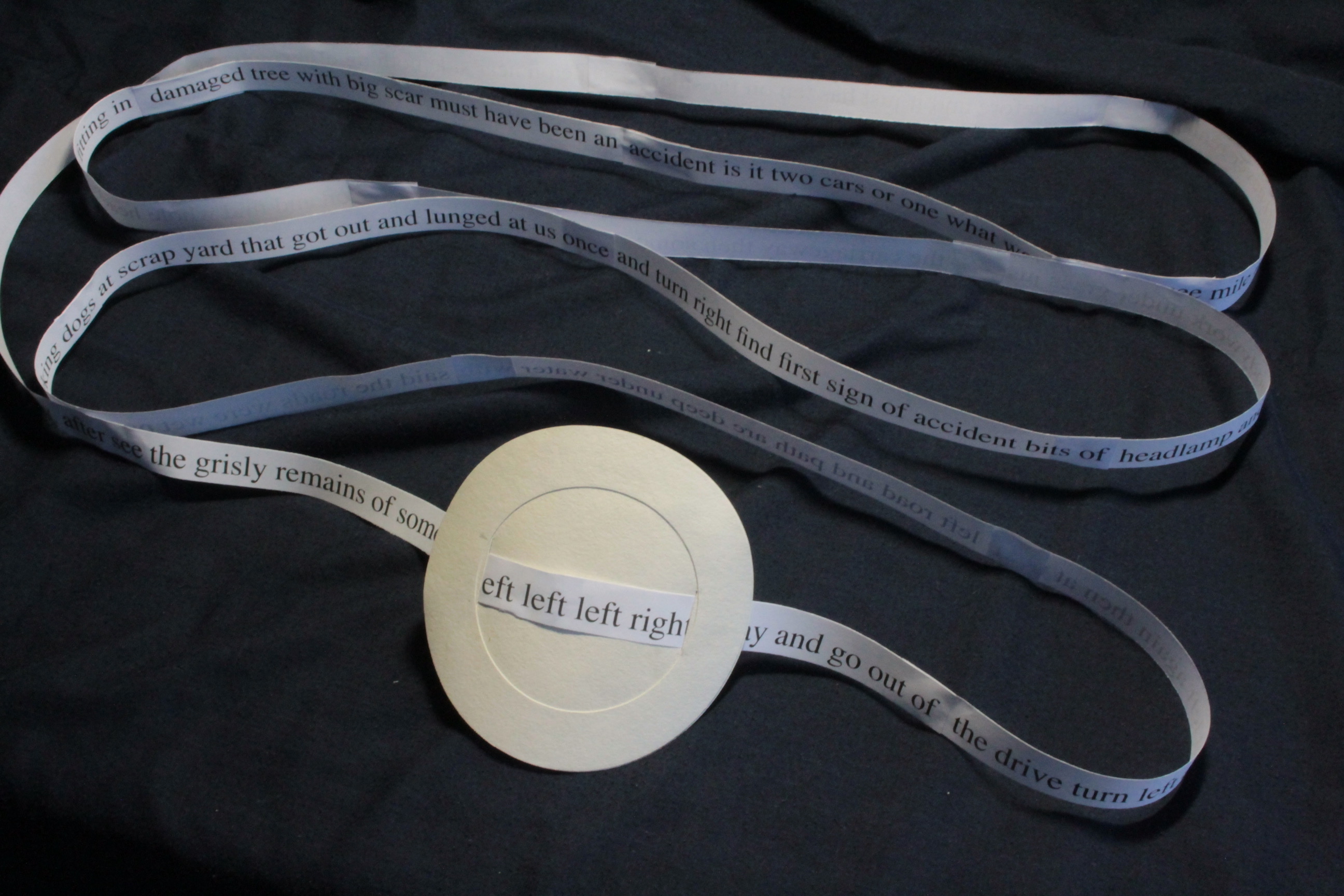
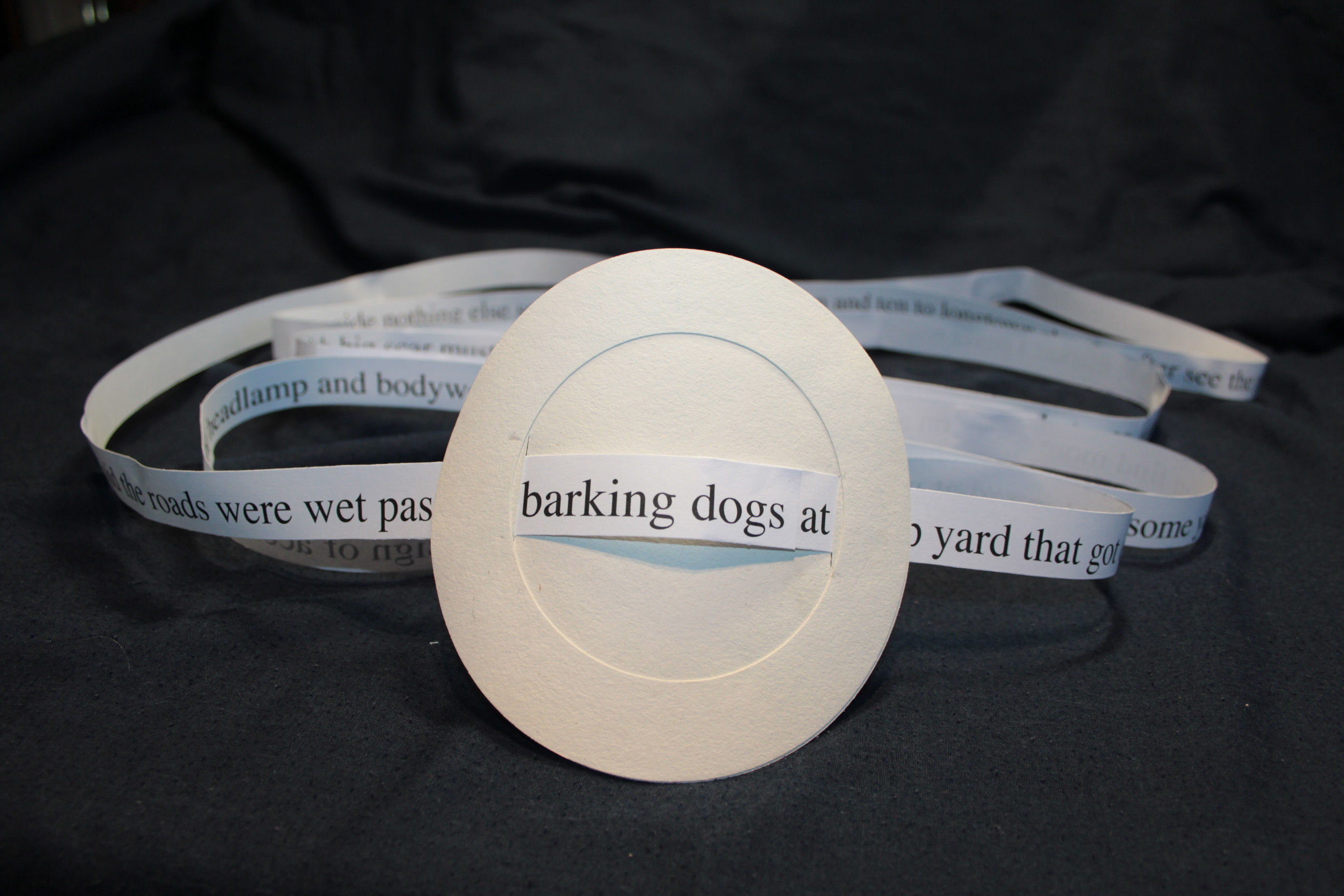
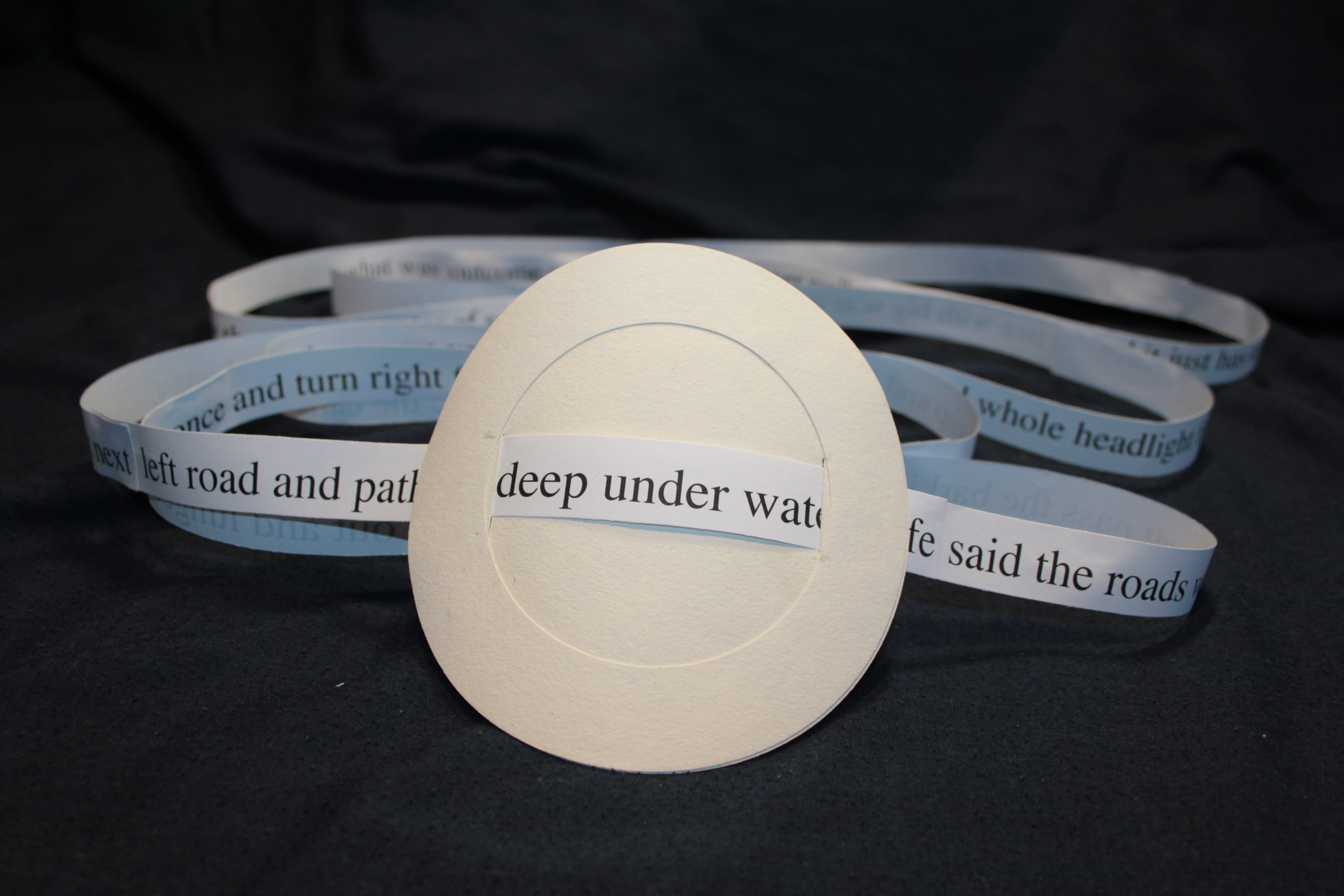
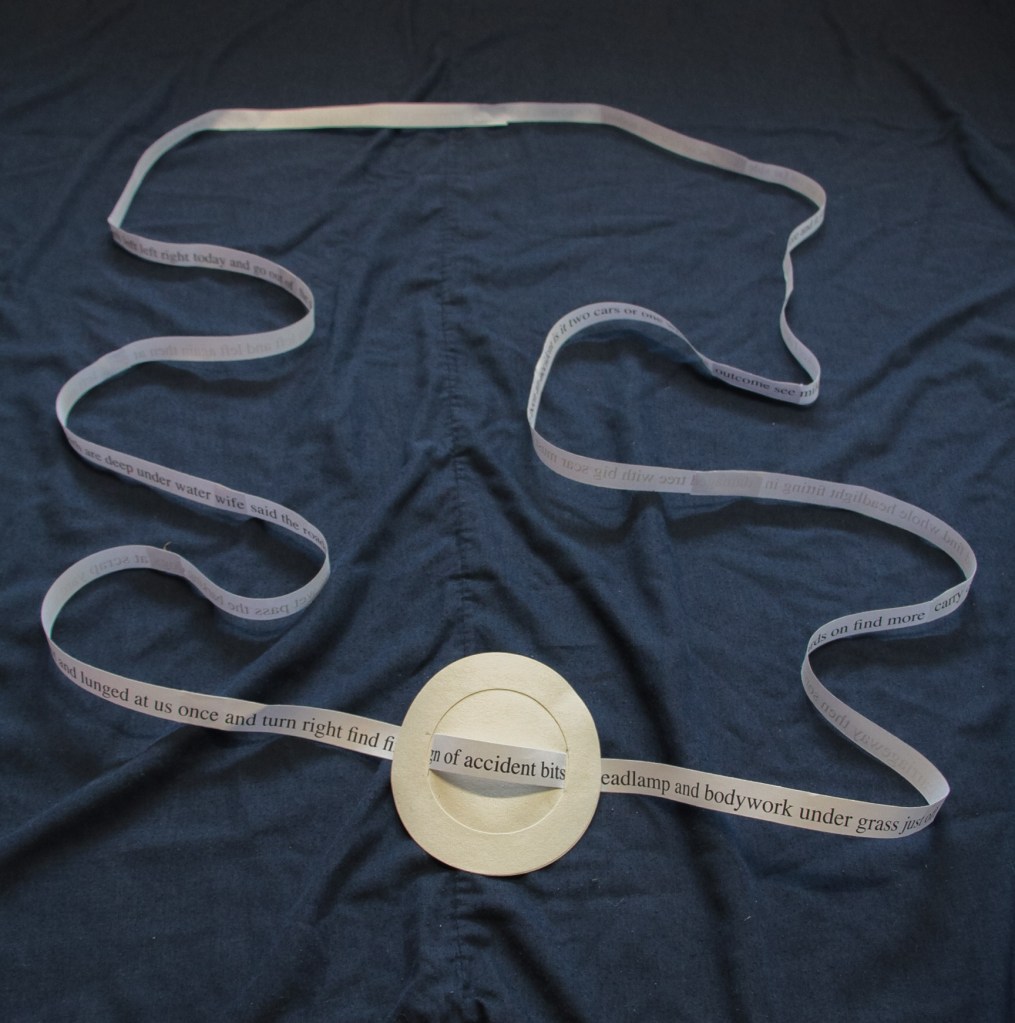
This post has been worked on for three weeks. I made the object shown above and below to try and express the experience frustration of describing doing, and translating experience into words. What writing the post revealed surprised me. I want to bring what it revealed into the post, but first I want to describe the wandering path I took to get to what it showed me.
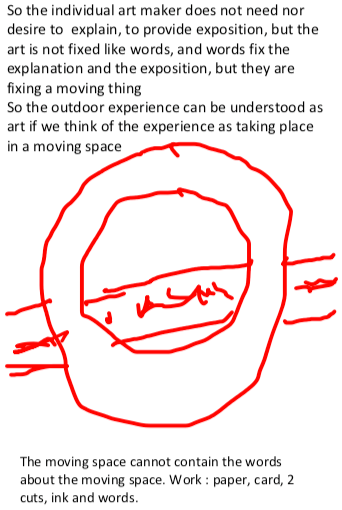
Looking at the words, in unpunctuated lowercase text as a block, I was interested in what would happen if I made the words take on a linear form, rather than the block imposed by the page. A memory of ticker tape experiments in physics came to mind. Then I saw a big string of words describing doing extending way beyond a tight space of a small circle, showing only 2–3 words. I wanted to make this image or idea as a material object, to express the difficulties in using words for describing doing. This was my original sketch, in MS OneNote. I saw the inner circle as my experience within the bigger circle, the space I was walking in. I saw the words as just a little bit of the experience, not really fully describing my experience. They went on and on at length about some shorter succinct experiences. The experience, like the artform, could speak for itself simply without verbosity and verbiage.
In my dramatherapy training and practice and my reading about art as research, the idea of art as a form of material thinking was developed and was very compelling. Can we think, through the experience of making material objects? Can the materiality of art making be research without needing words? I work on this a lot. Some arts practitioners have explored ideas and experiences of material thinking.
Some Ideas about Material Thinking
Two interesting arts practitioners who have worked with theories and practices about material thinking, the capacity for arts materials and practices to act as a way of thinking through doing are Barbara Bolt and Augusto Boal. Each uses different words to describe the experience, but the core phenomena is similar.
In a great piece of writing by Bolt here she says ‘Theorising out of practice, I would argue, involves a very different way of thinking than applying theory to practice. It offers a very specific way of understanding the world, one that is grounded in (to borrow Paul Carter’s term) “material thinking” rather than merely conceptual thinking. Material thinking offers us a way of considering the relations that take place within the very process or tissue of making. In this conception the materials are not just passive objects to be used instrumentally by the artist, but rather the materials and processes of production have their own intelligence that come into play in interaction with the artist’s creative intelligence.’
In ‘Rainbow of Desires’ Boal writes in a different way about ‘Concretisation’ in the experience of artistic or therapeutic performance. He says ‘Concretisation is the putting of ideas or thoughts into concrete form, concretisation being the act of materialisation of these desires’. He uses the word desire as an amalgam of idea and intention. He goes on to say ‘The desire becomes a thing. The verb becomes a palpable noun.’ Then of the artist/performer through the experience of doing, of acting, of action he goes on to say ‘In living the scene, she is trying to concretise a desire, in reliving it, she is reifying it. Her desire… transforms itself into an object which is observable, by herself and others. The desire, having become a thing, can be better be studied, analysed, and (who knows) transformed… Not only what one wants to reify is reified, but sometimes also things that are there but hidden.’ (pg 24 Rainbow of Desires).
Both Bolt and Boal advocate for material thinking. The materiality can be through a physical object, or through performance, an engagement with space. In both cases we make some thing come into existence that previously did not exist. This was called poiesis by the greeks and included art objects and theatre. My proposal is that this is experiential at it’s core and making art as an object or as a performance is a form of experiential learning. We make art and attend to what we make and what happens when we make it. So I did this and am telling you about what happened now. This is what I made as an act of material thinking. The inner circle is the experience. The words, taken from my writing about the experience, take up much more space than the experience.
So what does this object have to say?
The Object – A Subjective Reflection
I could find no name for it at the time and still cannot. That it has no name interests me seeing as it is mostly words. The original image I had in my head was of a circular object made of stiff paper with cuts to allow a tape with words on it to pass through it, like a line of text. This was my idea. My intention was to make it and see what it had to say. My preparation was to fiddle about making prototypes and find a form that worked for me. Then I made it.
In my mind was a way that the circular bit would be the singularity of the experience, present in the landscape, and the words would be utterly unable to fit into this. The words in the prosepoem were also made the way they were to represent the line made by walking. So I printed out the whole thing as large text as vertical lines going top to bottom of an A4 sheet. My intention was to do the whole prosepoem and cut it into strips and stick them end to end but it would have been 36m long which would have taken too long to make. I have to go to work some time. This only served to reinforce the idea of the difficulty of describing doing.
In my prototypes I experimented with circles of card with smaller circles drawn inside them but it did not work for me. So I used some cutting dies used in crafting to make the form which worked nicely for me. The words were constructed as a loop, so I got circles within circles within circles which was pleasing. I played with it, moving the strip back and forth and found the way that it only showed a few words at a time was also pleasing.
An important part of art making is the act of reflection. This is a core element of experiential learning. But the great thing about an object, a material manifestation of your subjective experience is that it persists after the experience. It is like you hold the the experience in your hand to aid reflection. In the action phase of art making there are three elements. Action, the doing, Reflection, the thinking and Incubation, the not doing or thinking. The object helps with this. You can forget it completely, let it sit and come back to it. Some thing happens at an unconscious level. Like when you cannot remember the name of something and then 10 minutes later it pops into your head. Some thing incubates like an egg or a seed, then pops open or sprouts little leaves. The Celts start their day at sunset and their year at the end of autumn on what we call Halloween or All Saints Day. Growth starts in darkness.
In my previous post, King Crimson sings a song about his experience of art making here. The writer Adrian Belew talks about the art object he made.
‘I do remember one thing
It took hours and hours but
By the time I was done with it
I was so involved, I didn’t know what to think
I carried it around with me for days and days
Playing little games
Like not looking at it for a whole day
And then, looking at it to see if I still liked it
I did!
The more I look at it, the more I like it
I do think it’s good
The fact is…
No matter how closely I study it
No matter how I take it apart
No matter how I break it down
It remains consistent
I wish you were here to see it!
I like it!
This is what my unnamed object did. It remained consistent. In contemplating it it became a material objective form expressing my experience, my ideas and words could roll around. The object and the experience of making it became a form of material thinking. And as Barbara Bolt says ‘Material thinking offers us a way of considering the relations that take place within the very process or tissue of making.’ I made the thing out of a desire to better understand describing doing. Of this Boal says ‘The desire, having become a thing, can be better be studied, analysed, and (who knows) transformed… Not only what one wants to reify is reified, but sometimes also things that are there but hidden.’ The last bit is important and links to the image on my home page. Here Art lets you see things from another point of view.
Part of my research surrounding the making of the object was writing. I have a journal and used this and wrote various forms of this blog post. John Baldesarri, here one of the elders of modern art talks about writing thus, ‘Writing helped me understand what I was thinking about.’
I suggest we see writing as performance or a form of material thinking. You have an idea or a desire and in writing it down you see it as words on a page or screen. Your thoughts are materialised. You see them dance onto the screen and deliver the content of your own script. You see your ideas perform like actors on the silver screen like a movie, but on the screen of your PC or Mac.
Rachel Lois Clapham says ‘To call something a performance is to separate it from the world and then present it back to the world as something distinct. This double movement of separation and re-presentation is the writing of the performance, and it is in this writing that performing exceeds doing. Being written gives the performed thing the simultaneous immediacy and distance of language, by which its separation from the world permits the fullness of its expression.’ here.
That ‘..double movement of separation and representation..’ she talks about, is the cyclic form of experiential learning. It is what Performance Studies progenitor Michael Schechner calls ‘Restored Behaviour’. here Viewed through the lens of performance, writing can be seen as experiential learning. In writing I can experience my thoughts as material(ised) thinking about experience. This is writing as doing, a verb, as performance, as well as a noun, the thing I have written, my writing, the thing you read.
In writing this post I cycled through different titles, but like the object I made, I could never settle on a title as a fixed thing. I could not name it. The noun, the linguistic act of fixing a thing with a name eluded me. The act of the noun to name a thing, as opposed to the act of a verb, to denote an action seemed to me to be in opposition. The words on a page describing doing seemed to take the action of the noun and thus seemed to fix the verb, the action of doing the thing, thus rendering it inaccessible to the reader. ‘You had to be there’ you might say when a description of an experience falls short of the experience. One title I tried was ‘The Subjective Object’. On reflection, this seemed to work very well. It has an intrinsically oxymoronic nature, which seemed to express the intrinsically oxymoronic quest to describe doing. An objective description is intrinsically incapable of being congruous with the subjective experience of doing.
My proposal is that we can make art as experiential learning to conduct subjective research to explore and express personal experience, including outdoor experiences. I see this as an adventure, which taken from the Latin adventurus ‘about to happen’, which also makes this an oxymoron. The thing about to happen does not currently exist, and when it comes into existence it is no longer about to happen, so it cannot be what it’s name claims it is. It feels like trying to explain things by giving an explanation of the thing.
I lived with my object for three weeks. I had made it in the form I imagined which fixed it. But I wanted it to move me on. I wanted it to propose a new form and meaning for itself. So I ignored it. I let it incubate. I tried writing about it but the words would not organise themselves, they just circled back round and returned to themselves. I put up this post to express this experience. here
My experience is that all made things will change form and meaning over time. I had to bide my time. I once went to a lecture by an artist and psychotherapist, called Patricia Townsend who wrote ‘Creative States of Mind’ here in part because there were lots of books about the skills needed to make art and about the psychology of named artists and named artworks, but few about the experience or psychology of making art. Lots about art as a noun, but little about art as a verb. Where art as doing was described it was presented as the skills of the oil painter or the jazz pianist or the method actor. Patricia talked about her journey to becoming a skilled artist, exhibiting and selling work and working as an arts therapist. She talked about how she had found her unique way of working after a long journey. She talked with pride about eventually finding her unique artistic vision. But in writing the book she had looked back at her undergraduate work, having ignored it for years. She described her shock at seeing her unique artistic vision in her earliest work, in plain sight. What had changed was not her work, but her capacity to see how she saw. My experience is similar. I look back at my early work and see things there that in my mind are new exciting and current developments in my work. Not looking at things can help you see better the things you are looking at.
Like the man in the King Crimson track, I played games with my subjective object, ‘Not looking at it then looking at it to see if I still liked it…’ and the way I saw it changed. In the original image I only saw the circle with words going through it. In making it, I cut it joined the ends together. The making of it made me make the prosepoem into a shortened edited loop. But the loop moved through the opening. This offered new ways of understanding the object. I played with the materiality of the object and new ways of thinking about the describing the doing became apparent. The material thinking capacity of the object offered new ideas that were there all along, like Patricia’s undergraduate work and my earlier work. What the period of not looking had changed was not the object, but my capacity to see how I saw it.
I photographed the object just after I made it but missed the way the words formed and endless loop. Later I could see that. So I photographed it again to show the word loop.
So I started with a stream of consciousness on the walk, I turned it into a string of unpunctuated lowercase words, I wrote them down on a page and the string became a block, I took them to a ribbon to recreate the linear experience of the walk, then I looped them to make them fit in the object. But the object I made remained physically consistent. On reflection the making of the object both explored and expressed the experience, not only of the walk, but the experience of making the object as well. I still find finding the words to describe this lived experience difficult.
In my training as a therapist and later in the reading I did on post-grad arts research the capacity to use research to show efficacy of the art therapies and arts education in a quantitative form through and through the written thesis was questioned. The argument was that the art making was research. Words describing doing were of a second order to the direct first order expression through art making. The words became a discursive adjunct to the non-discursive artform and it’s making. That art can be research is still contested and modes explanation and discourse still abound. But for me the object I made shows a first order expression of the experience. The materiality of it’s construction made it’s own intelligence apparent. It showed me what I could not see. But in part, that it became seen was in part because of the act of performative writing. I saw my confused thoughts on the screen and, in conjuction with the object, worked with them to see some thing hidden from me. Like Boal says of reification of desires above ‘Not only what one wants to reify is reified, but sometimes also things that are there but hidden.’
In the end the elusive experience of the circularity of language in the making of this post was oddly made more fully known through a totally unconnected encounter. I have a newsfeed about art and the outdoors. I found and posted a news item about the intelligence of crows. I adore the whole Corvid family. I have encountered them in the Alps and the Atlas Mountains, in rural Wales and Cumbria, and in the middle of London. Crow is a trickster. Ted Hughes wrote a book of poetry about Crow. Here On the linked site Paul Radin says of the Trickster, ‘s/he became and remained everything to every wo/man—god, animal, human being, hero, buffoon, he who was before good and evil, denier, affirmer, destroyer and creator.’ The trickster is a god and an idiot. The news item is about the intelligence of crows.
In reading the article here I was taken with the central finding of research which showed crows can engage in recursive reasoning, a form of intelligence assumed to be singularly human, and a product of language. It derives from Latin recurs-, stem of recurrere “run back”. Wiki succinctly describes recursion as ‘the process a procedure goes through when one of the steps of the procedure involves invoking the procedure itself.’ here
Experiential Learning as Recursion
There are many descriptors of experiential learning, but in all there is a big element of recursion. What we do informs what we do next. We have an experience which when attended to, informs our next experience. It is a loop. Our next action is informed by a looping back to previous actions. But sometimes we need to go round the loop many times to be able to see how we can get out of a loop.
Examples of recursion are many. It is well used in language, mathematics and logic, but also occurs in art and biology, so descriptions of recursion will vary. But the act of recursion seemed very apt on reflection of the experience of taking my walk, making my art object and trying to write about the experience. The experience of writing, going round and round in a seemingly endless loop was moved on by changing the way I saw my object to be an endless loop.
So to me recursion would seem to be a way of seeing patterns in patterns. To see patterns in patterns needs you to see a lot of patterns. But once you see the pattern, you cannot unsee it. If recursion is based in language, then how come Crows can do it. Pattern recognition comes from the experience of patterns. Recursive learning can be experiential. It may well occur in the natural world, as well as in the world of mathematics, and some mathematicians say the world is mathematical in essence. It does occur in language. It does occur in art making as the story of Patricia Townsend shows, and my story of making the endless language loop in my art and not seeing it also attests.
The thing within recursion is that it has a naturally closed element whereby you can only say something about a thing by saying something about the thing you are saying something about. But going round that loop allows you to see a pattern and in seeing the pattern you are able to move on, to another loop, but through seeing another pattern. My proposal is that in making art, the experience of making becomes concretised, materialised through materials which have their own intelligence, (their intrinsic form) so it enables you to see the pattern of your experience, and move on to seeing another pattern. You literally have an object that is the experience. It is recursive.
A symbol that was given in my dramatherapy training was Orobouros, and this is a symbol of recursion.
Coming from experiential learning I took this to mean the experiential learning cycle and glibly failed to pay attention to it in detail. But looking again I realise the snake is feeding itself by eating itself. That what I learn by doing informs what I do still stands as a model for experiential learning, irrespective of what a snake eats for dinner. But what I wanted to show here was an example of how one can learn from the experience of making art. And as an example, it shows both the pitfalls and the productive paths. I have learned something through art making, but it’s description in words took longer than I thought.
My plan now is to work with artform to explore the experience of exploring recursion. This will go up in a series of posts rather than one long one.




 Moving Space