This little rambling expedition was prompted by my reading this article below (click it to see it or here)
It is an article about a scientifically measurable phenomenon that occurs in both physical living and non-living systems and gives evidence that all order emerges out of disorder. It struck me that this could be seen to have some relevance to making art.
This is a thing that interests me because I believe art-making does this in the interaction between the physical living art-maker and the non-living materiality of the art object, as painting or piano. I am interested in this, like I am interested in the phenomena of ‘recursion’. Recursion as an idea can be found in art, science, maths, coding, ecology, language and experiential learning and I am interested in things that crop up in diverse settings. That this can describe a gas as well as a goose is what interests me. I like the idea that this may describe some underlying (or overbearing) principle that can be, with limitations, be applied universally.
An interesting article on how much more a genuine painting stimulates the brain than a reproduction. More apparently than an unexpected stop in a lift. Scary!
Nine years after I first walked as an act of art making, I have returned to Walton Moss to circumnavigate the same grid square as before. The first time I forgot my compass and despite my best intentions the outcome was, aesthetically, a bit rubbish. This time I intend to cheat like spotted feline to make a pure form.
This article introduces the return and reflects on why the experience was both different and the same.
There are may ways of describing experiential learning but this work from Professor Thomas Fuchs works for me, describing cognition as embodied and active and the brain as a relational organ, the title of his 2016 book.
I am working my way through his 2018 book “Ecology of the Brain – The Phenomenology and Biology of the Embodied Mind”.
In the preface the book refers to the idea of ‘..the Umwelt for understanding the human brain, namely as an organ of relation, interaction, and resonance: with the body itself, with the immediate environment of the organism, and with the social and cultural environment of the lifeworld.’
The Umwelt or environment, is a way of thinking about how our perception is a product of our circumstances. A bacteria, a bee, a bat, a bird and a badger all live in a wood near my home. All sense and respond to the same woods but each will percieve it in a very different way. A bacteria responds to heat and chemicals in it’s immediate milieu, a bees can sense the sun, with compound eye and navigate by it, a bat flies by sound, a bird by sight, a badger lives in darkness and hunts by with its nose. To each it is categorically a different place. Each organisms umwelt, their environement, thus their experience, is different.
My take is that the outdoors and art making offer us ways of modifying our umwelt or having our umwelt modified. We can, through art-making, think through paint or dance. The outdoors provides us with an experience very different from our normal domestic indoor setting. Art making and the outdoors extend and modify our umwelt. Thus they extend and modify us. This is a key idea in what I am proposing.
The video below has Professor Fuchs explaining ideas from this book. The language is dense but non-technical. It may be a useful way of thinking about experiential learning, our learning in an environment, an umwelt, for artists, art therapists, experiential and outdoor educators.
He talks of learning being circular, realtional, thus performative and phenomenological, about how mind and body are a unity, and both the subject and object of experience, and about how an ecological understanding best applies. For me it brings together a lot of ideas, maybe attached to different words, in a variety of other academic discourses I have read, so it is post-curricular and trans-disciplinary. To me a good sign. It suggests it has the scope to be understood by people from many modes of discourse.
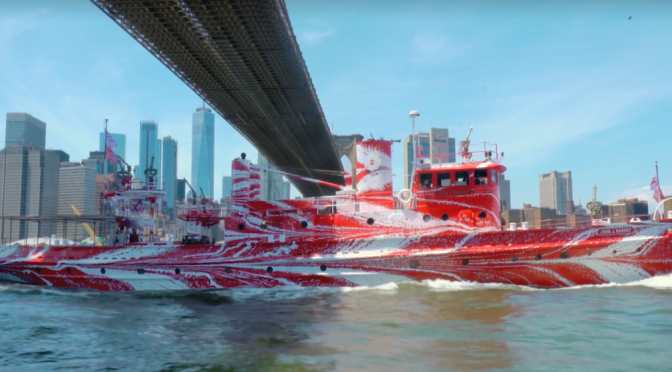
Great video of artist Tauba Auerbach who works right on the edge between arts practice as personal subjective research and objective material research to the point where they become some other thing. That they are they reinforces the post-curricular, nominal nature of their work. That they seek to find the substrate that underpins our surface world fills me with wonder and awe. The header image is a boat she painted.
In this video Tauba says “I want to learn new things constantly. And I am always trying to find the pattern behind things. I have educated myself about a number of mathematical and scientific principles through crafts like paper weaving and paper marbling. To marble paper it is all about relationships and ratios…”
This appeals to me a great deal. I read nothing but books about maths for about 6 months once on the principle that maths may describe the underlying substrate of the material world. In the end I was unconvinced but concluded that maths provided the best map we have available for the underpinning of the objective world, but the maths was the map not the territory.
So like Tauba I explored art making as a way to get there by other means, subjective means that meant something to me personally. I made a things called ‘A Step Back’ here as this path about maths led to me exploring ideas about recursion between the digital and analogue domains and the oddly dissociative effect of things being in both domains. Recursion as a phenomena connects lots of things in maths, science, art, ecology, sociolology, philosophy, on and on. I believe it is a source of creativity and distributed or collected intelligence between intelligences other than just people, see here. Art making helps us encounter distributed intelligence. James Bridle wrote a great book about this idea, see here and the way it is embedded in the world.
Tauba also talks about art making as a way to get out of thinking in words. This is also important. Materials used in art making have their inherent material intelligence made available through the act of art-making. This intrinsically and in an embodied way extents your perceptions to re-view the world through art making. Thus arts practice facilitates the extended mind see here.
Tauba’s website is here and a great pdf called ‘Thy Fearful Dissymmetry’ is here to see more.
And the original link was for Art21, a great arts website here and here.
At some level there is a connection between art making and adventure. The place this can happen is in the making of art. Arts practice. Arts practice could be seen as a journey of uncertain outcome. A big part of the adventure journey is the travelling rather than the destination. The journey is made in the walking of it. So it is with art making. I will give you two ways.
Art as Adventure – No 1
The Journey of Uncertain Outcome
I had an art adventure this weekend (Oct 21–22 2023) on Adobe FireFly here. Adobe is doing a big sell on their new service, FireFly. This is an AI image maker. Kinda controversial in some quarters. Some AI image programs scrape art off the interweb and quite rightly some object when art is scraped but not attributed to the maker. Everybody wants the artist to do some art for them for nothing. Hey it’s good publicity right!
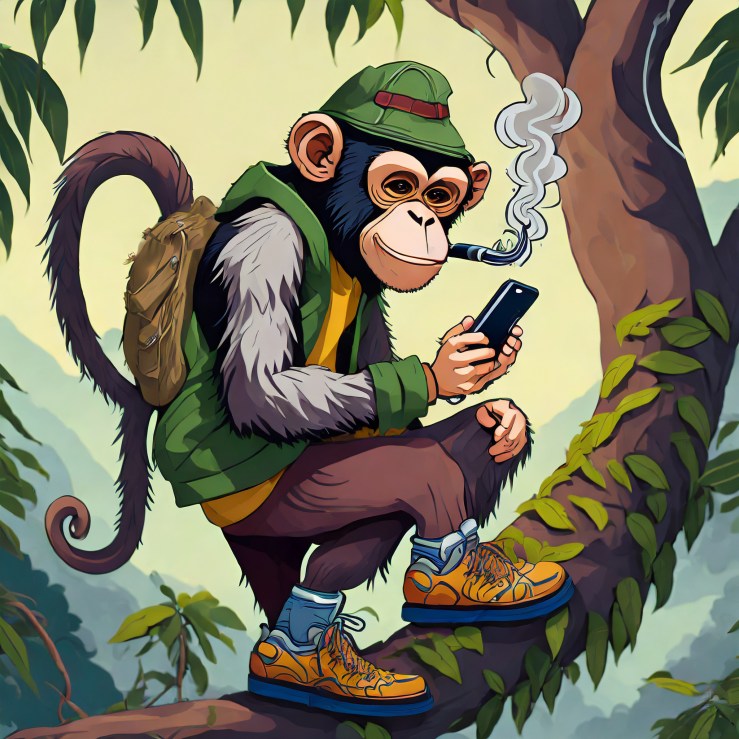
But Adobe base FireFly on their product Adobe Stock of 2 million or somethingorother images here and here. For this you sell them a photo or artwork and they then own it, then designers and advertiser and artists can buy other people images for their art/product/service etc. So Adobe scrape their stock of bought art and images, where the artists are paid. Fair enuf. But this is then used to drive their AI image making machine. They then sell on this service to subscribers. But this all goes (or went) live November the 1st , the paid bit that is. But ’til then it is (or was) up for grabs for payed up subscribers for nowt. I have the ‘Photography Plan’ so I experimented with it. This was my adventure. I put in ‘a monkey in a tree wearing trainers and smoking a pipe, looking at her mobile phone,’ and this is what I got…
This begs the question ‘Did the monkey agree to this and did she get payed and is she in Equity?’. Art can be so difficult.
My interest (beyond smoking monkeys) really was not in such concrete manifestations but in more abstract ones. Below are some images and the text prompts I gave for more abstract ideas. I wanted to see what I would get.
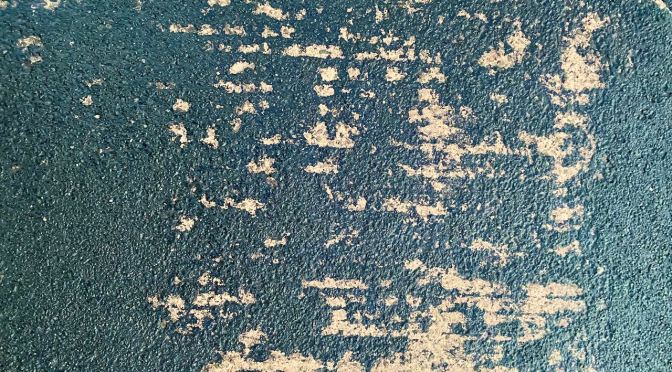
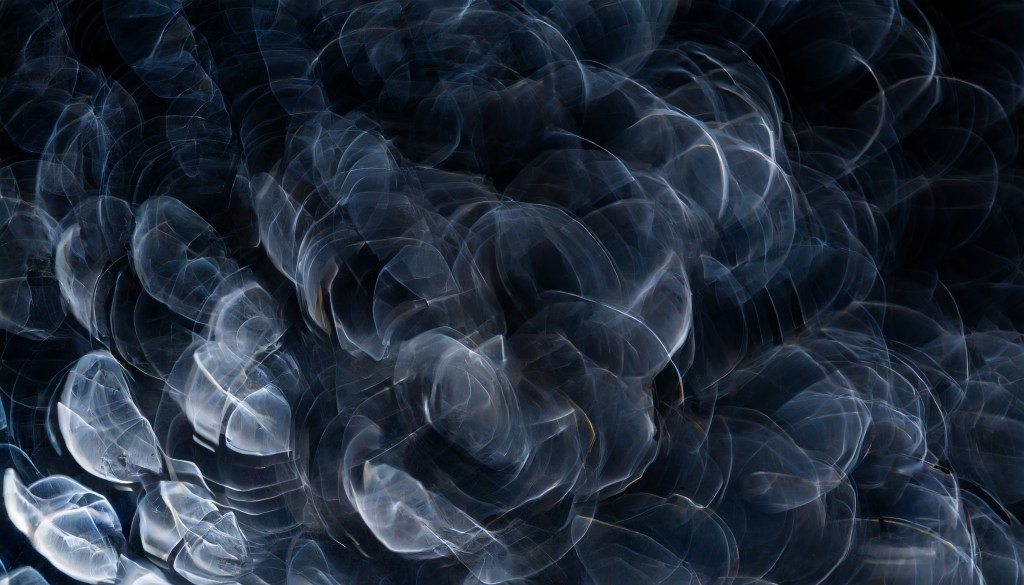
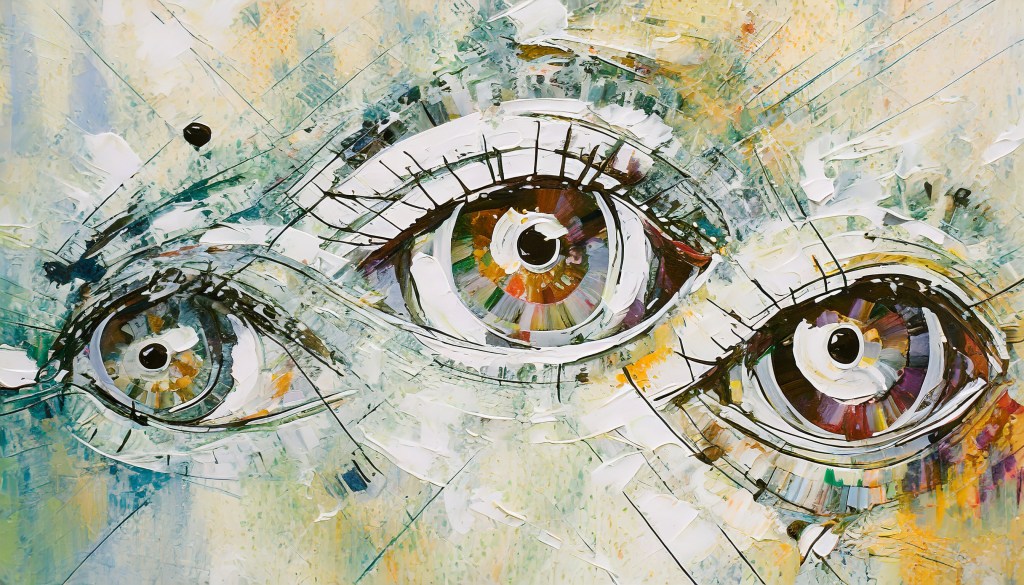
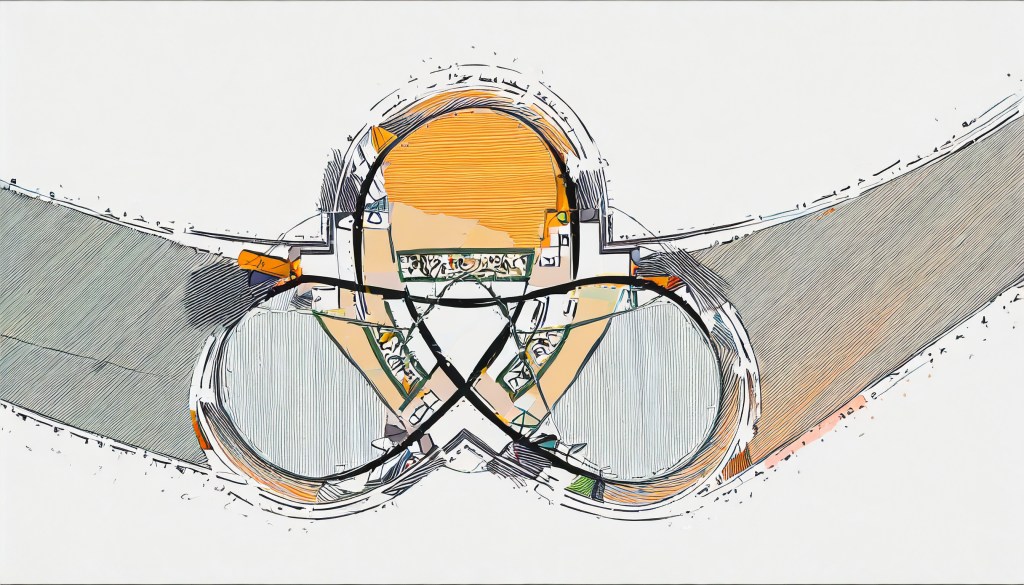
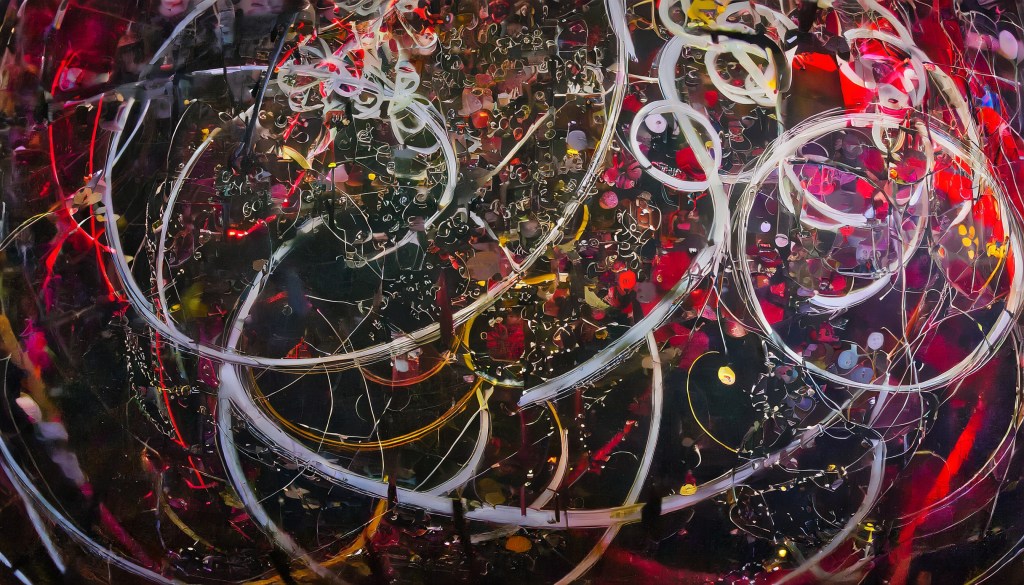
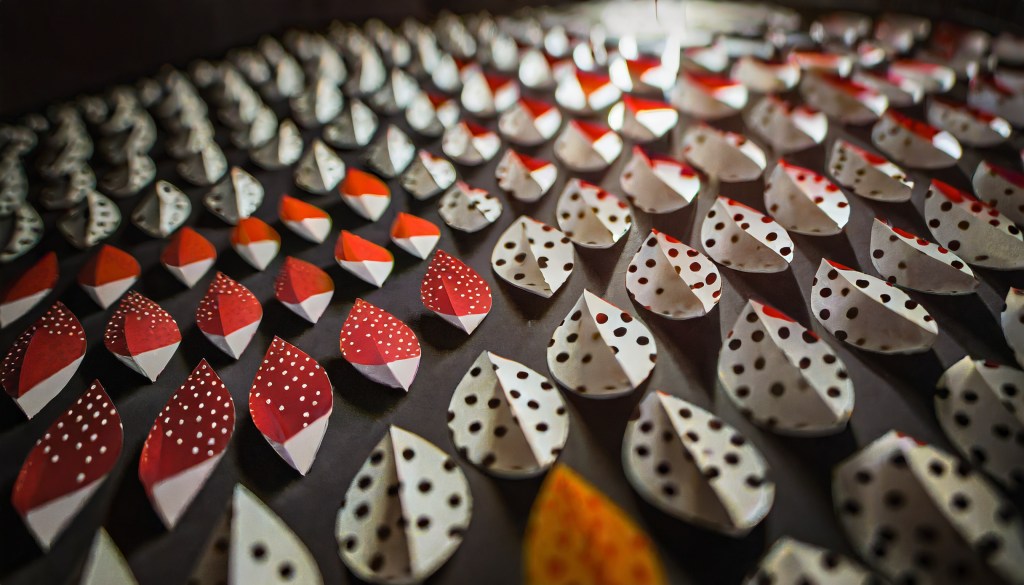
I prompted with ‘cycles and cycles and cycles of dark foreboding substrate’. I got this…
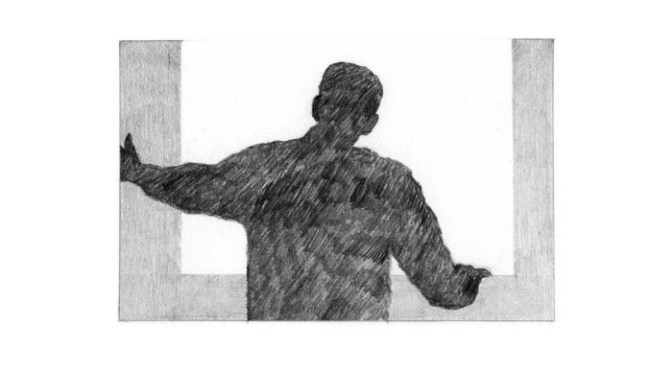
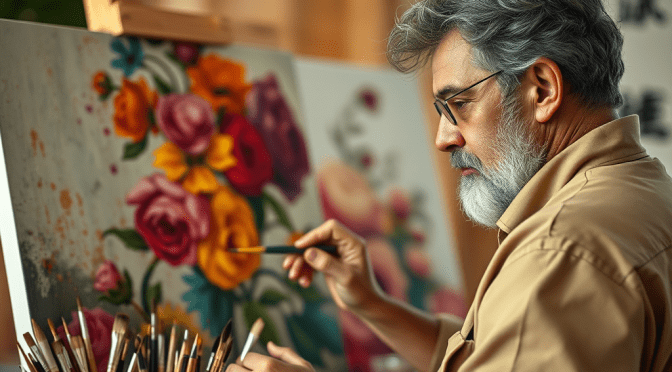
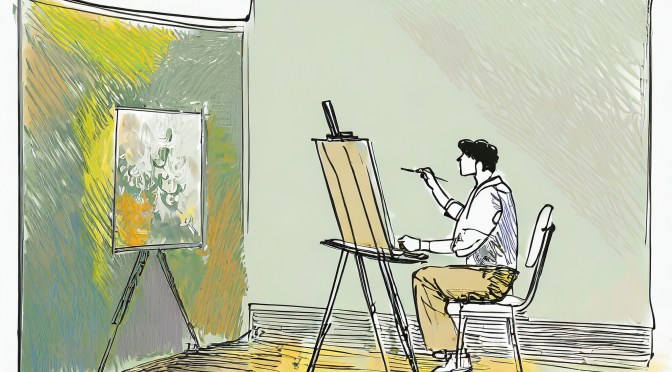
Then I changed parameters, making the image ‘oil painting’, or ‘archtectiral drawing’ or ‘bright colours’ or included say, ‘three cycles’ and got these.
It was impressive. I suspect this will make millions for Adobe. Designers no longer need to trawl through image libraries, if they want a ‘a monkey in a tree wearing trainers and smoking a pipe, looking at her mobile phone,’ for say, a New Scientist article on hominid evolution in the age of the interweb. They subscribe to FireFly on their device, type in the aforementioned prompt, and then there she is, on their PC in about 5 seconds if you have the latest Intel chip. So as mentioned, from Nov 1st on you will be charged for this as part of your plan.
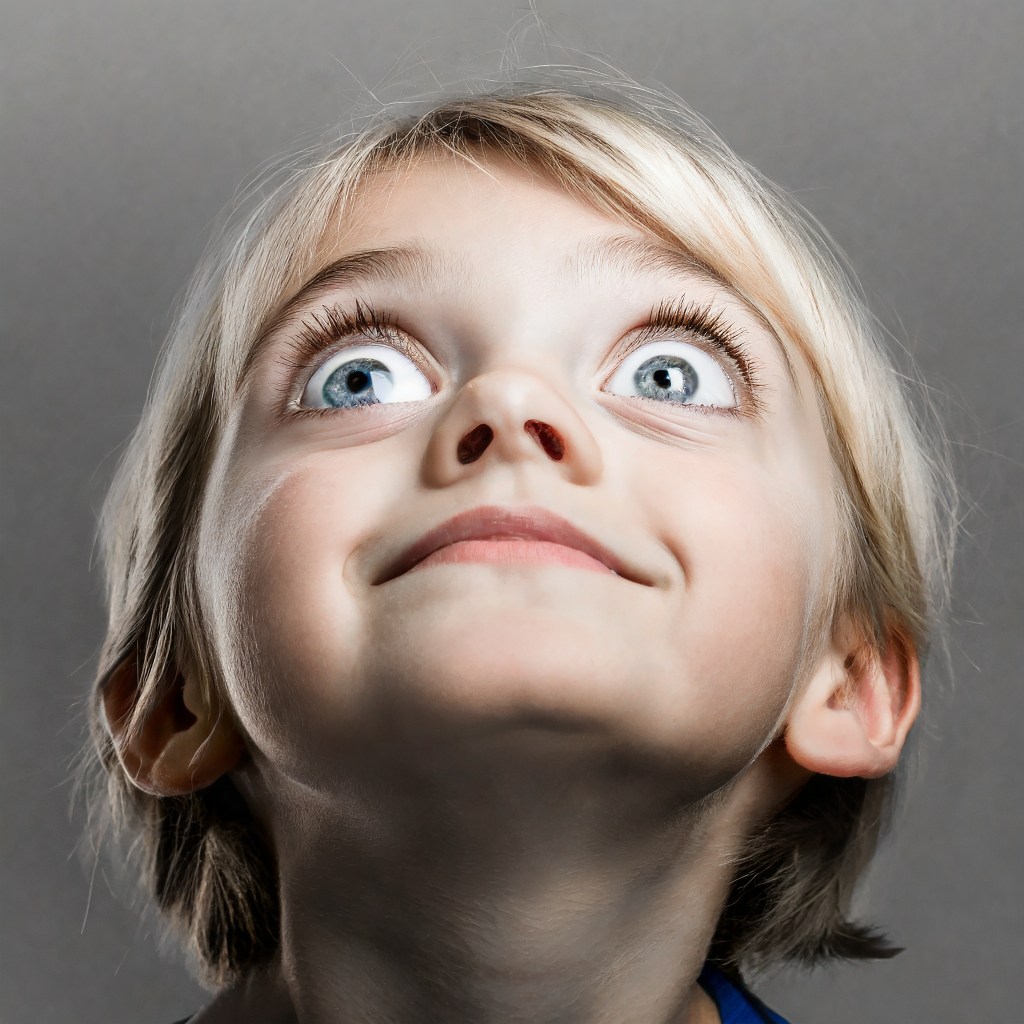
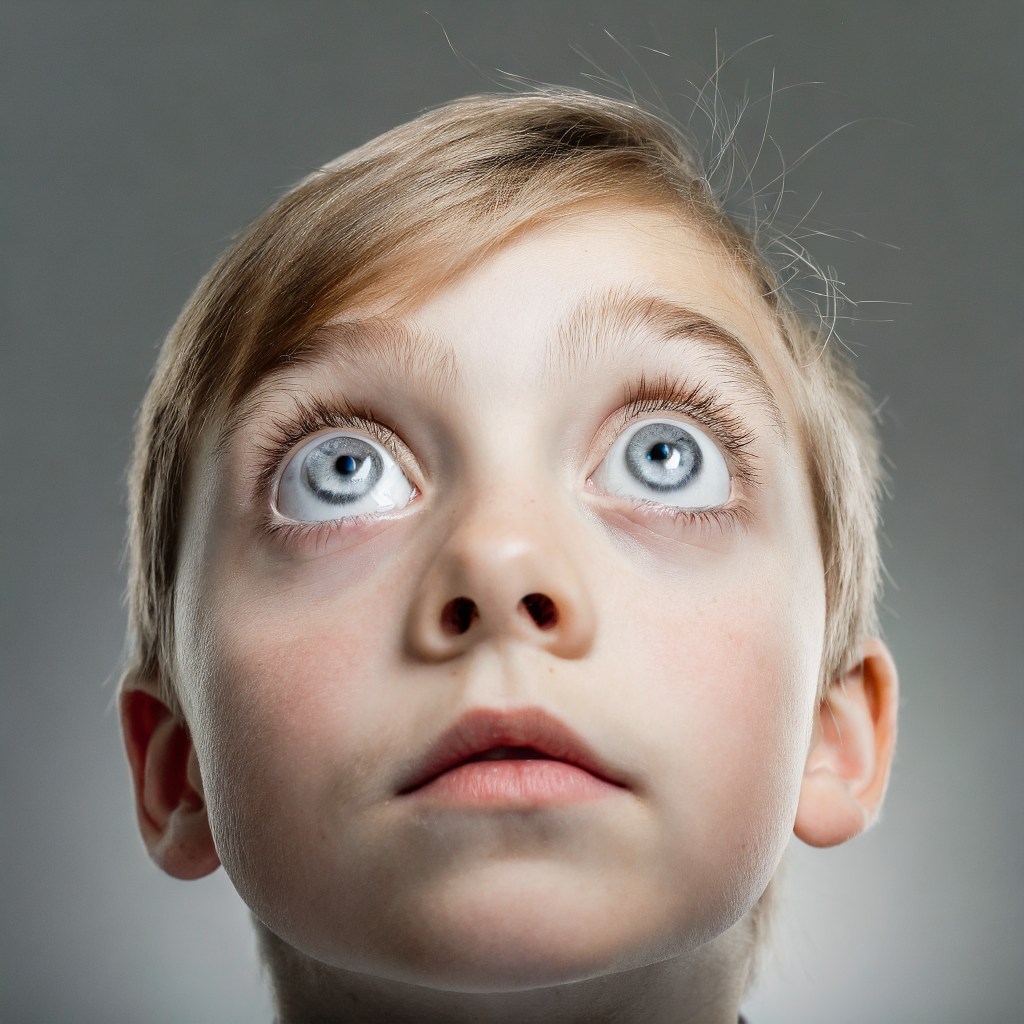
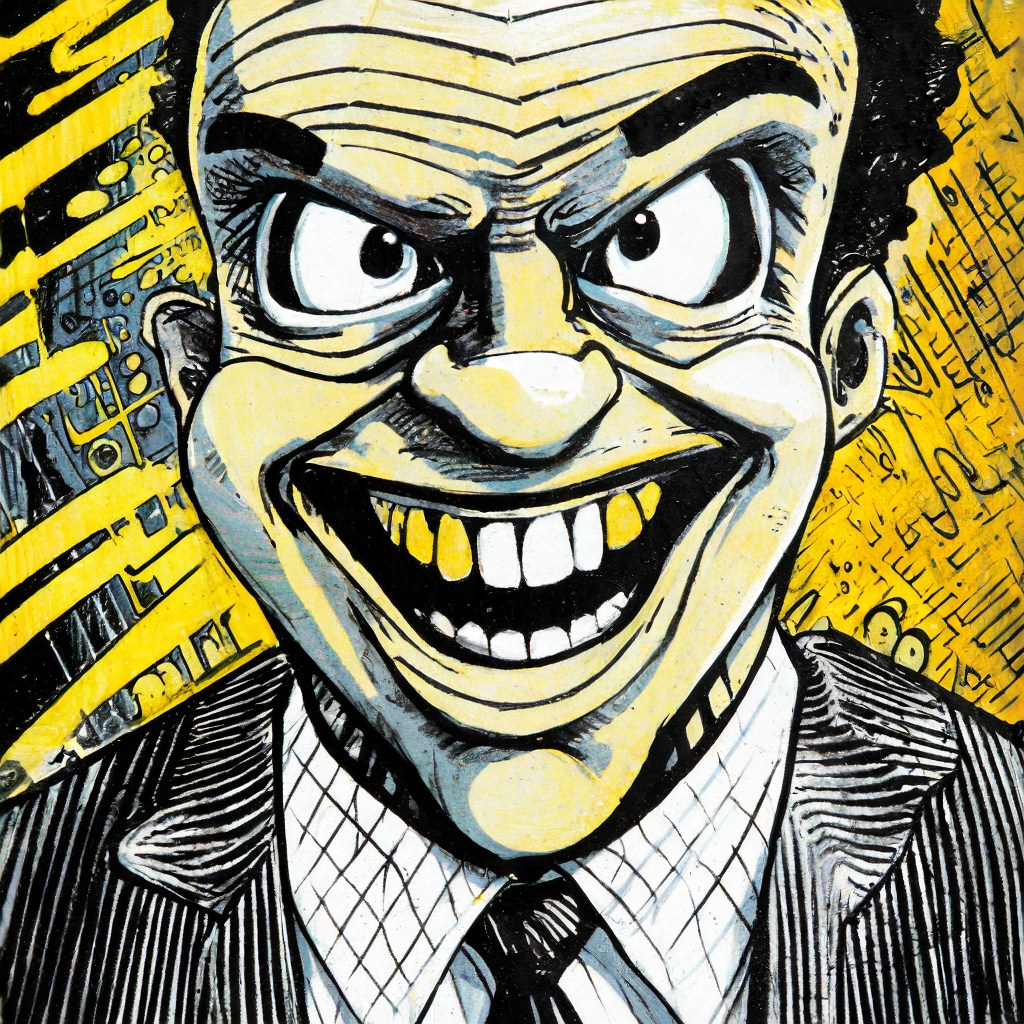
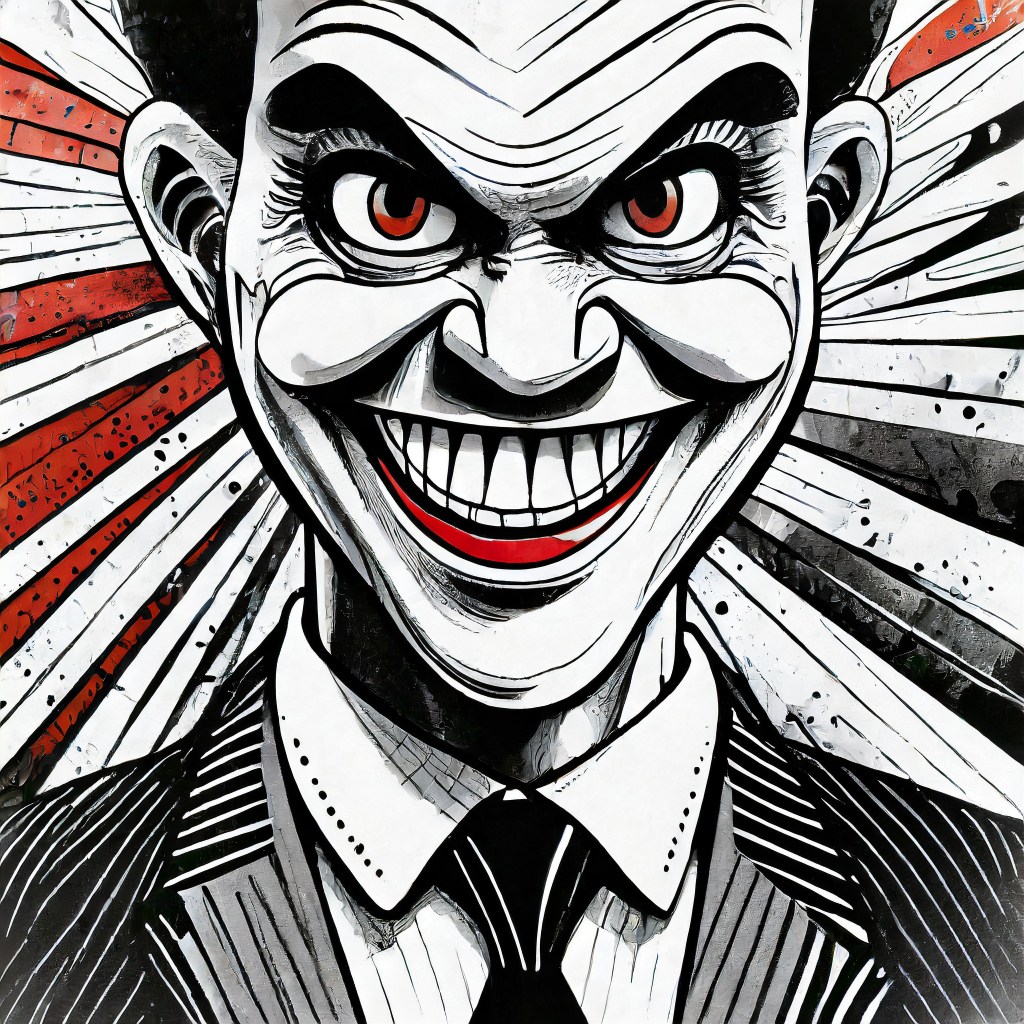
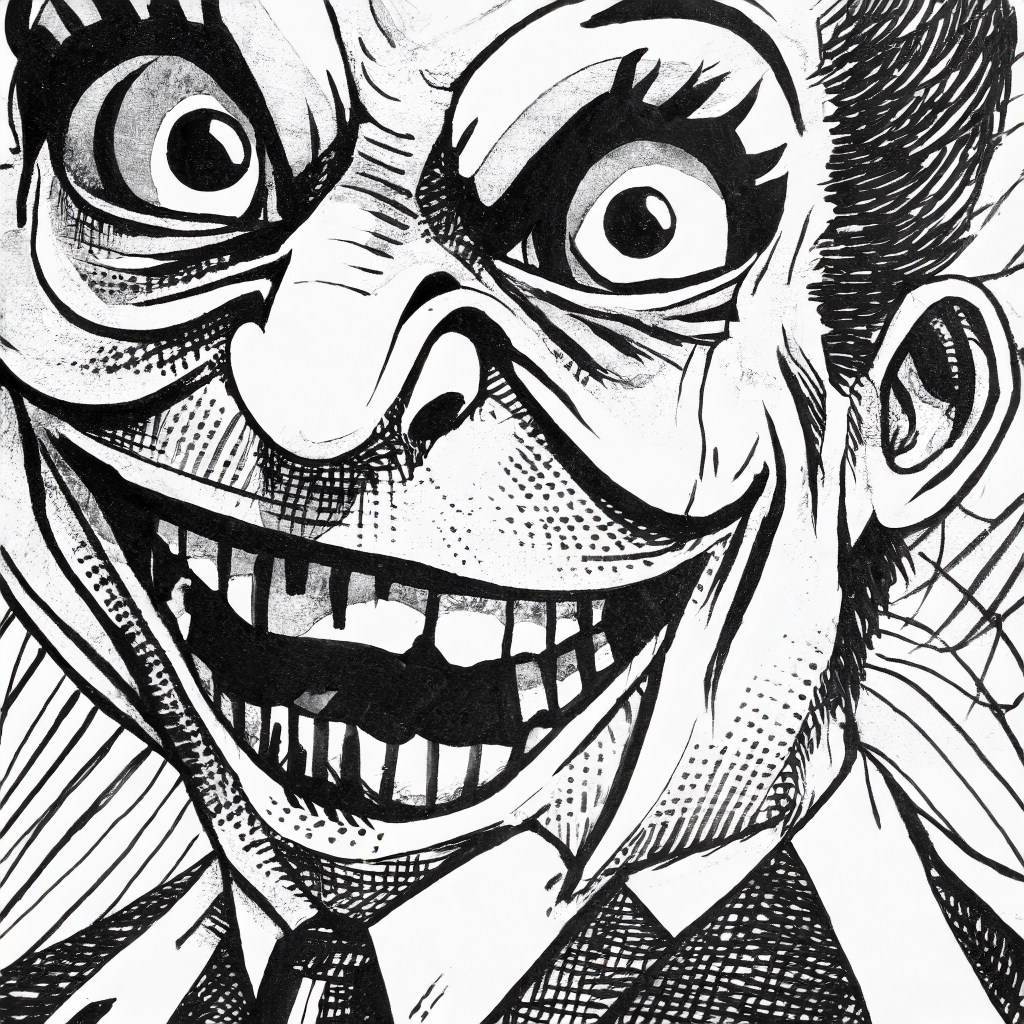
So my counter cultural alter ego kicked in and I decided to make a little artwork from the initial text prompt ‘huge face with big white blank eyes with no pupils looking up’ and got these.
Part of what I was after with my little artwork was some critique of the Attention Economy (see here), about how young people particularly are being trained by social media and their device centric social life to make money for the shareholders of multinationals see here. Adobe apparently read my mind. Uncanny. Scary. My Lu’d I rest my case. Adobe initially gave me children with big trustful eyes.
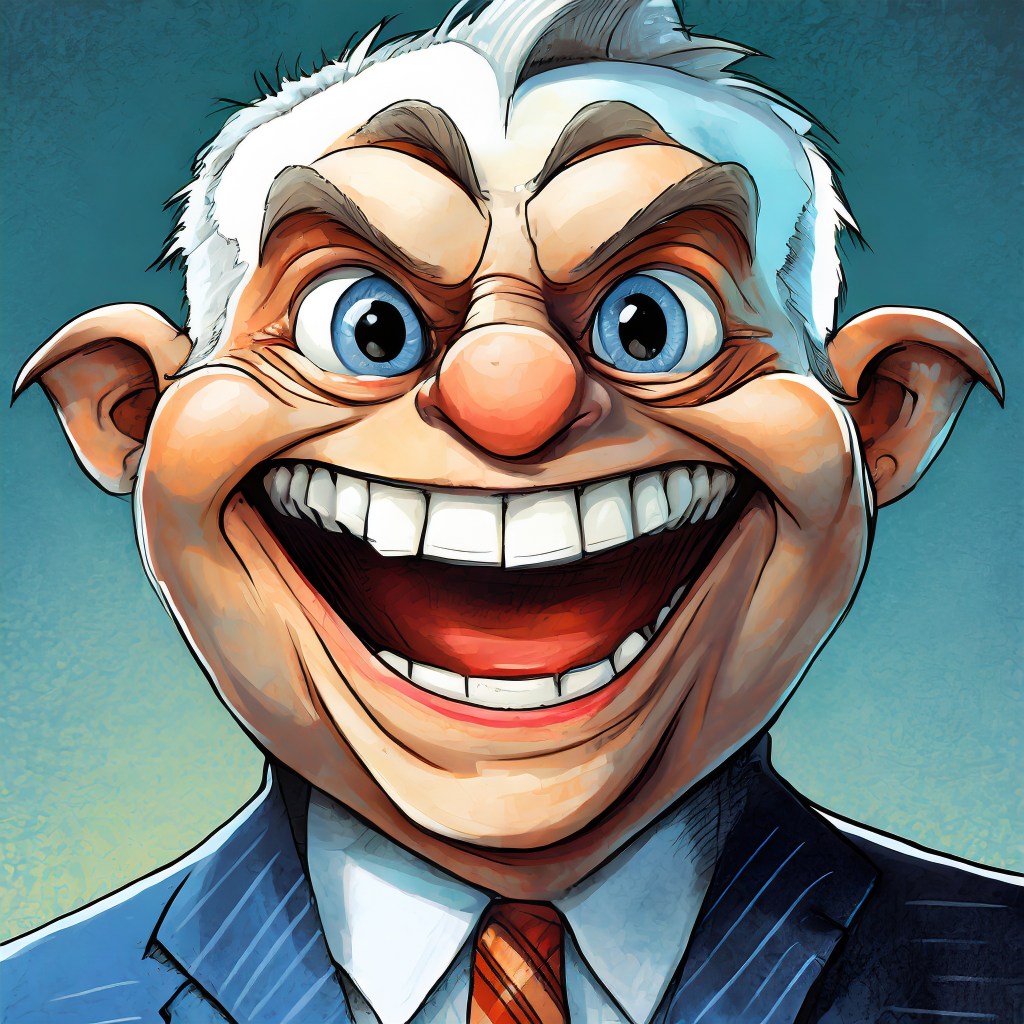
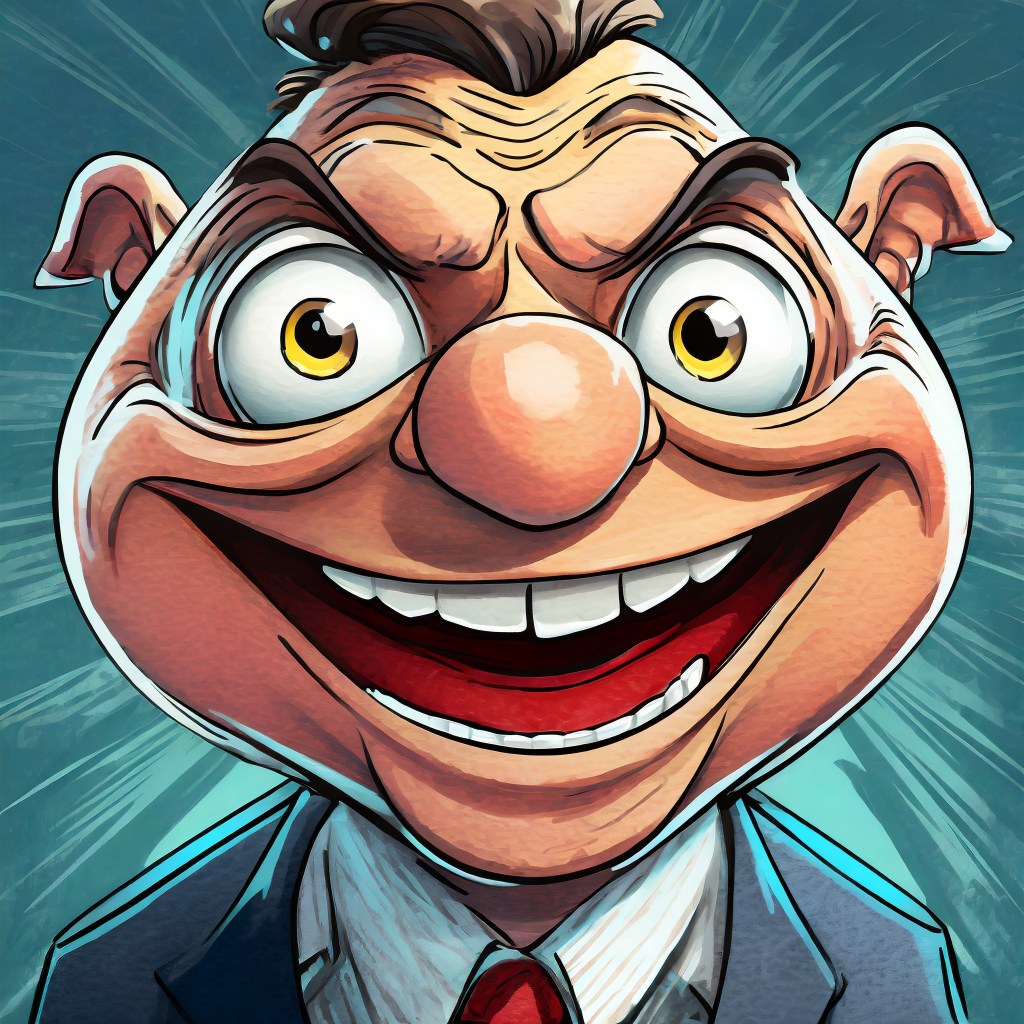
But to be truthful in this case I was after a more specific image so I typed in ‘huge grinning smiling business man face with huge big oversized white blank eyes’, then ‘huge ugly grinning smiling business man face with huge big oversized eyes looking at viewer’ and got these (amongst many more, unlike a real human artist, AI never gets tired or wants to eat or go to the toilet).
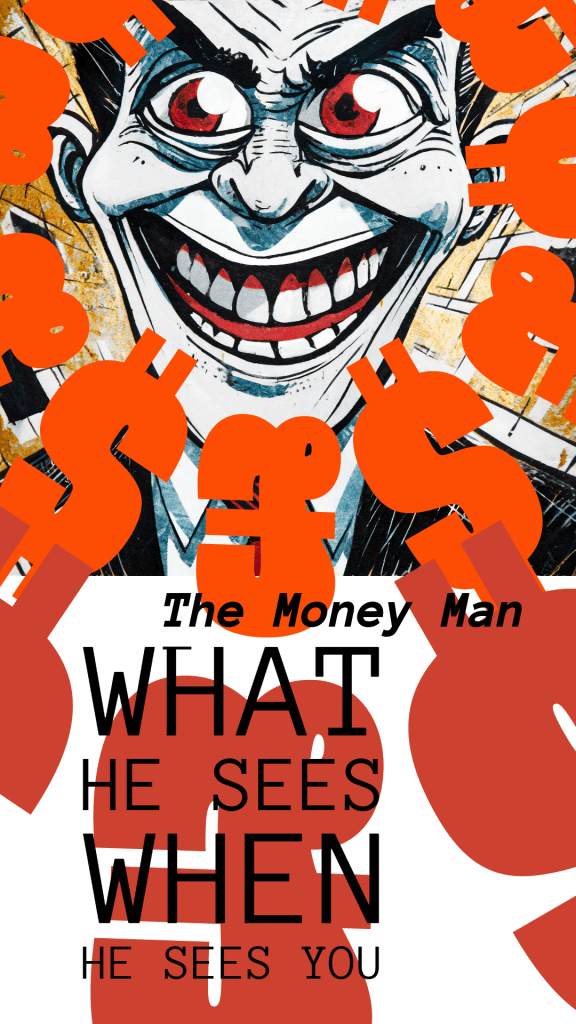
Now FireFly is connected to Adobe Express, a thing to make graphics and images for social media. Express is a quick and easy way to make graphic design. So I made this…
It kinda worked but was not quite what I was after. I moved on and planned to come back to this ismege agian later. But this moving on made me think.
Art as Adventure – No 2
Artworks as way-markers (and as cheating).
This act of art making lead me on to my No 2, Art as Adventure idea, the art object as way-marker or ‘flash’.
On an adventure the ‘flash’ was a thing you left on a tree with your hand-axe. In the wilderness an axe mark can only be the work of a human hand. A bit like a work of art. It was a way to mark your trail, so you can find your way back to whence to came, or have someone else find your remains if you were eaten by a bear say.
People are afraid of bears as people are afraid of art. Like avoiding hungry bears, people avoid making art for fear their art be seen and critiqued. Publicly. In my school if you had your art put up on the wall it was sign of a being a sellout, see here and you were shunned in the dinner queue. Harsh, but just. I got CSE grade 1 in Art and Physics. Social pressure has a lot to answer for. I did a BSc.
So to overcome this fear a suggestion is to see each little artwork you make as a way marker, a flash, a flash in the pan, a thing to be discarded and left behind, a thing to show where you have been not where you are. A thing only you see. A small sign of moving on.
A bigger art work, a project, a show, an article on your local radio station, then a national, then Breakfast TV, Sky Arts, the Venice Biennale here the Turner Prize here, can be seen as an encampment. You set up camp and make a lot more mess. A midden, a dunny, a campfire circle and some discarded lager cans. You know…. ‘Culture’. An encampment will make you officially a ‘Real Artist’. Is it an old tent or Tracy Emin’s artwork? See here. I have seen her tent and I loved it, don’t get me wrong.
So I made the image above and moved on. The lettering did not work. The £ and $ signs ended up upside down so it kinda missed point. The face was great, but I did not make it, AI did.
So what? Well some principles from the arts therapies and experiential learning apply. Whatever thought or idea you had becomes concretised, reified, made a subjective object see here. You make it as art and this experience becomes concretised, reified, made a subjective object. You get to view and re-view yourself, your inner world. You go beyond being a consumer of images and become a producer. That nobody sees your way-marker but you removes you from the echo chamber of on-line life. Like a sketchbook or journal, you see your journey unfold and know where you have been that you better see where you could go. I believe this can make health. It can aid recovery of whatever need to be recovered. It is recovering your own ground. It is in the process in which states become traits to quote Dan Siegel see here. It is art in process. It is art making with intention, attention attitude. I intend to make art, I attend to what I make and what happens when I make it within an attitude of openness and the capacity to non-attachment. This is a just way-marker and I let it pass. Nobody sees it but me. It shows where my adventure took me. This is art not ‘Art’. I do not have to account for it. I am a safe in the dinner queue.
So check out Adobe FireFly. Or ignore it out of principle. But remember David Hockney said ‘The moment you cheat for the sake of beauty, you know you’re an artist.’ See here and here. My business man was not a beauty, nor was my art, but I was a bit of a cheat so maybe I was being an artist. If you cheat, you too can be an artist. Just avoid the dinner queue.







 Moving Space