“Each camera click is an exploration, a deep dive into another person’s worldview, making the photograph a captivating tapestry of human perception and worldview. This process, this dance between creativity and reality, transforms an ordinary image into a captivating story that is a trustworthy reflection of a real and true story with which the viewer can identify. It is a fusion of different minds and points of view converging to create something unique, trustworthy, thought-provoking, and priceless. The process of searching for meaning and truth in documentary photography is a value in itself that AI is not likely to give.”
Anna Bedynska
Tag Archives: Photography
Items about taking or viewing photographs

Art Making as Reviewing
A way of working with art as a form of experiential learning is the idea of the review or reviewing. The simplest version of the experiential learning cycle goes ‘Plan – Do – Review’. Experiential learning nods to Kolb and Dewey but is presented here as a way of learning through doing that is cyclical or recursive. We learn through personal experience in situ. It is in contrast with schooling which tends to value the input of curriculum and output as testing in a linear way.
The capacity to have experience and learn from it is a central aspect of our consciousness. We maybe don’t think of it that way as thinking, writing, talking about things then making plans and acting on them seems so normal and simple. Humans do it in a way that seems a bit different to other living things. It is maybe a blessing and a curse. Art reviews our experience in many ways. But with photography, the act of ‘Taking a photo’ does this in a very immediate and concrete way. The act of framing a shot, on a phone or with a camera immediately reviews how we see the world. Then we make an image and put it in some place other than where we took the photo, with a caption, in the public domain, or a chosen person. This is an amazing thing to do.
A favourite photographer of mine is the street photographer, Garry Winogrand. I love his images. He took thousands of images in New York and after his death, thousands more were found on unprocessed 35mm films. Of his practice, he said ‘I photograph to find out what something will look like photographed.’ This struck a chord with me. I posted 400 of my favourite photos and the act of sharing still seems strange. I never took them with the intention of showing or sharing them.
I photograph to find out what something will look like photographed.
Garry Winogrand
If Winogrand had vast numbers of images entirely unseen, I kind of figure he may also have some relationship with the act of taking the photograph that is different to the showing the photograph. He talks about photographing as a way of ‘finding out’ about something. It is the process of photographing that has value for him as much as the product, the photograph and the photograph shared. This to me is an act of research. To search for something is an act of finding some specific thing. The French ‘recherché’ means to seek something out with care and add value to it. In art making, we find value in things.
Below are links to Winogrand’s work. He does what all artists do, he engages in an act of reviewing. Below whatever words we find to describe this act, art and photography allow us to review experience.
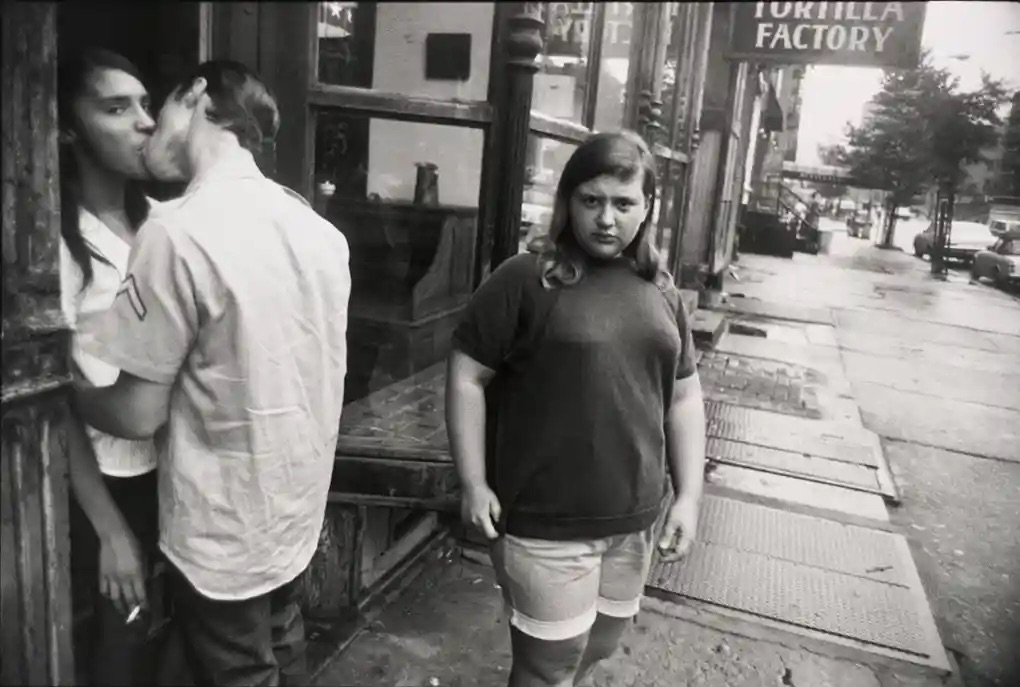
Fraenkel Gallery- Winogrand Portfolio
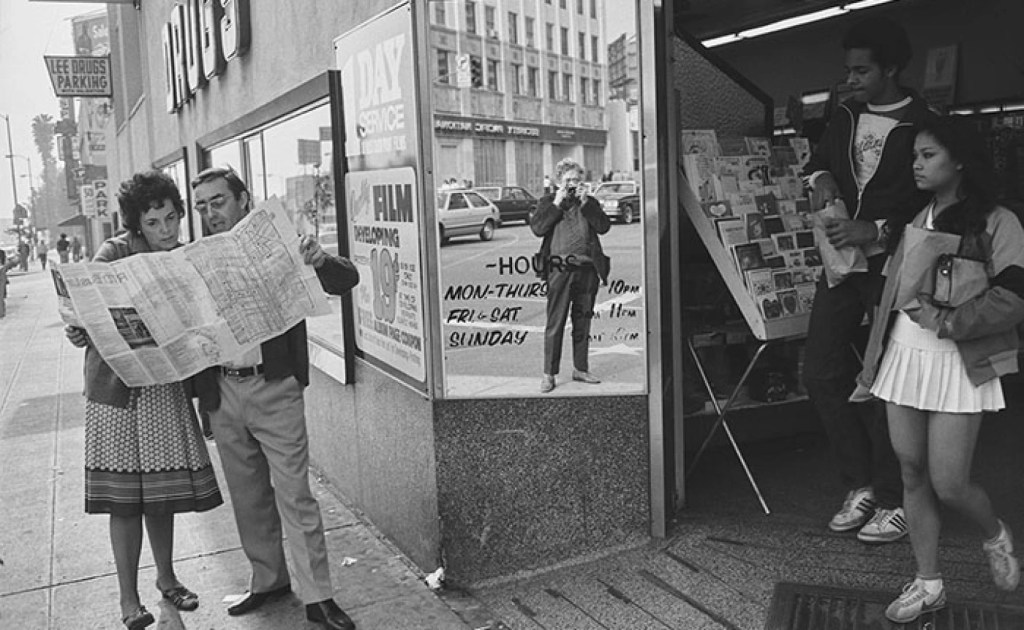
Guardian article – Garry Winogrand: the restless genius who gave street photography attitude
Happy New Year
My daily walk in the morning is now overlapping the darkness before sunrise. I walk as the rookery wakes and masses in the nearby Oak tree. We now rise and depart together as the night’s darkness departs. I always say hello.
As the light of summer departs a new year is upon us. Samhain is the end of the year in the Celtic calendar. As dusk is the end of the Celtic day. The Celts started their day and their year in darkness. The proper order, for we all start in darkness, as do all seeds. A moment for time travel. Looking to the future. Remembering the past. Ones we have lost. Time is upon us.
So too am I remembering the past. I have been going back over my photography archive, all the way back to 2005 when I got my first digital camera. It holds 13000 photos. This surprised even me. I edited this down to my 400 best and put them up on my portfolio site. Click the image below to go to my portfolio and see the images. I chose a picture of geese because they are honking overhead now as they return for the winter. Time turns. It is circular.

I also bring you Van the man singing Celtic New Year, on Jools. There is a very grainy clip of this on Yootyoob but this one is best. He starts at about 3m 55 sec. He so captures for me, that sense of darkness and light, longing for absent friends, some passed over to eternal darkness, and light, the looking forward to meeting friends again even if it is when we pass over into darkness. Like “Bette Davis said, “Old age ain’t no place for sissies.” We begin and end in darkness. Peace at last. I head this post with an image of the coming green of spring. See you on the other side.
Turning
Photo by Chris Reed
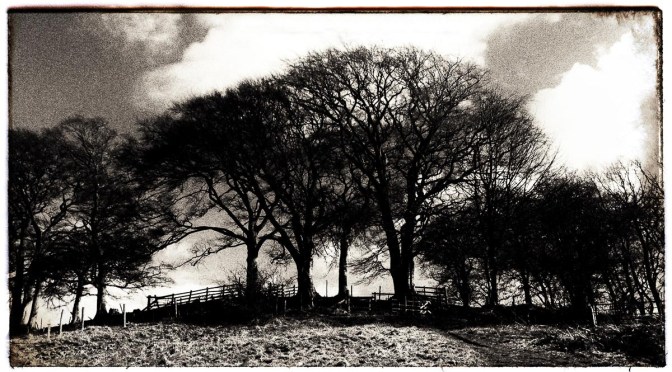
Brampton Ridge, Cumbria, UK.
Photo by Chris Reed
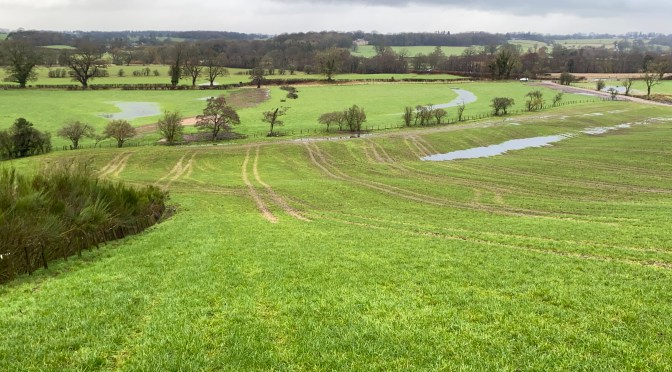
prosepoemwalk jan 1 2023
Prosepoem
Decide on left left left right today and go out of the drive turn left and left again then at next left road and path are deep under water wife said the roads were wet pass the barking dogs at scrap yard that got out and lunged at us once and turn right find first sign of accident bits of headlamp and bodywork under grass just off the carriageway then some yards on find more carry on and find whole headlight fitting in damaged tree with big scar must have been an accident is it two cars or one what was outcome see mile marker I never really examined before and it just has ten on far side and one on near side nothing else so must be a mile to brampton and ten to longtown shortly after see the grisly remains of some roadkill which I guess is what is left of a young badger just the skin then become aware of a flowing stream down side of the road that is usually dry and accompany it downhill a ways to find a broken pipe by a gate in the field suggesting more deliberate engineering but it just dumps into field which is now flooded with runoff gurgling down to the irthing further on road narrows and I loose the grass curb for my walking and get onto the tarmac but see big tractor tyre marks cutting into verge on longtown bound side and see wet field has open gate with big tractor tyre tracks so guess marks made by autumn muck spreader swinging out left to make right turn into field now close to river and do next left to find road flooded again with water both side in hollows in field and a slow clear curve of old river course on downstream side filled up with overtopping groundwater left again into field and more signs of old river route including what seem to be grassed up riverbank sandbank beside the old river flow up hill now and find a single red sand stone pebble in field on top of grass like it was just dropped there today why where did it come from who dropped it maybe it came off a tractor and see several tracks of small animals come under fence and over field then cross same fence by old style and on to the hilltop badger sett which is clear red soil and earth and not overgrown like the beasts are about at night and see little one plank bench above it like people set it up to look at the view or wait for the badgers in the dusk and see big bank with lots of clear paths most likely not from farmers stock but maybe badger roads squeeze through lined up old gates and see very new dead sheep wool pulled of her hind quarters just eyes and tongue gone into crows belly see no other sheep and farm buildings nearby then follow fence and find rest of sheep flock at field corner by style either getting out of wind or as far as possible from dead sister and they all do that shudder thing like dogs to shake off rain as bits of blue sky appear then on to road with good flow down it into gurgling drain as it is right over the partly fossilised watercourse in the lazy bottom of the shallow valley and links the brampton glacial till ridge with the irthing which only appears after rain then in other places flows overground or through broken culverts and along field boundaries see curious gouges and marks in tarmac of road which must have taken something big to do it that deep and clean then find I can do my second right and then three lefts to find myself back on road of my first right but further up near brampton by the schools so would then do next three lefts like before and be stuck in a perpetual loop like a figure of eight so decide to end it and drop the algorithm then feel a bit weird thinking what would it be like to just keep walking and not ever go home but turn right past sprappies and back to my house by same route I took to start with and get back to dry out and drink tea and recollect the walk and the glory of it’s mundanity
Reflection
The intention for this walk was to start a new year by reconnecting with my local space after a bit of a hiatus. I wanted to concentrate on the act of walking more than the act of going to some destination.
One way of doing that is to use a simple algorithm to decide the path taken. I chose to take a path based on turns left and right. I decided on going LLLR, three left turns and a right turn, for two or three iterations, and see where it took me. This idea still gives some control over outcomes. It was very wet so a wanted to stick to roads and footpaths. It is an idea used in psychogeography for urban walking, as a way to move around a city in a way that brings the walker to places they don’t choose and don’t expect. The idea is to stop attending to the navigation and attend to the senses as you walk. You find all sorts of paths you never would normally notice, and in sticking to your chosen algorithm, feel compelled to take them. In my locale I found all sorts of little unmarked paths, in Cumbria called ‘Lonnings’, using this way of walking.
The day was wet and I timed my walk to miss the showers. I took my phone to photograph anything that took my fancy. I have walked all my local paths and could work out where I would go in my head. I wanted to see what had changed since my last walk this way. There is a saying, I think from the german, that says “If you want to find something new, take a familiar path.” It was in this spirit that I set out to walk.
“If you want to find something new, take a familiar path.”
I walked and photographed whatever took my fancy. On the way I thought about how I could represent the walk when I got back. In my head I had images from old scientific expeditions. My Father in Law got the new Taschen ‘Science Illustration’ for Christmas and some of the images were a great combination of the objective and the aesthetic. See the content of this book here.
Out of my front gate I went left, then two more lefts and then a right. Then I repeated it. After two iterations I worked out that if I did another iteration I would end up in an endless loop. I set off on my third ‘right’ down the same road as my second ‘right’, then broke the pattern and turned home. The intentional act of granting yourself responsibility to relinquish responsibility for navigation is quite strange. It behoves attention. It invokes an oddly relaxing attitude. It lets you be more in the here and now. This way of walking allows you to be present where you are, rather than where you want to be. It is intrinsically meditative.
“This way of walking allows you to be present where you are, rather than where you want to be. It is intrinsically meditative.”
My phone has an app that can use GPS to map my track. On return I wanted to use this as a kind of objective account of the walk, but do some ‘arty’ thing as well. I was not sure what it would be. Maybe some kind of faux expedition illustration like in the Taschen book! I also had in my head a separate idea about a construction of card exploring the relationship between the experience and the words used to describe the experience. I will work on this and show you in another post, but with this in my head, the prosepoemwalk idea with a slide show kind of formed as I woke a day later. This is at the top of this post. It seemed to capture the dyadic experience of the being present, attending on the spot as a singular phenomenon, and the walking as an extended, linear flowing phenomenon. I liked the idea of the words and the images mirroring and complementing each other. I liked the idea of the thing I made being self contained. It shows you what happened without explanation. The LLLR ending up as an iteration was pleasing too, like it revealed a natural mathematical formula, a universal platonic pattern, in my local landscape. Very cool!
On this walk I wanted to simply pass through a space and observe it, and express my experience through some artform. Here I chose words expressed with an aesthetic which I feel reflected the experience. This action will go on to be developed in other artforms posted up here later. I am working on a kind of construction made of card and paper to develop this experience further. Exploring the same experience through different forms is part of the art as research process. Each form reveals a different thing. But I see a generalised sequence which goes we observe, we reflect, we interact and we modify, make and share. In the Taschen Science Illustration book mentioned earlier are the products of observation, the reflection is embodied through image, but the image is used to guide interaction, then modify, make and share ideas, products, processes. This walk was done in this context, to simply observe and record and reflect on the experience of the space I walked through. As 2023 pans out I want to use art making to explore my relationship with my local spaces through observation, then interaction to modification. I want to use this to develop ideas about the outdoors as art and art as research.
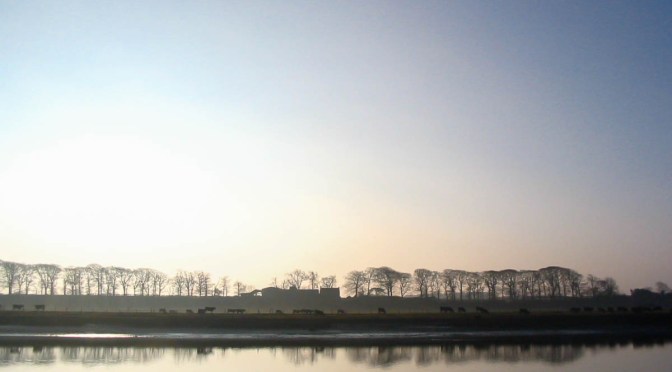
Solway Walk – Experiencing place through photography
In seeking to report here on my experience of the Solway as expressed through art, what has happened is that I have come to question my understanding of how I experienced the Solway.
In some ways this was a bit alarming. My main contention with Moving Space, is that art making provides an expression of experience that is closer to the direct embodied experience than verbal or written accounts. This remains true, but on reflection the following has emerged.
- That whilst being in experience (as an embodied, sensed, cognitive, spiritual and durational phenomena) is encountered as a ‘normal’ seamless thing, retrospectively upon examination through words, images, and personal recollection, the shear magnitude of the simple experience of being on the Solway has dawned on me. It was also something far from normal.
- Each artform I have worked with has given a particular account of, or path through the experience. All are valid but all are incomplete compared to the actual magnitude of the experience of being there.
- The one bit of art making that came closest to being directly in the actual experience, was the moment I stopped walking an image of an idea and moved into performance and decided to (like KC & The Sunshine Band implore) do a little dance.
- This is the one bit of artform that leaves no concrete artefact, like a painting, or a photographic image, of a poem. With performance there is no art object.
- Of the artforms producing an object that I have worked with at time of writing, the film and the photography, the images of the experience that best get to how it felt, are the least figurative ones. The more abstract the image, the less it appears to depict the place, the more it shows how the experience felt.
- But collectively, the more modes of artistic expression I explore, the more I get to an expression of the experience as a whole.
- Whoever would have thought a one mile walk on a beach could contain so much experience.
Over this post I want to show what I made and pick some of this apart. But first I want to pick apart some art history which is pertinent to my reflections above.
History is written retrospectively and by it’s nature contains many narratives. Historiographically one narrative is that sometime around the end of the 19th C photography ruined painting. In the UK, most Victorian painters were portrait painters. People of sufficient income wanted paintings of themselves and their families that would show sufficient likeness that they could hang them on the wall and not have guests say ‘Who is that in your lovely painting?’ But along came the photograph, and apart from the time it took to expose a photographic plate, the photograph became a means of making an image of total likeness, that was available to everyone, including people who’s income was insufficient for a painting by an artist.
But a theory goes that now photography could simply and quickly make a totally accurate likeness, painting which was hitherto largely figurative became impressionistic. Photography showed the real thing, painting showed an expression of a thing. Painting became an impression of the experience of the painter. Painters went outside their studios and painted ‘En plein air’ in the outdoors. Freud explored the unconscious, artists explored surrealism, science discovered the quantum world, and suddenly we find that the observer of reality changes the reality they observe. The modern era had arrived.
So in recounting my Solway Walk and the art making that ensued I want to start by reviewing my photography on the Solway because this most easily illustrates some of the points I made above.
Long before I did the Solway Walk I climbed Criffel with my wife. Map here. The day we were there, the tide was out on the Solway and the clouds scudded literally just over our heads. We could see and touch the clouds around us and also see them reflected in the ebb tide thousands of feet below us. It was a mind expanding day. This impression of the Solway never left me.

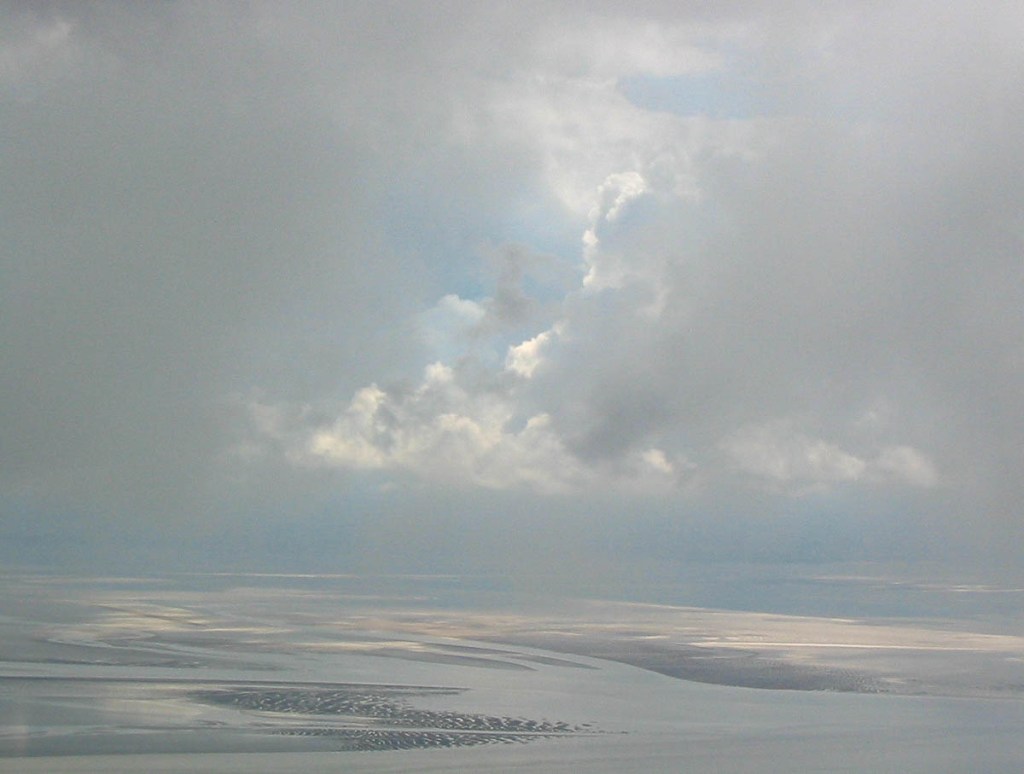
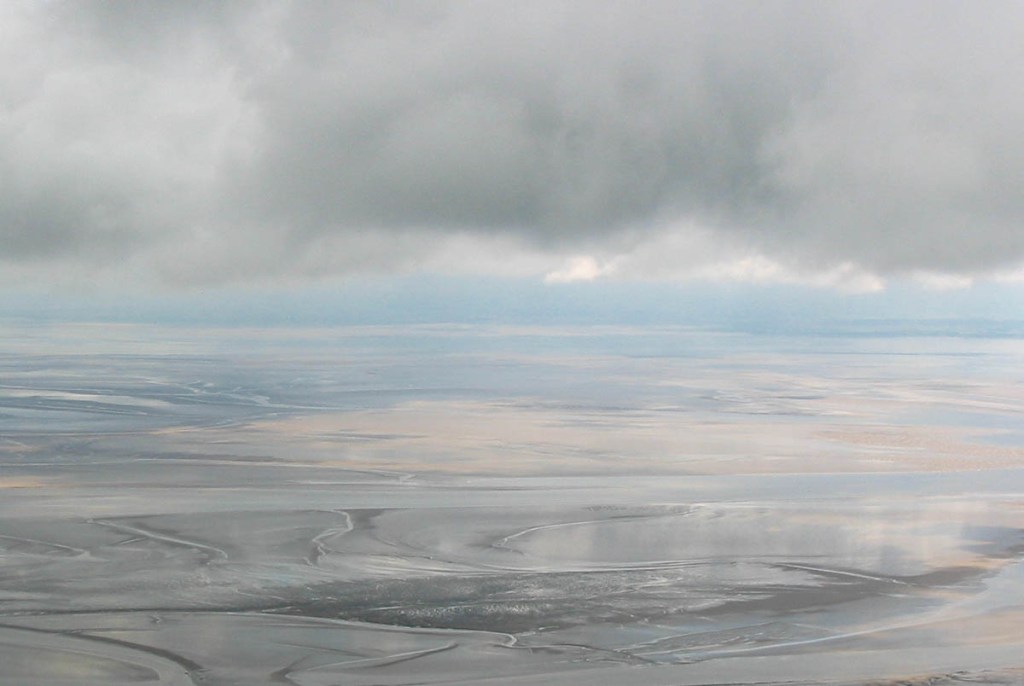
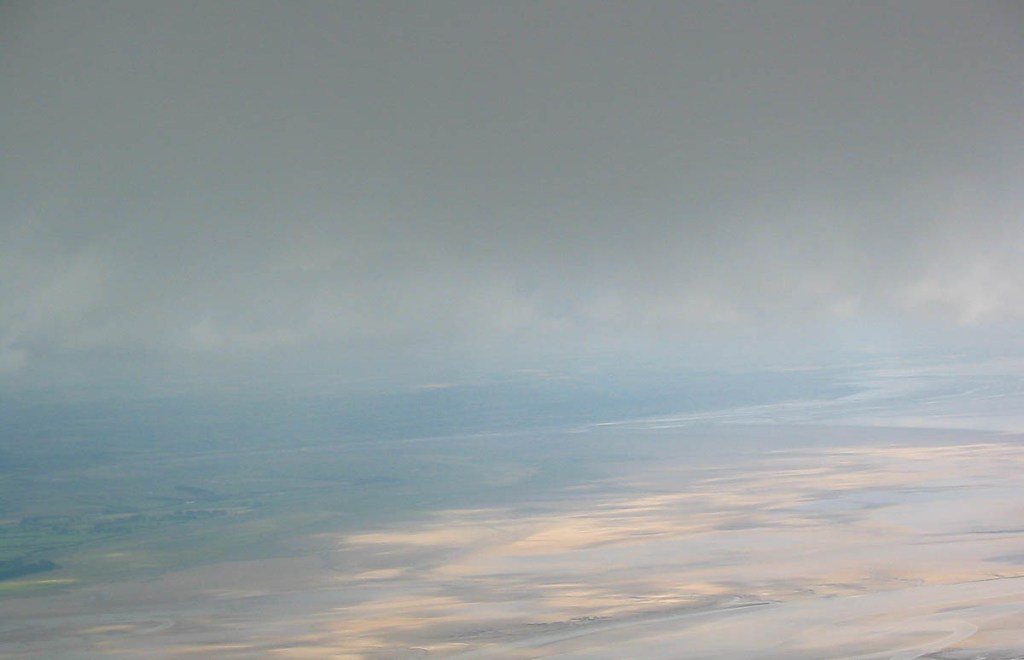
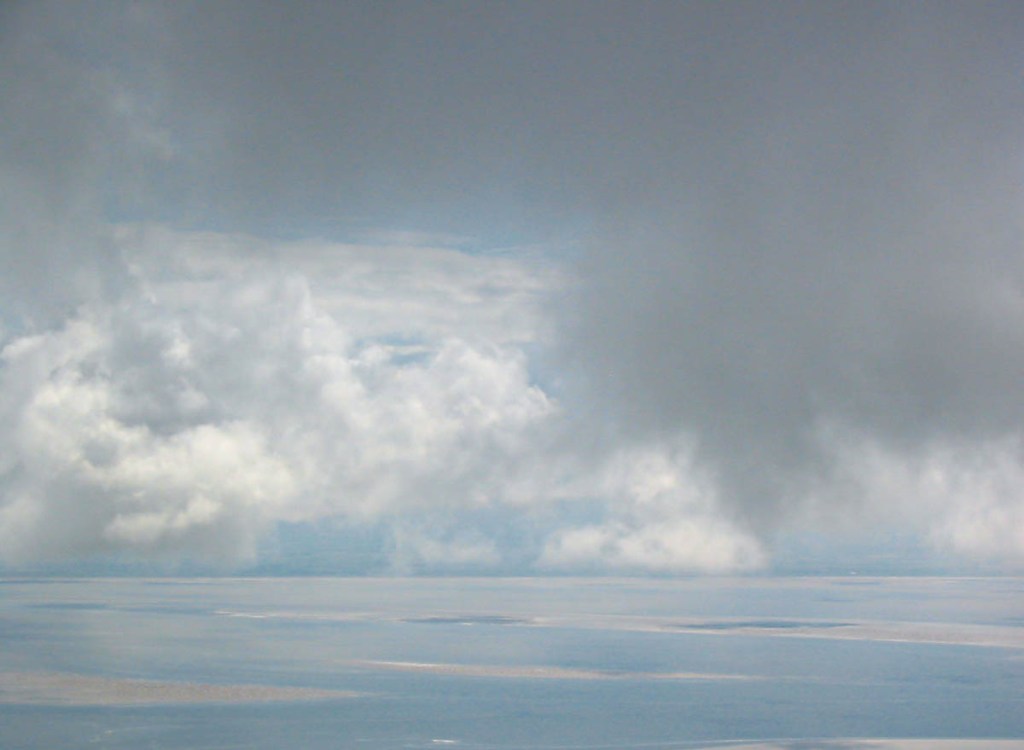
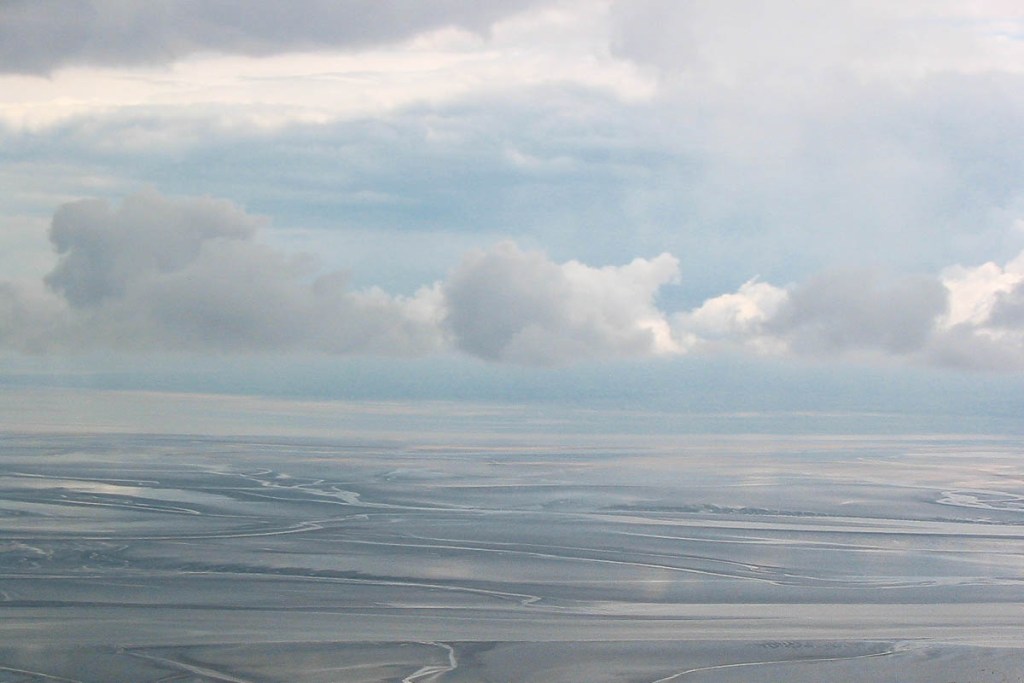
To me these are very impressionistic images because at the moment we peaked Criffell, the whole place gave an impression of a place bewixt and between. The images are accurate depictions of the place. The images have an abstract quality with the sky and the cloud edge below us.
Other images of the Solway, whilst having some aesthetic merit and accurately and figuratively recording a photographic image of what I saw. They are rooted in my sense of sight, but don’t convey the otherworldly aspect of the Solway. They are conventional landscape images that show what I experienced with my eyes.


So working with images, post-processing them on my Mac with Lightroom, I find nice landscape images, because I saw nice landscape shots. But other images I took, which clearly caught my eye at the time, don’t have that nice figurative ‘landscape’ look. They show my experience, but don’t make classically photographic images.

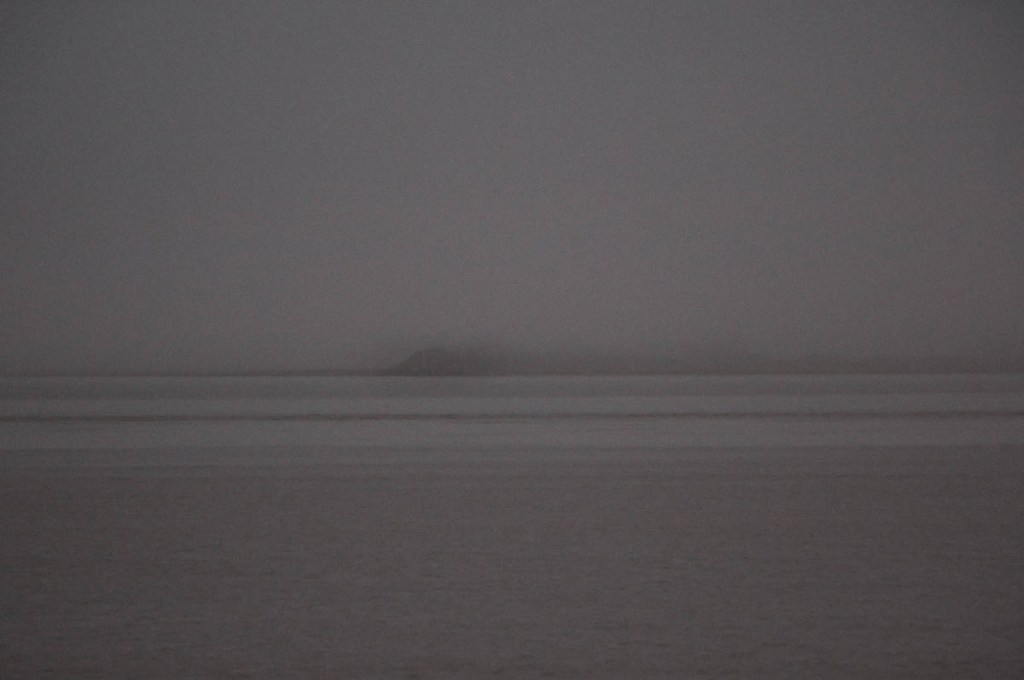
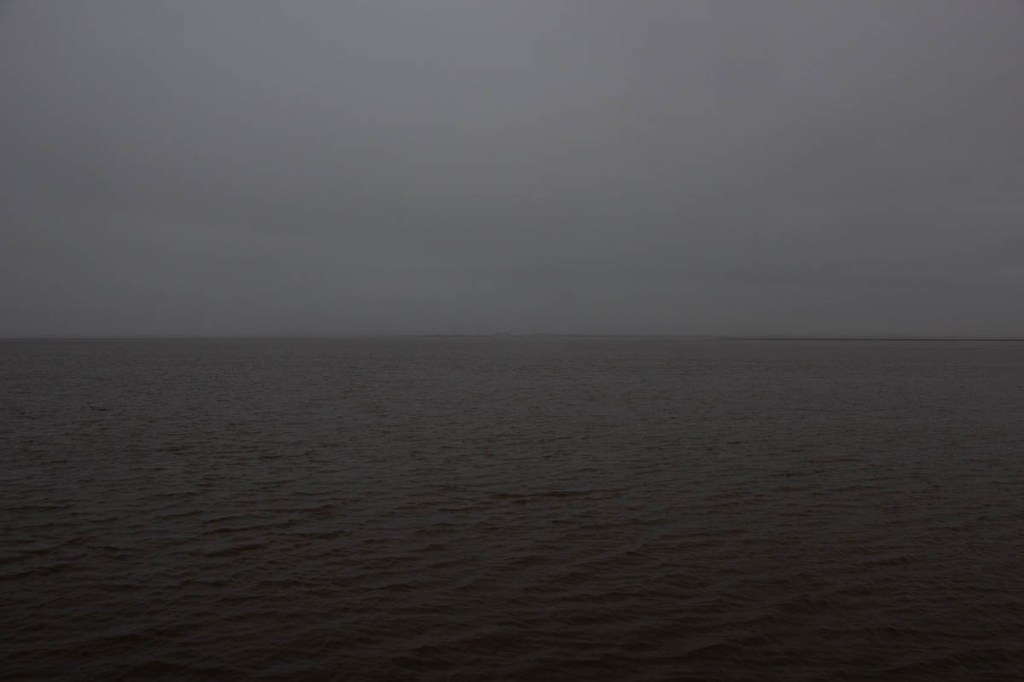
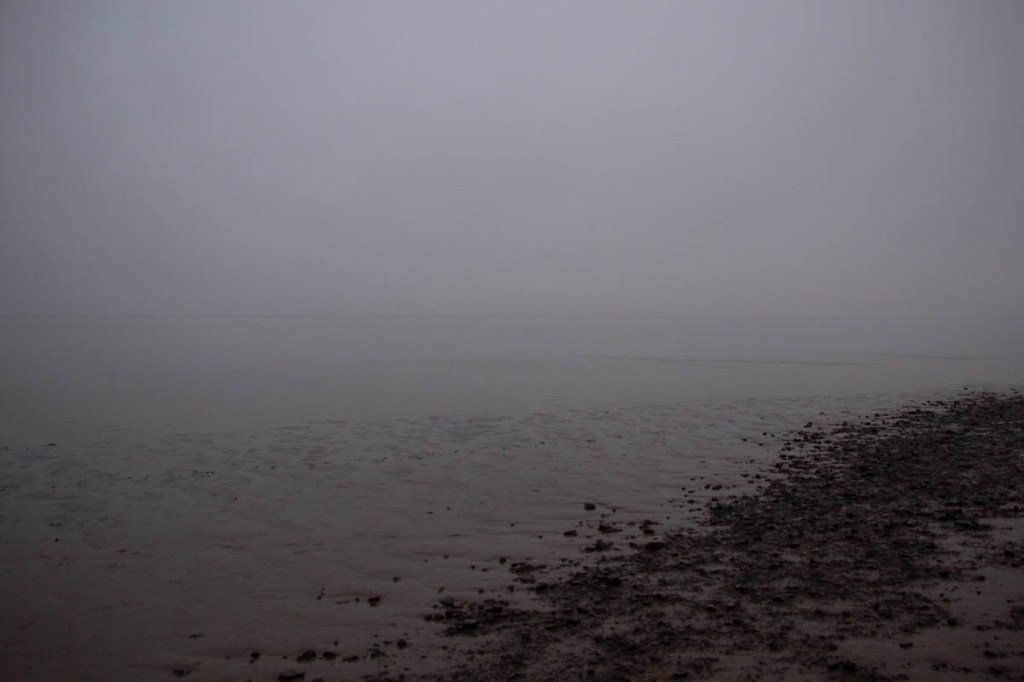
My Amateur Photographer ‘Landscape’ eye judges them to be boring. But my judgement is that they covey my experience of the Solway as a place eternally between sky and sea, between tides, between land and water, but nobody will understand them.
In the end I produced this image which to me most accurately conveys my experience of the Solway.
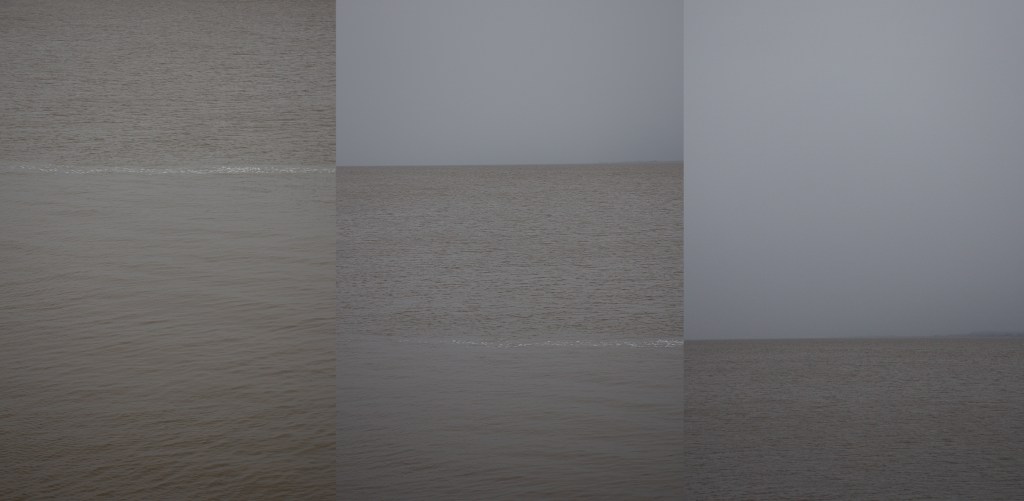
To me this conveys the idea of ‘The more abstract the image, the less it appears to depict the place, the more it shows how the experience felt.’ I put this image out and make judgement that in ‘landscape’ terms this is not an image easily understood by a person viewing it. It is not really a picture of a thing. It is an impressionistic triptych, and in some ways cubist, showing three views at the same time, like Hockney’s cubist inspired ‘Joiner‘ images. It has shifted away from a figurative ‘landscape’ image that shows what I saw, but it shows much better my experience of the Solway and a place that feels like it is always between things or many things at once.
So in terms of how art making can be used to explore and express personal experience of place, I come back to a recurring theme. There may be a tension between making art that is accessible in terms of being a figurative account, that looks to me and other people like a ‘landscape’ and more impressionistic or abstract images which mean something to me, that show my experience, but may be less explicable to other people.
Furthermore. If the performance of the dance came closest to being directly in the actual experience of being on the solway, but has the least to show, then using art to explore and express personal experience may need to have two threads. One is more personal and connected to process. Art is made that helps the individual process their own experience, but may be inexplicable to other people. The other thread is one in which art is made that is less impressionistic, but makes personal experience more explicable to other people.
All I have talked about here is my photography. This reinforces that both in terms of personal process and the production of art that is explicable to other people, working with a number of artforms may be useful. No single artform can covey experience in it’s fullest. It also reminds me of the idea of the ‘exposition’ in a previous post in which the author describes artform as embedded in a setting which includes some ‘..sharing of thinking processes and the revealing of methodology; and.. invites participation in order to enrich and expand understandings from the inquiry.’
The author goes on to say ‘One may even say that there is something inherently gentle to exposition considered as introduction, a relief, perhaps, from the obligation of being a ‘work of art’, in the serious sense of the word.’
In my next set of themed posts I want to explore what art is and use walking art as a vehicle to frame the discussion. My proposal is that we best understand how to work with at as enquiry if we work with ‘art not ART’. By this I mean getting away from an approach rooted in ‘Fine Art’ with galleries and sales and judgement on skills. Fine Art informs art as enquiry, but the work is done with art as a verb not a noun.
Relating to the intention to explore a model of art making as experiential learning then the art making is the central component but it is informed by all sorts of other experiences and modes of enquiry. Regards art making it is best understood as being playful, in the serious meaning of the word and the actions. And as such we learn from playing in many different ways.
 Moving Space