Tag Archives: Politics

Modern Art is Rubbish

This is an old TV series about Modern Art for those interested in art history.

Ironic eh?

This is Modern Art is from Channel 4 in the UK from 1999. It is a sardonic but serious series of six 1-hour shows, and covers ‘Art’ from Picasso to the Sensation show at the RA end of the 20th Century.

If you can accept the common misconception that ‘Art’ is famous white male painters, then you will be OK. The writer and presenter is artist and critic Matthew Collings. He is very tongue-in-cheek and disrespectful about what many may call ‘Great Art’ and many more may just dismiss as rubbish. He is informative and offers a useful commentary, but is suitably ironic. It also has a good late ’90s soundtrack.

It should appeal to people who know nothing about modern art and people who know a bit more than nothing, and its content is likely to have some people frothing at the mouth with outrage.

I went to Sensations and witnessed a great bit of theatre. The Damien Hirst pickled shark The Physical Impossibility of Death in the Mind of Someone Living was the centrepiece. A father and child came in, and the boy saw the shark and ran over, shouting “SHARK SHARK SHARK” then ducked under the little rope barrier around the tank full of thousands of gallons of preservative and whacked both hands, very loudly, on the tank and triumphantly screamed “SHAAAARK!’.

Everyone jumped, especially the ushers who all charged over in horror, not least ‘cos the boy could have broken the glass and flooded the gallery, thus wrecking the whole show. The boy then, under father’s tutelage, went around pointing to every piece he liked and described them all, now quietly, as ‘A shark!’ It was at least as good as the show. It was so funny. This post is dedicated to that boy.

Collings explores modern art through six themes.

Episode 1 – I am a Genius

Focuses on the current state of modern art, and looks back at Picasso, Jackson Pollock and Andy Warhol to see how they changed the definition of art.

Episode 2 – Shock! Horror!

Revealing the ways modern art attempts to shock the audience.

Episode 3 – Lovely Lovely!

Investigates whether the once accepted view of art as merely a thing of beauty prevails today, examining the works of various artists.

Episode 4 – Nothing Matters

Focuses on minimalist art.

Episode 5 – Hollow Laughter

Examination of the jokes used in modern art.

Episode 6 – The Shock of the Now

An exploration of the authenticity of modern art and the media hype that often surrounds it, asking if it can be accused of repeating the art of the past.


At the end of episode 6, Collings talks about the state of modern art at the turn of the millennium and contemplates the future. He describes what he sees in art then as ‘Big corporate global display.’

So in this old TV series about Modern Art, ironically, we see art as a means by which to contemporaneously see what is coming down the line. We are now, 25 years later, subsumed in the world of the big corporate global display. In retrospect, we may now see that the art was telling us what was going to happen. Just don’t tell our current philosophers and politicians and academics and influencers. They will be so pissed off art beat them to it.

All art asks is that you pay attention, intentionally, with an open mind, and be objective about your subjective response to what is made as art, especially art you make yourself.
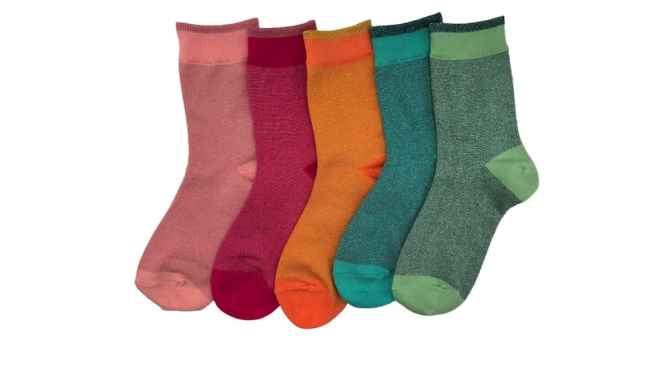

The Migrant Problem

Where do they come from

The migrant socks

Alone in the world

Adrift

Where do their partners go

Why do they fall apart

Why do they drift aimlessly around my house

I look in the dryer

Nothing there

They went in together

Now one is lost on the journey

Gone

Who knows where

Inevitably

They settle together

The singular socks

Start a community

Of those that don’t fit in

Bloody foreigners!

Walking in the City

For all walkers

In the city,
People walk.

Edinburgh, The Fringe.
A tide had not just turned,
But ran,
Or rather walked.
People, like tidal water.
Unstoppable.

And unlike water,
Where two flows meet,
Making mayhem,
Sunken boats and
Wrecks,
Space was made for everyone.

One way, AC/DC fans
Pointed the way to the venue.
The other way,
A mixture of
People, once arrived, we assume
From many boats.

A deep diversity
Seemed
To go deep down,
And also spread
As a surface
Of calm.

A dozen different languages
In a dozen minutes.
People had all come somehow
From somewhere.
Not here,
But here, no difference.

In the city,
We all walked.

Powte’s Complaint

Anon. 17thC

 Attributed to The Fen Tigers

Powte’s Complaint

Come, Brethren of the water, and let us all assemble,
To treat upon this matter, which makes us quake and tremble;
For we shall rue it, if’t be true, that Fens be undertaken
And where we feed in Fen and Reed, they’ll feed both Beef and Bacon.

They’ll sow both beans and oats, where never man yet thought it,
Where men did row in boats, ere undertakers brought it:
But, Ceres, thou, behold us now, let wild oats be their venture,
Oh let the frogs and miry bogs destroy where they do enter.

Behold the great design, which they do now determine,
Will make our bodies pine, a prey to crows and vermine:
For they do mean all Fens to drain, and waters overmaster,
All will be dry, and we must die, ’cause Essex calves want pasture.

Away with boats and rudder, farewell both boots and skatches,
No need of one nor th’other, men now make better matches;
Stilt-makers all and tanners, shall complain of this disaster,
For they will make each muddy lake for Essex calves a pasture.

The feather’d fowls have wings, to fly to to other nations;
But we have no such things, to help our transportations;
We must give place (oh grievous case) to horned beasts and cattle,
Except that we can all agree to drive them out by battle.

Make art not ‘Art’

Making art nobody sees but you

This article is about Jonathan Beller, film theorist, culture critic and mediologist, and Professor of Humanities and Media Studies at Pratt University.

Beller is a writer and generally avoids having too much of his work online. His work skirts around art as research, but as an academic, not an artist. He is focused on visual culture, cinema and anything with a screen.

He has a Marxist background and sees the ideas of Marx as useful in understanding how social and cultural structures influence thinking and may help us think critically. He is an academic, and his work must be approached in this context. He does a few online things, see here, but I get a sense that he is most comfortable as a writer. Stick with the video as he does give his thesis, but does not present in a comfortable way. He lectures, but not that well.

What I found most interesting is his emphasis on visual culture, particularly what we attend to visually.

As an example, to open my mobile phone, I am now expected to look at it, gaze at it and have it gaze at me. He proposes that this is an act of having me become part of the world computer to make money through this as post-capitalist economic media. He proposes, for example, that this could be seen as labour as it makes money for the provider of the media, and provides me with a benefit, ie the phone and all that it does.

One bit of Marx that he talks about, in his very academic way, that has to do with art making that nobody sees but you, is to do with use value and exchange value, in this case, of the art you make.

Marx argued that workers in making stuff, prior to ‘capitalism’, ie being paid to work, the value of the stuff they made for themselves was in how they could make use of it, themselves. Marx called this ‘Use Value’. The worker grows corn and uses it to make bread, then eats it. The use value is retained by the person who grew the corn.

In making stuff for money for someone else, benefits came from ‘Exchange Value’. The stuff was exchanged for money. And the more times the stuff could be exchanged, the more money the person doing the exchanging makes. So the worker grows corn for a landowner, it is exchanged for money by the mill owner, it makes flour, which is exchanged for money by the bakery to make pastry, which is exchanged for money by Greggs, who sells the worker a sausage roll. All the people who do the exchanging make the most money, not the worker.

All I am suggesting is that in making art nobody sees but you, the use value is retained by you.

Exchanging art for money can be a great thing. Think of Picasso paying his bar bill with his signature on a paper napkin, or Jeff Koons selling a sculpture for $91,075,000 at Christie’s in 2019. If you want this, go for it.

But making art that nobody sees but yourself changes your relationship with what you make as art. It makes seeing its use value to you more available.

I cannot tell you what its use value is, only you can do that, or more importantly, the artwork tells you. This is useful in telling you something about your experience of making the art and thus something about your experience.

Clearly, if it’s exchange value would pay for a 3-week stay for you and your family in the Maldives this summer, then its exchange value to you is useful to you.

But making art nobody sees but you is a useful way of shifting your relationship with it away from exchange value to use value. And, if you do not see yourself as an ‘Artist’ because the art you make would clearly not sell, you retain the use value the art has in talking to you about experience. Seeing its use value makes you make it in a different way.