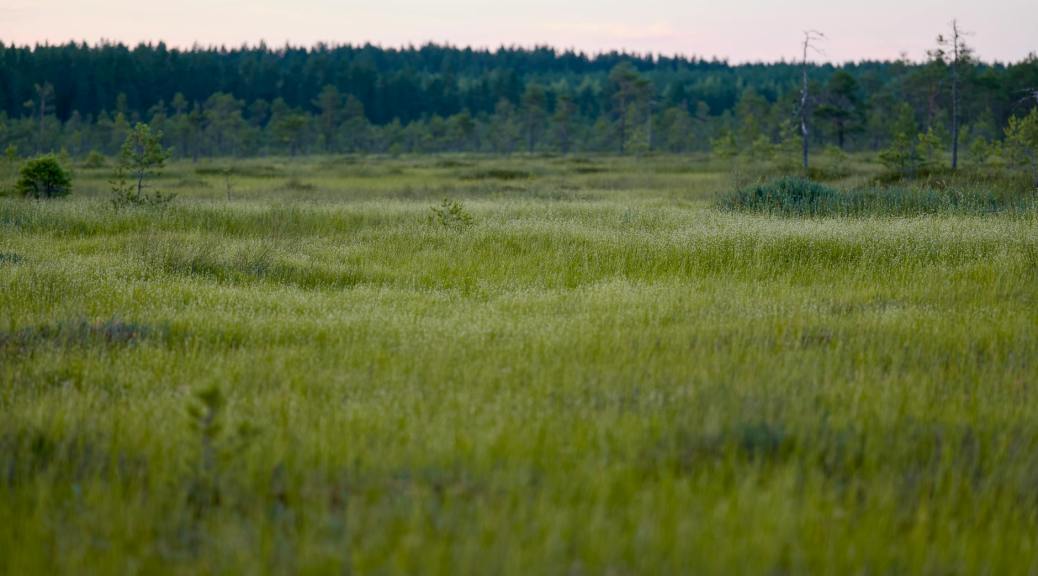
Years ago when I was not very well, with early symptoms of depression, invasive thoughts, disturbed sleep and volatility, I wondered why, trained as a therapist I could not heal myself. Could I do art and do it outdoors as a way to help me not slip into ill health? So I walked with a GPS. The idea was that I was making a mark, albeit digitally. Markmaking is like in early years education but I would be doing it outdoors as an adult. Could I walk around a grid square and make that make a mark? I found an area of open access a ten-minute drive from my home. A place called Walton Moss. Two square miles of wilderness. I found a grid square that fitted within the accessible space and walked. The mark I made was not great. I was off the grid square. It was misshapen. But it set me off on a long journey.
Now 9 years later I find myself at a kind of crossroads. 9 years ago this crossroads would have rendered me into dejection and inaction. The stained sheets of depression would have prevailed. But I have moved on. Not least in that, I have my pension. I have some financial security financially. But two workplace experiences have rattled me badly. I kind of concluded that I really don’t want to be an employee anymore. It is a role that I can fill variably. In some places I have worked, the work does suit me, or maybe I suit the work. But others…”Nah! No thanks!” My goal is to now firstly to make money, fill that gap that comes when the pension money runs out. I want to simply sell products. Secondly, I want to sell my own arts and experiential productions to whoever wants to pay me for them. Art in tents, drumming, walking as art, working with art making as research, art as exploration and expression of personal experience, at best, bespoke experiences created by clients doing experiential learning. Finally I want to work with arts for health. This may or may not pay, but we shall see.
So I am 9 years older. I found the GPS file that I made 9 years ago and wondered if I could better it. At the time I did the walk I went on to realise that it was physically impossible to walk a straight line, never mind a perfect square, flat on the Cartesian Plain. The earth is a geoid for goodness sake, travelling through space. All movement is a curve. All is in a state of movement. But in our life, we just don’t perceive it except maybe at sunrise and sunset. But that is the point. I have found art-making makes these things known. It makes you miss the point you used to make, and find a new one. You make art and you make that happen. So I wondered what I could make happen by making that walk happen again.
This time I was better prepared. I refused to use GPS last time to navigate. Walton Moss is in places, like a prairie. It brings on Prairie Madness. A turned to take a photo. Looked away from the horizon that encircled me, enclosed momentarily inside the confines of the viewfinder, and when the horizon returned I had no idea where I was, where I was headed, from whence I hailed. I recognised the Pennines in the distance, which were SE, and this brought me back But it was a mad moment. Having visited the place many times since, this madness became commonplace. Walton Moss does not care for humans and plays tricks on them, to make them leave. The idea of a grid square would be a thing it would abhor. But I intended to prevail. Walton Moss is like Puck in A Midsummer Night’s Dream. Mischievous, capricious with the will to be malicious ever-present. I had learned to be unafraid, but not to assume I would prevail.
The intention was to walk a perfect square whilst knowing this was impossible. The perfect square was my aesthetic. David Hockney said, “The moment you cheat for the sake of beauty, you know you’re an artist.” I intended to be an artist. I intended to cheat. I could not walk the walk but use an app to generate GPS waypoints and make a square Euclid would be proud of, but that would be taking cheating too far. I could navigate using a compass, a physical map, a GPS, a digital map, a watch for timing and a nice set of Rangers Pacing Beads for pacing. Originally I walked using just a map and compass, by line of site on a bearing and a back bearing, but be aesthetic, the mark I made was not as accurate as I had hoped. In the real world, you go point to point. The path you take is arbitrary, the easiest, drying least boggy route. You follow a path. Up a steep hill, it zig-zags to make the ascent manageable. Walton Moss is, apart from the remnants of quad tracks, utterly devoid of human paths. Fewer people have hiked to the summit of Walton Moss than have hiked to the summit of Everest. The summit is arbitrary. The summit is subjective. It is the point you feel is the highest point on what is in effect, a slightly convex prairie.
So I set off. I waded in through a stream to gain entry to the moss and on a giant bath sponge full of water. The moss imposes itself on you. This is what it does. It will not let you walk in without some imposition. You become an imposter. I wandered and, using GPS, found the entirely arbitrary point in a bog that passed for the bottom right and entirely arbitrary corner of the grid square and walked north on the entirely arbitrary line that was the one klick first leg of the grid square, due north, 1000 meters. This went well. This was a bad sign.
Peat had been cut in the southern section of the moss. But going north the original raised bog prevails. So the walk went uphill, unto the age-old moss, a mountain made of water and peat, 10,000 years in the making. You can see why the moss is asocial. It has been plundered by humans. So knowing me to be there at best it would tolerate me walking my silly straight lines. It would be silently laughing, and weeping. At worst, I have found it to be malevolent.
On the UK official Ordnance Survey map it is shown as moorland. On the OpenStreet map, it is shown as a water feature. OpenStreet has this about right. You cannot go there without getting your boots filled with tannin-rich bog water, the tears of laughter, or sorrow. The moss was, when the Neolithic, and the New Stone Age prevailed, a lake. It filled with sphagnum which became peat which grew at 0.5–1mm a year. On the first of the four legs of the walk, I ascended just over 15m from the base to the summit of the moss. So given good and bad years, a rate of growth of 0.75mm a year would be about right. 10,000 years growth. An organic hill. A water feature. Beyond the comprehension of human sensibilities. A hill that grew itself from sunlight and rainwater. I adore and fear this place. I am in awe.
I set off on the first leg. This was the easy bit.
 Moving Space