Tag Archives: Making Art

Items about making art

Art is Not Truth

“We all know that Art is not truth. Art is a lie that makes us realize truth, at least the truth that is given us to understand. The artist must know the manner whereby to convince others of the truthfulness of his lies.”

Pablo Picasso

Interesting article from The Conversation. It is a well-reported account of the work of artist Damien Hirst discussing, amongst other things, truth in art, and specifically ideas about art as process and product.

Click the image below to access it.

Page 1 of 2 – Click below for more

FRAGMENTARIUM

by SULI QYRE

95. From Inner To Outer

A human being is a body, its actions, and its words. All of these things exist in the physical world: a body can be felt, its actions can be seen, and its words can be heard. But a human being also has feelings and thoughts and these do not exist anywhere in the world. While they do have worldly counterparts, these counterparts are not the experienced things themselves.

Our thoughts and feelings exist for us in an inner space that the world cannot directly reach. The world can influence this space, but it is still wholly ours. We can think about anything we can imagine. We can invent ideas and structures without limit. We can be fully creative here without having to worry about even the possibility of criticism from anything or anyone in the world.

Everything we create in our inner space is also wholly ours. We hold these creations close and we might even feel they are part of our identity, for this space is also the domain of the self. While we do not share everything we think or feel, we do occasionally feel the urge to transform an idea into something tangible. We want our idea to have its own body, to exist in the world apart from us. We want this not only because we want to express ourselves but also because we see value in the ability of physical objects to outlast us.

But the act of creating a physical object is daunting. It means showing a completely private part of the self to the world. It means violating the inner space that is entirely ours alone by allowing a part of it to exist elsewhere. And this is true even if we do not intend to share our work with others. For the privacy of the inner space is total, and any leak from that sanctum must necessarily breach it. A part of the self that has been expressed to the world cannot be denied in the same way as something merely imagined.

To take creative action is to transcend our present self. It is to exceed the boundaries of our inner space and allow the self to grow. It grows because a part that was inner becomes outer and now exists in the physical world. The creative act grants that part of us a separate body and a new existence — an existence that is both part of the self and also entirely its own.

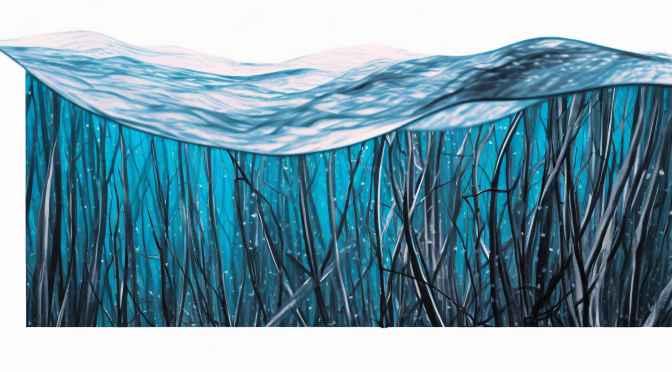
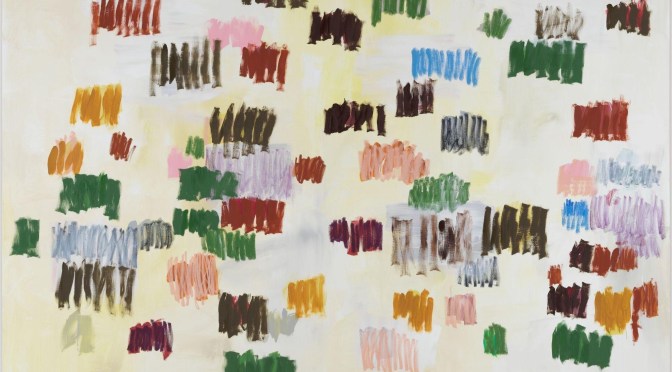
Featured Image – Robert Motherwell – Untitled from Madrid Suite
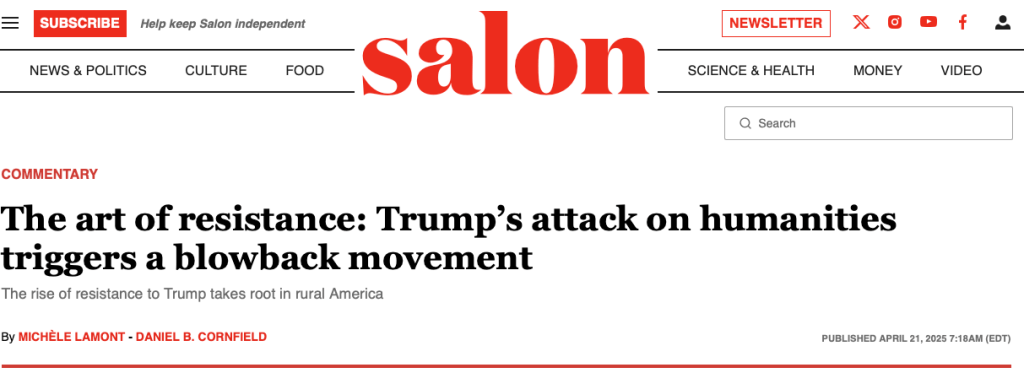
Resistance

Click the image above for the link.

This is an article about a country, or at least an administration, at war with the arts and the humanities.

Its main thrust is a story of resistance, but on the way it tells a story of what the arts do in the lives of people exposed to arts practice and the humanities.

In summary, I think what the arts do here has the following characteristics.

  • Participating in art in the community brings people together and, as the article says to, ‘..play a crucial role in fostering social bonds, as well as community and local identity and pride. As such, they are vital to social resilience..’ From my experience of care, resilience emerges out of attention and attachment. People are attended to, attend to each other and, vitally, attend to themselves. They see themselves being seen. They hear themselves being heard. Like the article says, arts activities like storytelling, ‘..uplift youth voices, nurture resilience, and build essential writing and communication skills’ in trauma-informed spaces connecting youth and educators.’ Resilience is an antidote to trauma. Each centre for art activities is ‘..a venue for self-expression and self-realization for many young people, in a context where few economic opportunities are available.’
  • The creative sector, whilst it does not raise lots of money to the participants, it promotes the flow of money, invigorating communities. It promotes social capital and entrepreneurship. People learn to do stuff. Art making is active and is thus prone to activism.
  • Therapeutic interventions reduce the burden of health services in the long term. It is plausible that the people receiving arts therapies may develop an interest in the arts and have some aspects of personal arts practice enhanced, with health benefits. The article talks about the way art practices in the community ‘..enable audiences to engage in critical reflection and preservation of human histories, cultures, values, and beliefs.’ The same goes for personal arts practice.

That this is an article about resistance emerging in the arts is expressed in the quote of Ursula Le Guin

“Resistance and change often begin in art, and very often in our art, the art of words.”

Ursula Le Guin

People not only thinking and speaking for themselves, but being given the means by which to do so systematically, is an impediment to the act of power speaking and thinking for people. Art and it’s makers can speak for themselves.

Art in Prison

I have been covering shifts at work and have missed posting, but I have been reading.

Jeremy Deller is a fave artist. See here, here, and here.

He did a performance piece with Brass Bands doing rave hits here and made great video about Rave Culture here.

This article about Deller working in prison with art making caught my interest.

Two quotes in it said a lot about how the arts can be beneficial simply through engagement, making art with other people. Simple engagement is all it needs.

The art room in prisons [..] is the only space you go into where things seem a little bit calmer and people are getting on with something.

Jeremy Deller

We’re looking at it for what it is – not who’s made it or what they’ve done.

John Costi