hail is different to rain at least this one landing on me now it was pale, translucent, semi-soft the size of small peppercorns but white in puddles it made ripples or circular waves the same in form as ocean waves smaller than ocean waves but bigger than rain waves some small surfing creature a millipede or flee would be on the phone ‘It’s up’ they would say to fellow surfers but this lasted not long enough for wetsuits it landed briefly on my face on my tongue on my hand it pattered on my jacket announcing it’s presence then gone on the wet floor it melted returned to water it’s adventure in phase transition over moving downhill eventually to rejoin the ocean waves and prompt further phone calls far away on another day
December 31st 23:59:45 2022. Went outside. The garden was pitch black, Silent, but for the sound of rain, And the grumbling of distant fireworks. Returned 30 seconds later in 2023. It seems new years only arrive indoors.
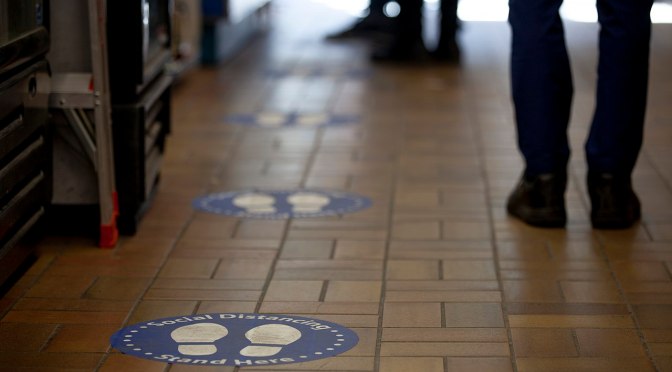
Social distancing was introduced to the UK around March 17, 2020
On March 18, 2020 I did a walking art performance to explore the then new idea and practice of ‘social distancing’.
On reflection, a year on, it is interesting that this simple act gave me insight that evening into the way that ‘social distancing’ would very quickly become normalised in society, as did the sensation of coming to avoid or mistrust the proximity of other people.
It just reinforces for me how performance and art as research may be able pre-empt experience and give insight into experiences to come, but do so through feelings, not through empirical data.
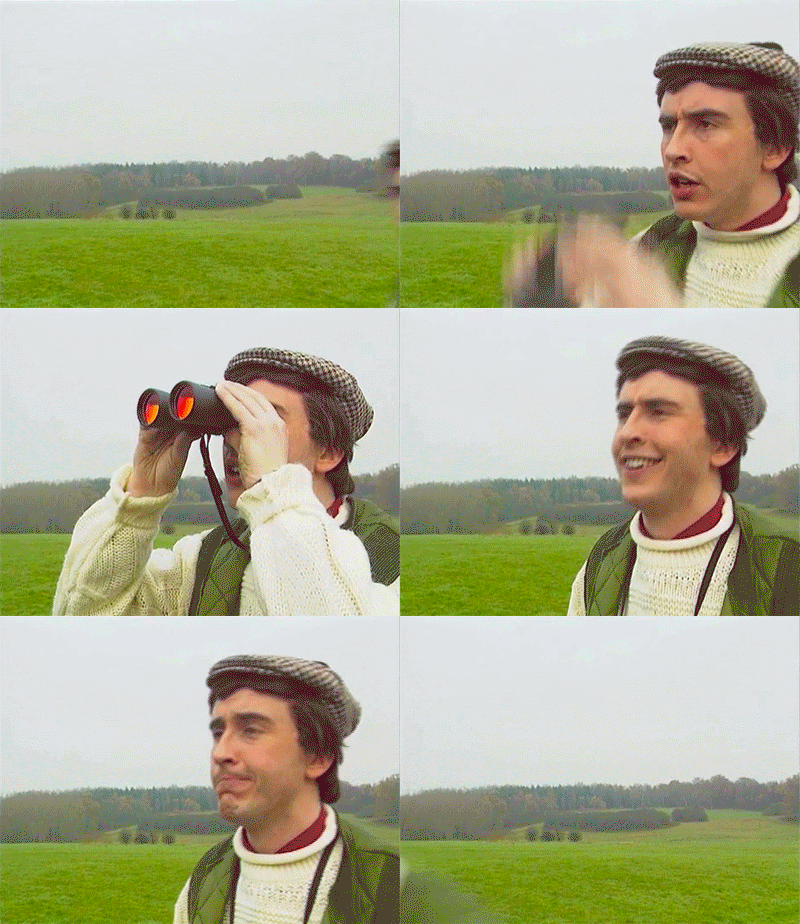
Be careful what you think you see.
This reminds me of Cassandra, who was able to see the future, but was cursed by nobody believing what she said. She was cursed by Apollo for lying when she said she would get jiggy with him. She was cursed for lying, so the curse made her words became an untruth.
Maybe the moral is then is to not lie to yourself about what you may see, but beware that to say what you see may help nobody. And if you do speak, maybe only speak to people who see the world the way you do. Therein is the dilemma of holding your own counsel or speaking only to become stuck in a bubble. Trump and Brexit and QAnon all rolled into one.
Or maybe the moral is simply that words are not accurate representations of feelings, and interpreting feelings is an art not a science.
Below is my account of that performance written somewhere around the end of March 2020.
Performing Distancing March 18, 2020
(Written end of March 2020.)
On the basis that art and performance can be used as research, to explore and express personal experience, I wondered what would happen if I walked through Carlisle town centre maintaining 2m social distancing, but do it as performance, choreographed like a dance or with applied dramaturgical principles, and record it with GPS.
A simple algorithm was devised to work like choreographic directions.
Walk in a straight line until I was within 2m of another person, then turn away until the distance exceeded 2m, then resume the straight line.
Where I met an obstacle turn through 90+ degrees and continue in a straight line.
Limit the walk to the central shopping area.
Walk for 1 hour.
I imagined this visualised as a faux maths formula, because moving an idea between forms, like turning word into image, can sometimes reveal a new aspect to the idea.
Faux math formula
Where P is the path of the walk, as an iteration or repeat of p, which is each leg as a straight line a-b until this is changed by meeting a person (the m is an aboriginal sign for a person, basically, the bottom mark left in the sand where a person was sitting) in which case the path p changes (the triangle) by n degrees.
The basic principle of art as research is to make art, in this case performance, and pay attention to what happens when you do.
On the 18th March I did a social distancing walk for an hour in Carlisle city centre, and payed attention to my thoughts and feelings and other peoples response. I tracked it with GPS tracker.
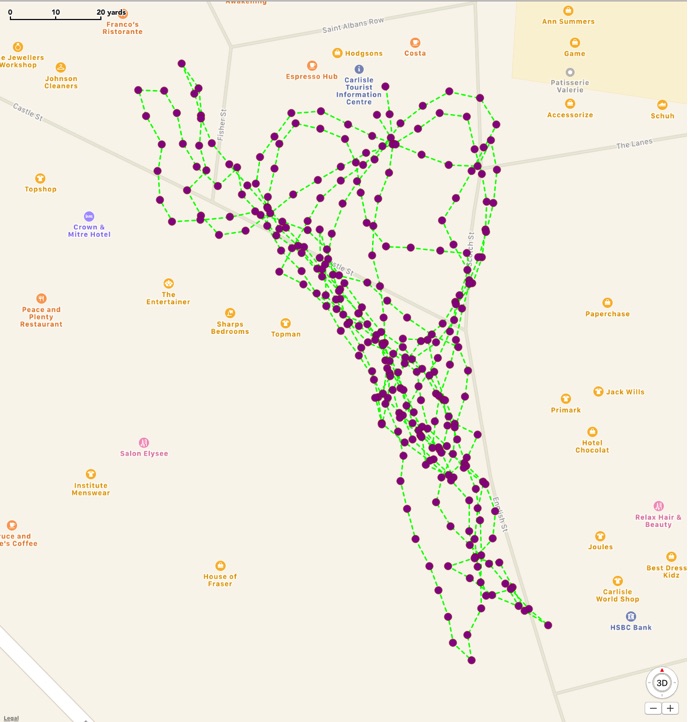
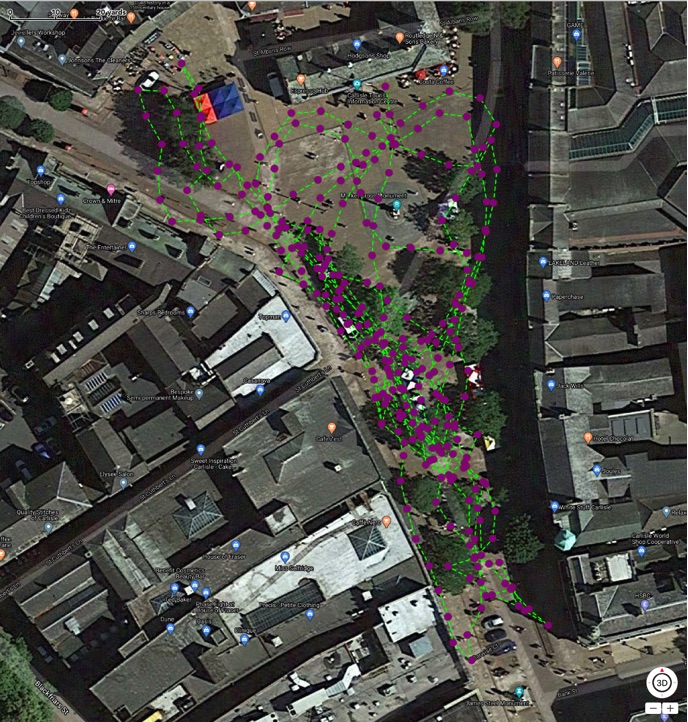
This is the raw GPS visualisation of that walk.
This shows the path I followed as the green line. The dots are simply GPS way points.
This is a satellite view. The image is old and some things were absent in March.
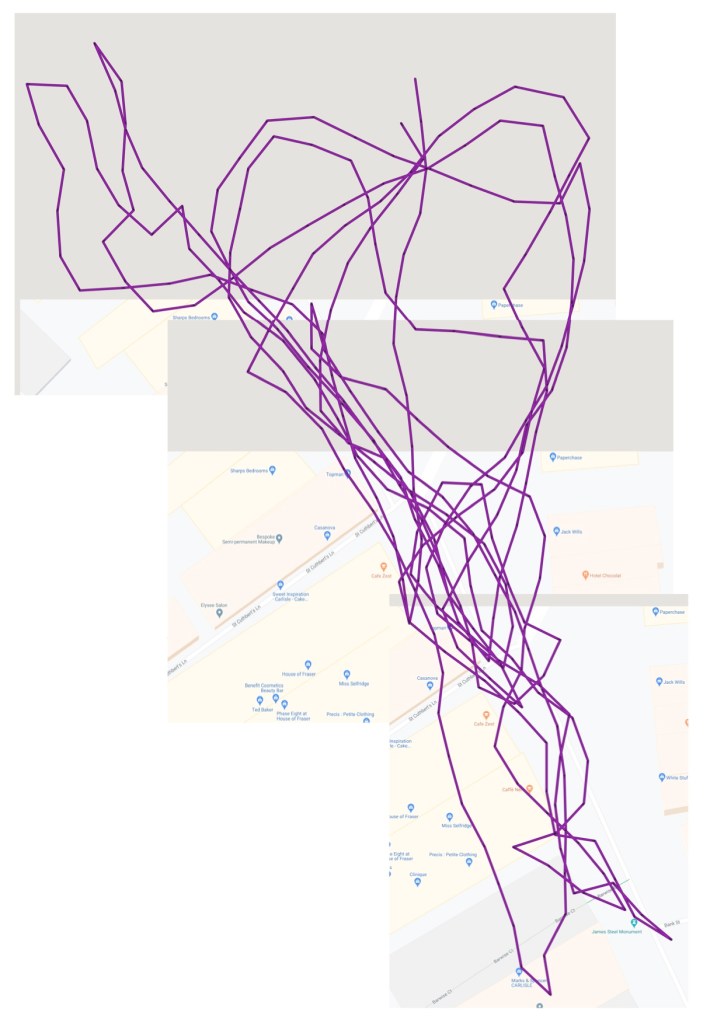
I worked with a GPS track editor and removed as many intermediary waypoints as possible to leave only turns in response to social distancing or turns in response to an obstacle, like a shop front.
I got this, edited down as three images joined together.
Simplified social distancing walk.
What the walk/performance did as research, was give me insight into social distancing, then a very new phenomenon.
Over the hours walk, I started to become anxious when I got close to people. As a person approached me and I anticipated the need to distance, I felt a rise in my level of anxiety. I felt isolated and distanced. I felt sad.
I was also nervous about wandering around in circles for an hour on CCTV. In the end nobody even batted an eyelid. I was utterly uninterrupted and fully ignored.T his added to a sense of aloneness.
Part of the creative process is the period of incubation, in which the creator moves away from the art making and does some other thing. On returning to the theme or the artform, after incubation, new insights emerge. The form created is seen in a new light. I noted this sadness and anxiety at the time, but on writing this, months later, another aspect of my experience of performance/art as research came into play.
I reflect now that this experience gave me insight into how social distancing would feel. Now, months later people are not rushing back to contact, many people appear reluctant to go back to the shops and the pubs and the office. This week, mid-June, the MP is now imploring people to go back to the office and the shops and the pubs. The anxiety prevails.
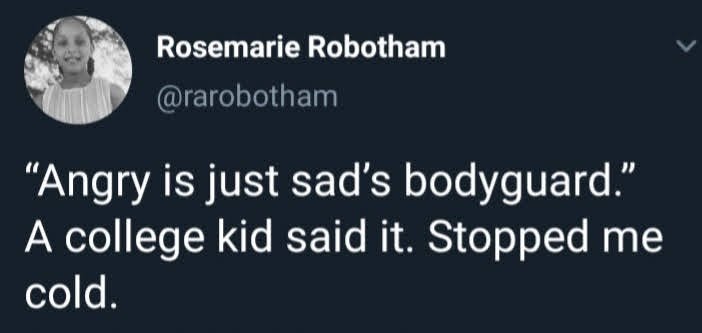
Also there is growing anger in the UK and clear riotous anger in the USA in some quarters of society. Today I found the following meme.
My experience of children in care is that many are angry and this is just a product of sadness and anxiety. Whilst different, both are connected to loss. Anxiety may be an anticipation of discomfort and danger, but also the anticipation of the loss of safety, the familiar, and the predictable. Our stress response is fight, flight or freeze. We have been unable to flee in lockdown, which leaves fight and freeze, anger and sadness.
On March 18, the day of my social distancing walk, the experience of social distancing was new. This art based research could not be seen as producing a clear empirical evidence based outcome, but I did experience feelings in myself which could have anticipated feelings shared by other people once the lockdown deepened in its impact. I anticipated sadness and could, in retrospect, have anticipated anger.
This work is highly influenced by the arts therapies and dramatherapy and by experiential learning. In the arts therapies, whilst art is made, the role of the artform as an end product, for sale, or for viewing by an audience, is not significant. What is significant is the experience of art making on the part of the art maker. As such it is a form of experiential learning in which direct experience of art forms the basis of learning or research in which the art making is both the mode of research and the outcome of the research. It is part research, part performance, part personal therapy, part play, part experiential learning but is never fully any of these things.
Undertaken with the intention to make this as art, invites the creative process, and as such it is unique, not in any grand way, but in a way that invokes creativity as a simple and easily available act accessible to anybody. The act that makes it art in intentionality and this intentionality can be learned.
My hope is to use this website and my own art making to show ways to learn this. We cannot all be artists but we can all make art. What this experiment revealed was simple and oddly mundane, but also complex and profound. I want to show how art making can help you explore and express your experience of the world.
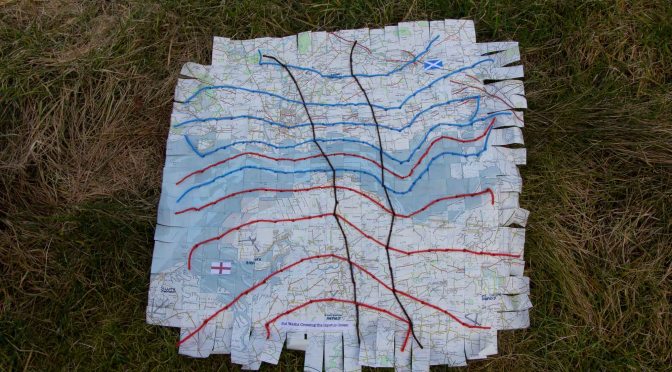
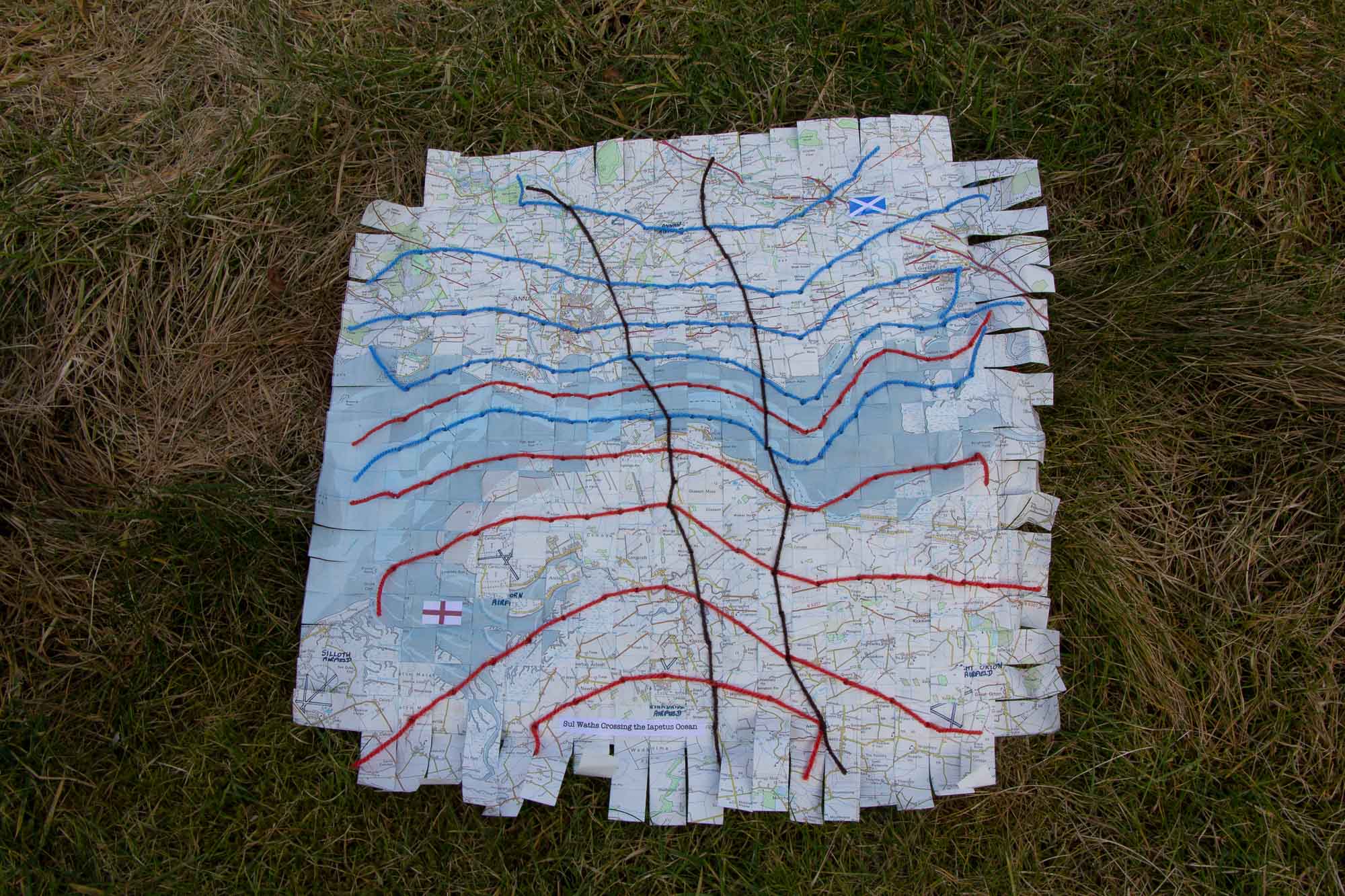
Following on from my exploration of the Solway I wondered if I could make an object that captured the way it was a real objective place, but was open to a number of subjective impressions.
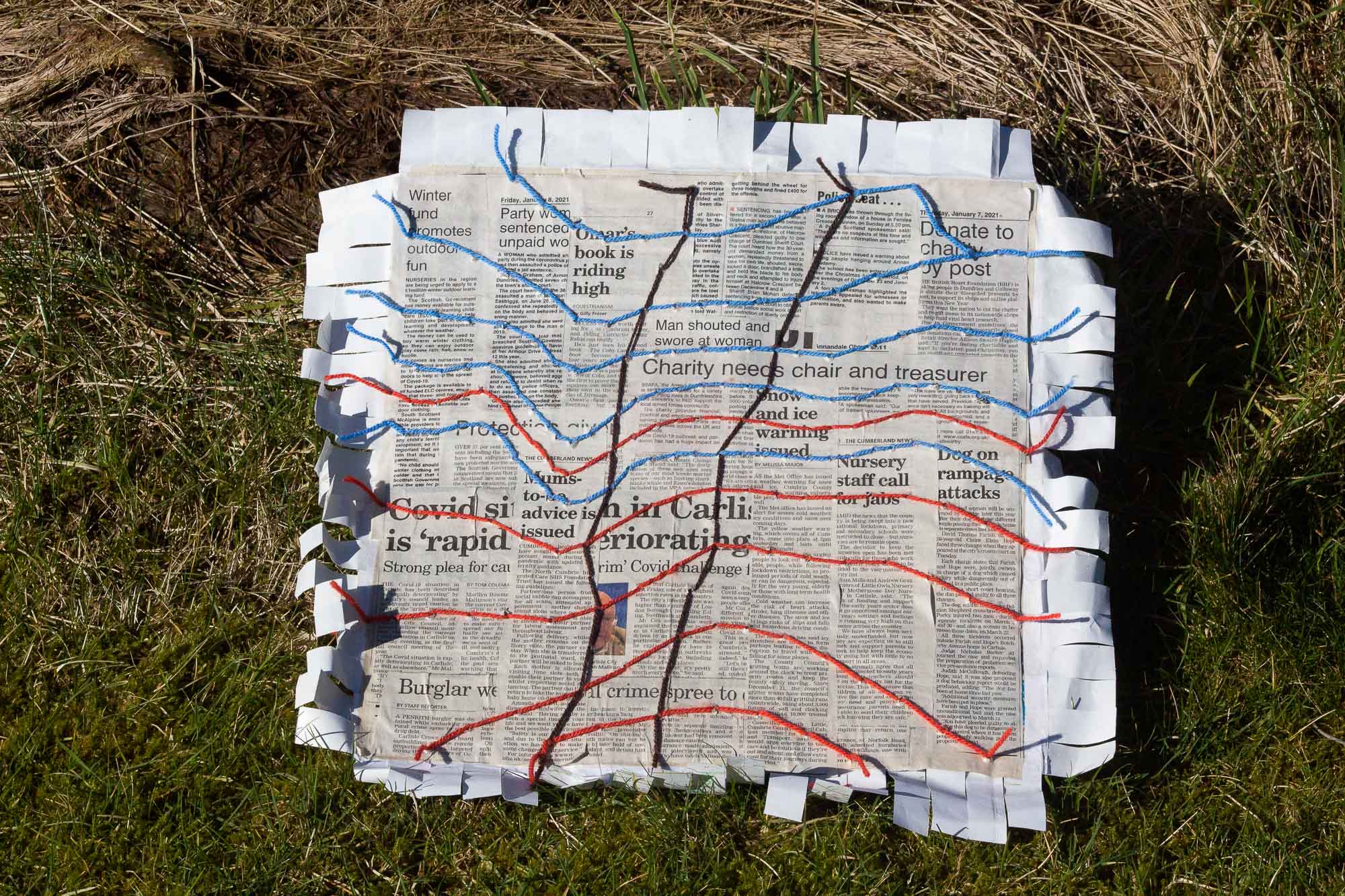
For a while I have experimented with weaving Ordnance Survey maps, with the grid squares becoming the warp and the weft of the created object. In the past it has been two different maps, but for this I wanted to experiment with two maps of the same place, but shift them so the Solway became kind of extended and ambiguous. Like it is. So I made the object above.
It will never win a Turner Prize but my interest is not in creating ‘Fine Art’, but in using art-making to explore ideas and express experience. What I wanted to express was…
Blurring the boundary between England and Scotland.
Showing how the Waths crossed this boundary.
Make something that looked recognisable from a distance but changed before your eyes as you approached it.
Make you kind of wonder what it was, a picture, a map, some weaving or needlepoint.
Shifting your sense of time. The Iapetus Ocean was the water between the two tectonic plates that mashed together to make the Borders. The Solway is all that is left. I liked it as an archaeological object.
To also have bits of it that were from the time it was made. I liked it as a contemporaneous object as well.
To work with text and image and object and colour as things to stand in for something else.
Sometime I would like to return to making this as a more aesthetically sophisticated object. But as a starting point, it is a good place to start.
Two circular walks around a newly erected fence and the old line between cut and uncut grass.
Enclosurenoun
Old French - enclos - closed in
Similar - Paddock, fold, pen, compound, stockade, ring, yard, pound.
An area surrounded by a barrier.
A section of a racecourse for a specified activity or group of people.
The state of being enclosed, especially in a religious community.
The process or policy of fencing in wasteland or common land so as to make it private property, as pursued in much of Britain in the 18th and early 19th centuries.
A document or object placed in an envelope together with a letter.
Boundarynoun
Old French - bonde - a visible mark indicating a dividing line.
Similar - Border, frontier, borderline, partition, dividing line.
A limit of something abstract, especially a subject or sphere of activity.
In Cricket, a hit crossing the limits of the field, scoring four or six runs.
An entity demarcated from its surroundings.
Guidelines or rules or limits that a person creates to identify safe ways for other people to behave towards them.
Circumnavigateverb
Latin - circumnavigare - to sail around
Similar - Bypass, skirt, compass, circumvent, move around.
To sail or travel all the way around (something, especially the world).
Go around or avoid (an obstacle).
Avoid dealing with (something difficult or unpleasant).
The complete navigation around an entire island, continent, or astronomical body (eg. a planet or moon).
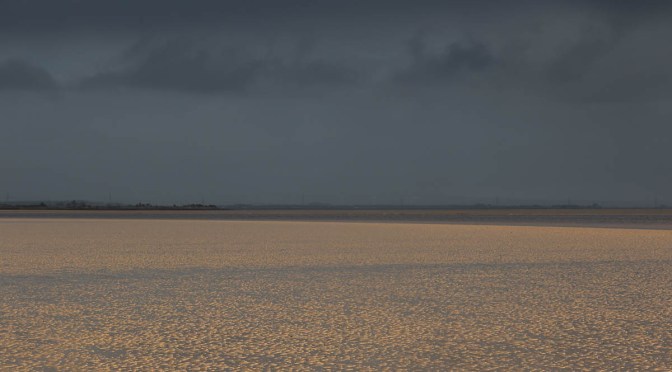
On the Solway, so flat and otherworldly I walked and remained fixed in space. The sea, the sand, the storm approaching over Glasson Moss moved past me as I rotated the Earth with my feet.
Looking closely and photographing, I moved slowly. But on my turn and return to Browhouses walking faster, the same thing occured. The white windmills in the sun sped towards me. The Earth turned under me like a ball under a circus dog.
In the Renault the Earth stopped. Feet no longer on the floor. The pedals, a, b, c were depressed, and the car sped past Metal Bridge and the services, back to Brampton and my house.
In the house, out of my boots, back on my feet in slippers, the Earth moved again the crockery in the cupboard rattled and chinked with each step. I toyed with a short sprint. The milk in the jug rocked like a storm… in a milk jug. Teacups were the same. Tea sloshed over the rim. Little waves on a bone china shore.
I filled the bath and on walking from the bog a tsunami formed. I walked the dog round the block, and the planet rolled in a raggedy right turn the size and shape of my neighbourhood, back to where she started. I sat still at last to watch the news. Natural disasters around the world. Unexplained tectonic movements unforeseen by experts, the Earth had moved.
I went to bed. I awoke. And it had gone.
I walked, I moved. The Earth did not.
I retuned to the Solway to seek the spot where it first happened, and in it’s vastness the spot was lost.
But somebody some day will find it. And the earth will move again.








 Moving Space