hail is different to rain at least this one landing on me now it was pale, translucent, semi-soft the size of small peppercorns but white in puddles it made ripples or circular waves the same in form as ocean waves smaller than ocean waves but bigger than rain waves some small surfing creature a millipede or flee would be on the phone ‘It’s up’ they would say to fellow surfers but this lasted not long enough for wetsuits it landed briefly on my face on my tongue on my hand it pattered on my jacket announcing it’s presence then gone on the wet floor it melted returned to water it’s adventure in phase transition over moving downhill eventually to rejoin the ocean waves and prompt further phone calls far away on another day
In my work in the USA I became aware of and interested in archetypal ‘Trickster Stories’ of Coyote, Rabbit and particularly Raven and used them in my Adventure Therapy work. Tricksters are seen as wise fools who can both cause trouble and be foolish but also bring great wisdom and change. They do this by being clever, not strong. In my dramatherapy training, we often used myths, and the oxymoronic power of the trickster was seen as an important aspect of dramatherapy practice, in that seemingly simple or even foolish actions can be very therapeutic. I also found that my work could be undermined by being too clever.
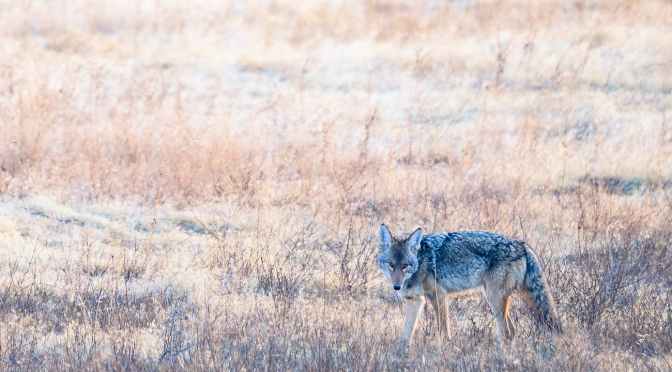
Recursion is taken to be a sign of high intelligence, particularly in relation to being able to have mindsight, the ability to perceive in your mind, some thing in another persons mind. This is an extension of the idea of embedding one thing in another. It struck me that this is a quality of the trickster. Raven is a trickster in North America, in Australia, Crow is a trickster. Another trickster in America is Coyote. I have a great memory of a story by Mark Twain in … about coyote, (or cayote as Swift writes) about his trickster qualities. It goes thus…
‘But if you start a swift-footed dog after him, you will enjoy it ever so much—especially if it is a dog that has a good opinion of himself, and has been brought up to think he knows something about speed.The cayote will go swinging gently off on that deceitful trot of his, and every little while he will smile a fraudful smile over his shoulder that will fill that dog entirely full of encouragement and worldly ambition, and make him lay his head still lower to the ground, and stretch his neck further to the front, and pant more fiercely, and stick his tail out straighter behind, and move his furious legs with a yet wilder frenzy, and leave a broader and broader, and higher and denser cloud of desert sand smoking behind, and marking his long wake across the level plain! And all this time the dog is only a short twenty feet behind the cayote, and to save the soul of him he cannot understand why it is that he cannot get perceptibly closer; and he begins to get aggravated, and it makes him madder and madder to see how gently the cayote glides along and never pants or sweats or ceases to smile; and he grows still more and more incensed to see how shamefully he has been taken in by an entire stranger, and what an ignoble swindle that long, calm, soft-footed trot is; and next he notices that he is getting fagged, and that the cayote actually has to slacken speed a little to keep from running away from him—and then that town-dog is mad in earnest, and he begins to strain and weep and swear, and paw the sand higher than ever, and reach for the cayote with concentrated and desperate energy. This “spurt” finds him six feet behind the gliding enemy, and two miles from his friends. And then, in the instant that a wild new hope is lighting up his face, the cayote turns and smiles blandly upon him once more, and with a something about it which seems to say: “Well, I shall have to tear myself away from you, bub – business is business, and it will not do for me to be fooling along this way all day” — and forthwith there is a rushing sound, and the sudden splitting of a long crack through the atmosphere, and behold that dog is solitary and alone in the midst of a vast solitude!’
In this act I think coyote shows mindsight. He can con the dog. To get the dog alone and humiliated in his domain, coyote has to know how the dog will think. He embeds himself in the dogs head, thus coyotes could be seen to display the power of recursive thinking, with no language in sight. What’s more, is the domain of this Trickster is the wild outdoors, the land uninhabitable by man and dog, dog being a domesticated beast. Same as rabbit and raven. Trickster is an experiential learner. Mark Twain also said, on being asked to reflect on things in his long life he was grateful for replied “I am glad my schoolin’ never got in the way of my learnin’.” Twain is suggesting experience was his teacher, that school teaching may be an impediment.
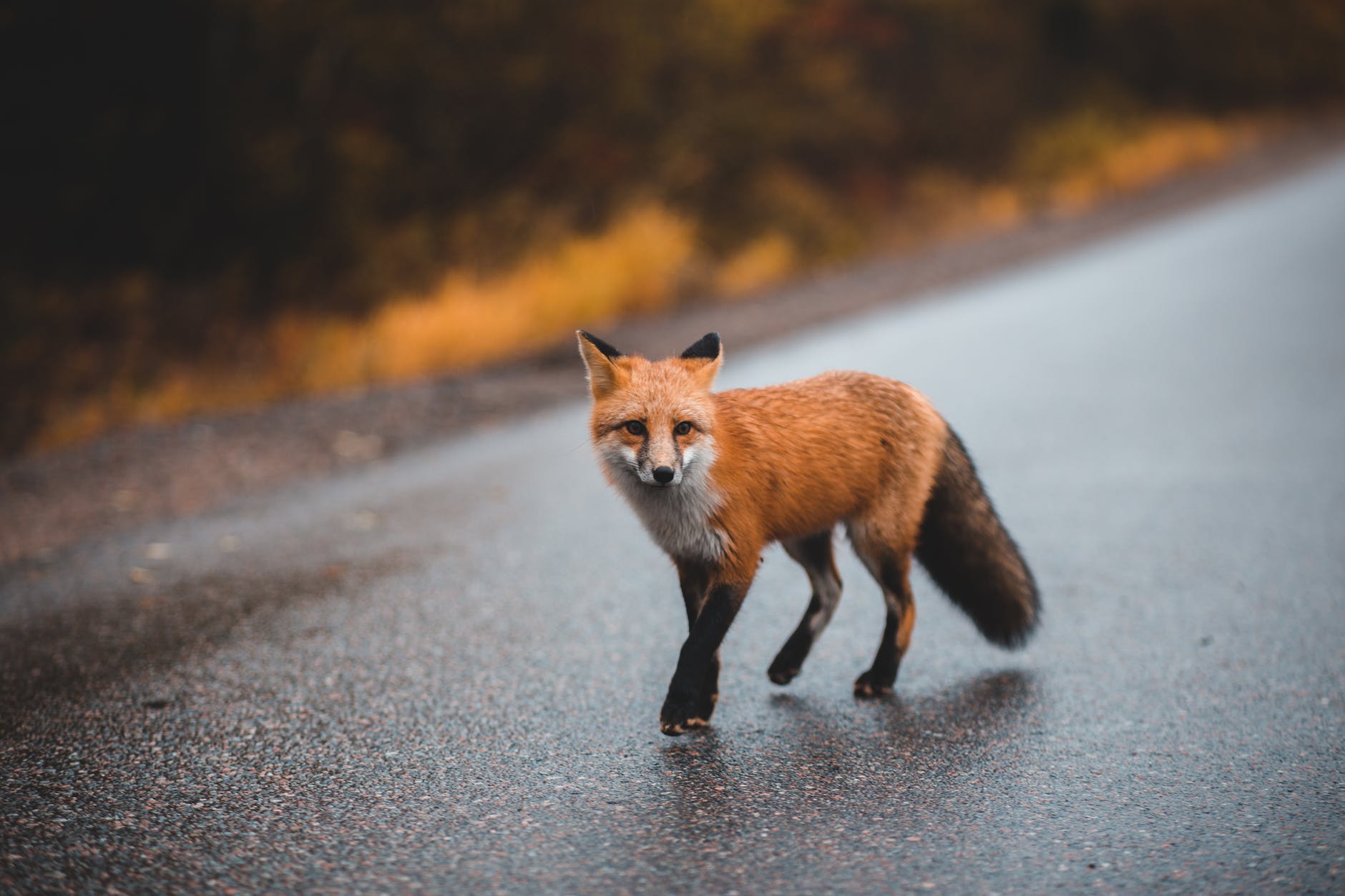
But the Trickster appears in many places. The wise fool appears the fool to learned or people who think themselves clever but the Trickster uses this to trick them. Even as I write this I am watching Colombo the cop casually con an oh-so-clever murderer (in this case an ambitious politician) into making a mistake that will have him show himself as a fool, by himself appearing to be a fool. Columbo is even scruffy and scrawny and dishevelled like coyote. Columbo is the wise fool, he is coyote transposed into contemporary culture. In the UK this could be Reynardine the Fox.
Columbo leads this smart city guy out into the desert and makes a fool of him.
In Mind of the Raven here Bernd Heinrich talks about how in any bit of forest or mountain there live ravens who have a pecking order and an established network of intimate, kinship and social relationships. But when young ravens fledge, they do not understand them, or more specifically tend not to adhere to them. Young ravens are trouble. They meet fledglings from other family groups and form gangs. In an established settled feeding site, the gang of young tearaways will turn up, steal the food and take off with it. Our local rooks work as a small group to turn over the turf on traffic islands, leaving all the moss pulled out, often over periods of days. Rooks are very well organised which means unorganised or uncooperative birds are disruptive.
I see this too locally, after fledging, when our young rooks are kicked out of the family nest we have found them sitting in disconsolate gangs at the bottom of our garden, looking sorry for themselves in the rain. Literally, they are teenagers hanging at the bus stop. Troubled teens. Tricksters all. The band Elbow also observe this trickster. In their song ‘Lippy Kids’ Guy Garvey writes in his wonderful poetic way about lippy kids settling like crows. Watch the keyboard player do the trickster thing and use insulation tape to make the old keyboard arpeggiate without an arpeggiator latch.
Lippy Kids on the corner again Lippy Kids on the corner begin Settling like crows Though I never perfected the simian stroll The cigarette scent it was everything then
Do they know those days are golden? Build a rocket boys Build a rocket boys!
One long June I came down from the trees And kerbstone cool You were a freshly painted angel Walking on walls Stealing booze and hour-long hungry kisses And nobody knew me at home anymore
Bernd Heinrich talks about he is unable to categorically say what happens to these young birds in the long term. For our local rooks who have a much larger social set, they form crowns in the move from spring to summer. A tower of circulating birds will appear over the roost. Clearly, there are more birds that inhabit the roost. My belief is that this is a way of rooks from different roosts, particularly fledglings, mixing and meeting birds from other roosts. The gangs at the bus stop seem to dissipate around this time. Given a need for the mixing of the gene pool, this would make sense. Also if older birds move over to a new social set, then it could be knowledge and culture is transferred, but this is pure speculation and wishful thinking.
A Crown of Rooks
If the trickster does display recursive features, even down to the circulating crown of rooks, then the trickster and thus recursion at a social level may have the following archetypal qualities. The trickster is young, it is an outsider, a thing of the wild, it is a troublemaker but a source of new ideas and new life, it brings risk but in the long term diversity, in the short term it appears elusive and contrary, but in the long term it settles into a perceptible pattern. If Columbo is the trickster archetype coyote then he is also socially inept, scruffy, impoverished, appears inept and a bit of a clown, but fully ten steps ahead of everybody all the time, he is a bit of a con man, he leads you on to your own demise, in the short term his actions seem strange, foolish, incomprehensible, but in the long term the pattern emerges and he gets his man, or rather he facilitates the means by which his man get himself. Tricksters are facilitators. As con artist the trickster facilitates their own interests, and as the hero, they facilitate the interests of other people. Either way the Trickster is never neutral, always brings change, for good or bad.
Red Reynardine the Fox the UK Trickster- Photo by Erik Mclean on Pexels.com
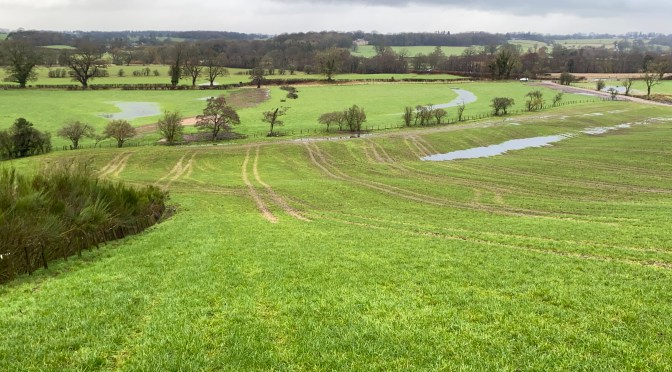
Decide on left left left right today and go out of the drive turn left and left again then at next left road and path are deep under water wife said the roads were wet pass the barking dogs at scrap yard that got out and lunged at us once and turn right find first sign of accident bits of headlamp and bodywork under grass just off the carriageway then some yards on find more carry on and find whole headlight fitting in damaged tree with big scar must have been an accident is it two cars or one what was outcome see mile marker I never really examined before and it just has ten on far side and one on near side nothing else so must be a mile to brampton and ten to longtown shortly after see the grisly remains of some roadkill which I guess is what is left of a young badger just the skin then become aware of a flowing stream down side of the road that is usually dry and accompany it downhill a ways to find a broken pipe by a gate in the field suggesting more deliberate engineering but it just dumps into field which is now flooded with runoff gurgling down to the irthing further on road narrows and I loose the grass curb for my walking and get onto the tarmac but see big tractor tyre marks cutting into verge on longtown bound side and see wet field has open gate with big tractor tyre tracks so guess marks made by autumn muck spreader swinging out left to make right turn into field now close to river and do next left to find road flooded again with water both side in hollows in field and a slow clear curve of old river course on downstream side filled up with overtopping groundwater left again into field and more signs of old river route including what seem to be grassed up riverbank sandbank beside the old river flow up hill now and find a single red sand stone pebble in field on top of grass like it was just dropped there today why where did it come from who dropped it maybe it came off a tractor and see several tracks of small animals come under fence and over field then cross same fence by old style and on to the hilltop badger sett which is clear red soil and earth and not overgrown like the beasts are about at night and see little one plank bench above it like people set it up to look at the view or wait for the badgers in the dusk and see big bank with lots of clear paths most likely not from farmers stock but maybe badger roads squeeze through lined up old gates and see very new dead sheep wool pulled of her hind quarters just eyes and tongue gone into crows belly see no other sheep and farm buildings nearby then follow fence and find rest of sheep flock at field corner by style either getting out of wind or as far as possible from dead sister and they all do that shudder thing like dogs to shake off rain as bits of blue sky appear then on to road with good flow down it into gurgling drain as it is right over the partly fossilised watercourse in the lazy bottom of the shallow valley and links the brampton glacial till ridge with the irthing which only appears after rain then in other places flows overground or through broken culverts and along field boundaries see curious gouges and marks in tarmac of road which must have taken something big to do it that deep and clean then find I can do my second right and then three lefts to find myself back on road of my first right but further up near brampton by the schools so would then do next three lefts like before and be stuck in a perpetual loop like a figure of eight so decide to end it and drop the algorithm then feel a bit weird thinking what would it be like to just keep walking and not ever go home but turn right past sprappies and back to my house by same route I took to start with and get back to dry out and drink tea and recollect the walk and the glory of it’s mundanity
Reflection
The intention for this walk was to start a new year by reconnecting with my local space after a bit of a hiatus. I wanted to concentrate on the act of walking more than the act of going to some destination.
One way of doing that is to use a simple algorithm to decide the path taken. I chose to take a path based on turns left and right. I decided on going LLLR, three left turns and a right turn, for two or three iterations, and see where it took me. This idea still gives some control over outcomes. It was very wet so a wanted to stick to roads and footpaths. It is an idea used in psychogeography for urban walking, as a way to move around a city in a way that brings the walker to places they don’t choose and don’t expect. The idea is to stop attending to the navigation and attend to the senses as you walk. You find all sorts of paths you never would normally notice, and in sticking to your chosen algorithm, feel compelled to take them. In my locale I found all sorts of little unmarked paths, in Cumbria called ‘Lonnings’, using this way of walking.
The day was wet and I timed my walk to miss the showers. I took my phone to photograph anything that took my fancy. I have walked all my local paths and could work out where I would go in my head. I wanted to see what had changed since my last walk this way. There is a saying, I think from the german, that says “If you want to find something new, take a familiar path.” It was in this spirit that I set out to walk.
“If you want to find something new, take a familiar path.”
I walked and photographed whatever took my fancy. On the way I thought about how I could represent the walk when I got back. In my head I had images from old scientific expeditions. My Father in Law got the new Taschen ‘Science Illustration’ for Christmas and some of the images were a great combination of the objective and the aesthetic. See the content of this book here.
Out of my front gate I went left, then two more lefts and then a right. Then I repeated it. After two iterations I worked out that if I did another iteration I would end up in an endless loop. I set off on my third ‘right’ down the same road as my second ‘right’, then broke the pattern and turned home. The intentional act of granting yourself responsibility to relinquish responsibility for navigation is quite strange. It behoves attention. It invokes an oddly relaxing attitude. It lets you be more in the here and now. This way of walking allows you to be present where you are, rather than where you want to be. It is intrinsically meditative.
“This way of walking allows you to be present where you are, rather than where you want to be. It is intrinsically meditative.”
My phone has an app that can use GPS to map my track. On return I wanted to use this as a kind of objective account of the walk, but do some ‘arty’ thing as well. I was not sure what it would be. Maybe some kind of faux expedition illustration like in the Taschen book! I also had in my head a separate idea about a construction of card exploring the relationship between the experience and the words used to describe the experience. I will work on this and show you in another post, but with this in my head, the prosepoemwalk idea with a slide show kind of formed as I woke a day later. This is at the top of this post. It seemed to capture the dyadic experience of the being present, attending on the spot as a singular phenomenon, and the walking as an extended, linear flowing phenomenon. I liked the idea of the words and the images mirroring and complementing each other. I liked the idea of the thing I made being self contained. It shows you what happened without explanation. The LLLR ending up as an iteration was pleasing too, like it revealed a natural mathematical formula, a universal platonic pattern, in my local landscape. Very cool!
On this walk I wanted to simply pass through a space and observe it, and express my experience through some artform. Here I chose words expressed with an aesthetic which I feel reflected the experience. This action will go on to be developed in other artforms posted up here later. I am working on a kind of construction made of card and paper to develop this experience further. Exploring the same experience through different forms is part of the art as research process. Each form reveals a different thing. But I see a generalised sequence which goes we observe, we reflect, we interact and we modify, make and share. In the Taschen Science Illustration book mentioned earlier are the products of observation, the reflection is embodied through image, but the image is used to guide interaction, then modify, make and share ideas, products, processes. This walk was done in this context, to simply observe and record and reflect on the experience of the space I walked through. As 2023 pans out I want to use art making to explore my relationship with my local spaces through observation, then interaction to modification. I want to use this to develop ideas about the outdoors as art and art as research.
December 31st 23:59:45 2022. Went outside. The garden was pitch black, Silent, but for the sound of rain, And the grumbling of distant fireworks. Returned 30 seconds later in 2023. It seems new years only arrive indoors.




 Moving Space